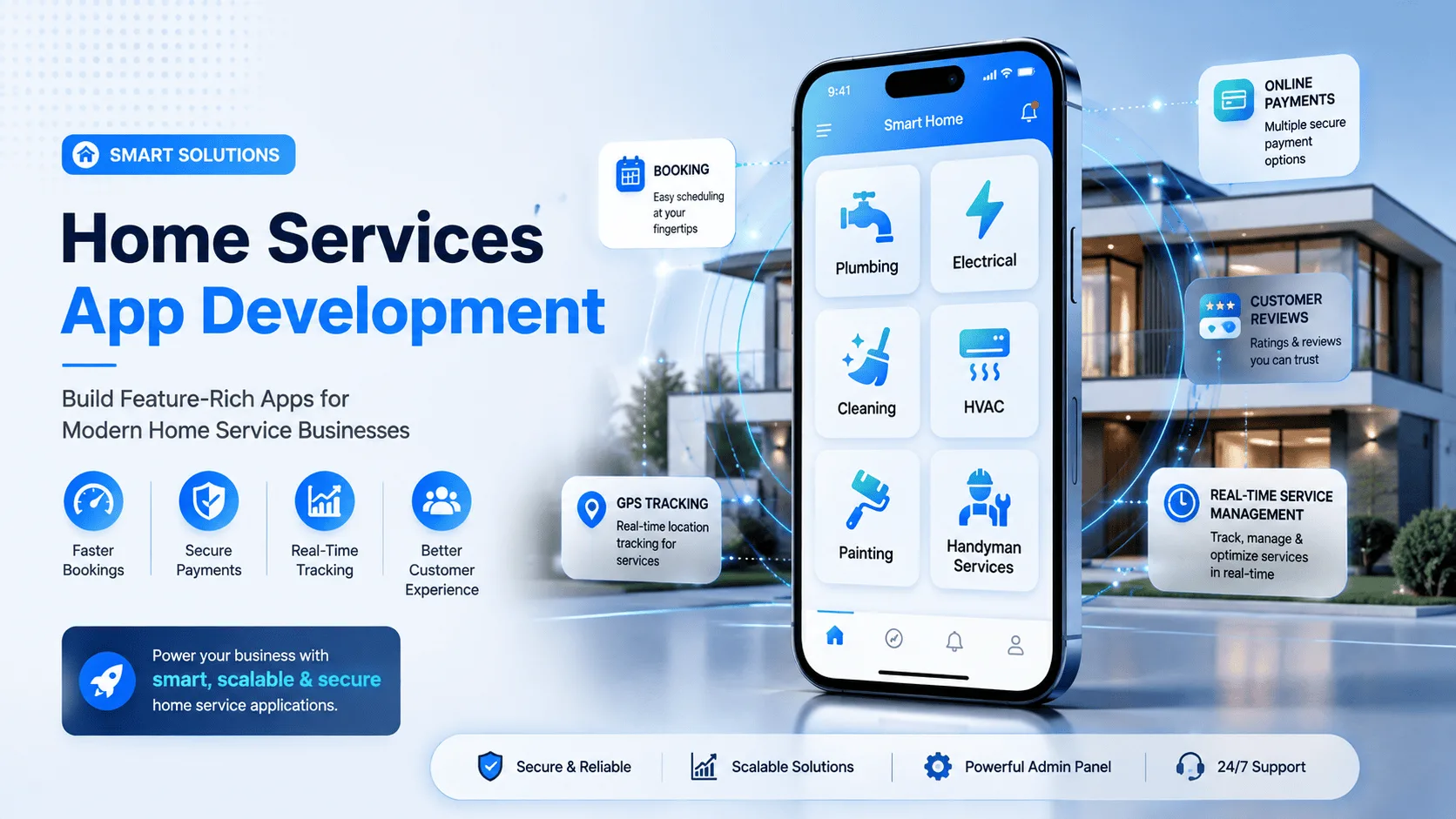
The home services sector is quickly adopting the process of digitization as consumers are becoming more demanding regarding convenience, accessibility, and instant availability of professional services. Whether it be a plumber, an electrician, a cleaner, an HVAC specialist, or a handyman – consumers prefer using mobile apps when scheduling services, making payments, and communicating.
In the USA, the rise in consumer demand for on-demand services is driving companies to develop smarter digital platforms that enhance user experience and optimize processes. In a similar manner, there is the rapid expansion of the market for home services via mobile apps in the UAE owing to rapid urbanization, initiatives for smart cities, and growing penetration rate of smartphones among other factors.
When developing a home services mobile app for a company, it may be useful to know the current technological trends that are shaping the future.
Below are the 15 major trends for home service app development.
Why Home Service Apps Continue to Grow
Digital-first consumers want services that are quick, reliable, and easy to access.
Modern home service applications help businesses:
- Simplify appointment scheduling
- Improve technician management
- Enable secure digital payments
- Enhance customer communication
- Increase operational efficiency
As competition intensifies, innovation is becoming a key differentiator for service providers.
Top 15 Home Services App Development Trends
1. AI-Powered Customer Support
Artificial intelligence is improving customer service by providing instant assistance through virtual chatbots and intelligent support systems.
AI can help customers:
- Book appointments
- Receive service recommendations
- Track requests
- Resolve common queries
This reduces response times while improving overall satisfaction.
2. Real-Time Service Tracking
Customers increasingly expect visibility into service progress.
Live tracking enables users to:
- View technician locations
- Receive estimated arrival times
- Monitor appointment status
- Get instant notifications
Greater transparency builds customer confidence.
3. Contactless Digital Payments
Secure online payment options have become a standard expectation.
Modern applications support:
- Credit and debit cards
- Mobile wallets
- Digital payment gateways
- Contactless transactions
Flexible payment experiences improve convenience and trust.
4. Predictive Scheduling
AI and analytics help businesses optimize technician availability based on customer demand and travel efficiency.
Smarter scheduling reduces delays and improves resource utilization.
5. Cloud-Based Infrastructure
Cloud technology enables businesses to scale operations without significant hardware investments.
Benefits include:
- High availability
- Automatic scalability
- Faster deployments
- Reliable backups
- Centralized data management
Cloud infrastructure supports business growth in both the USA and UAE.
6. Integrated CRM Systems
Customer relationship management systems allow businesses to maintain complete service histories and personalize future interactions.
CRM integration helps improve retention and service quality.
7. IoT-Enabled Service Monitoring
Internet of Things (IoT) devices are enabling proactive maintenance across connected homes.
Businesses can receive automated alerts for equipment issues, allowing technicians to respond before major failures occur.
Learn More About Home Service App Development
Want to discover how successful on-demand service platforms are built for scalability and customer satisfaction?
To know more about this topic, click the video link below.
8. Advanced GPS Navigation
Accurate navigation tools reduce travel time and improve service efficiency.
Features include:
- Optimized routes
- Traffic-aware navigation
- Technician tracking
- Location verification
These capabilities help businesses serve more customers each day.
9. Voice Search Integration
As voice assistants become more popular, users increasingly search for nearby services using voice commands.
Voice-enabled booking simplifies customer interactions and improves accessibility.
10. Personalized User Experiences
Customers appreciate services tailored to their preferences.
Personalization may include:
- Service recommendations
- Preferred technician selection
- Customized promotions
- Appointment reminders
- Loyalty rewards
These features encourage repeat business.
11. Enhanced Data Security
Home service applications process customer information and payment details that require strong protection.
Modern security practices include:
- Data encryption
- Multi-factor authentication
- Secure APIs
- Role-based access controls
- Continuous monitoring
Robust security strengthens customer trust.
12. Analytics-Driven Business Decisions
Data analytics helps companies better understand customer behavior and operational performance.
Key metrics include:
- Booking trends
- Customer retention
- Technician productivity
- Revenue growth
- Service completion rates
Analytics supports informed business decisions.
13. Subscription-Based Service Models
Many businesses are introducing membership plans that offer scheduled maintenance and exclusive benefits.
Subscription services create predictable recurring revenue while improving customer loyalty.
14. Multi-Service Platforms
Rather than offering a single service, businesses are expanding into integrated platforms that combine multiple categories such as cleaning, plumbing, electrical work, appliance repair, and landscaping.
This approach increases customer convenience and business opportunities.
15. Scalable Mobile Applications
As businesses grow, their applications must accommodate larger customer bases, additional service providers, and expanding geographic coverage.
Organizations investing in home service app development increasingly prioritize scalable architecture, cloud infrastructure, and modular system design to support long-term growth.
What Businesses Should Consider Before Development
Launching a successful home service platform requires more than adding popular features.
Businesses should evaluate:
- Target audience
- Service categories
- Market regulations
- Security requirements
- Mobile performance
- Third-party integrations
- Scalability planning
- Post-launch maintenance
A strategic roadmap helps reduce development risks and improves long-term success.
Why Emerging Markets Are Driving Innovation
The USA continues to lead in digital service adoption due to its mature technology ecosystem and growing preference for on-demand solutions. At the same time, the UAE is becoming a strong hub for smart home technologies and digital service platforms, supported by government-led innovation initiatives and a rapidly expanding digital economy.
Businesses that understand the needs of both markets can build flexible applications capable of serving diverse customer expectations.
Future Outlook
The next generation of home service applications will continue to evolve through technologies such as:
- Artificial intelligence
- Machine learning
- Internet of Things (IoT)
- Predictive analytics
- Cloud computing
- Augmented reality for remote assistance
These innovations will further improve operational efficiency and customer satisfaction while creating new opportunities for service providers.
Final Thoughts
The era of home services is witnessing significant changes, in which digitization, smart automation, and customer-centricity are key factors in ensuring organizational success. The integration of technology ranging from AI assistance and IoT maintenance to cloud infrastructure and subscription services makes these technological trends critical to the way that businesses function and compete.
Organizations involved in home service application development should focus on adopting these emerging trends to create a scalable, secure application that caters to customers. Organizations operating in both the USA and UAE can use these trends to their advantage.