Healthcare organizations often ask whether they should improve internal billing operations, outsource parts of the revenue cycle, or invest in better technology. The answer depends on where revenue leakage is happening. Some providers struggle with claim denials, while others face slow payment posting, coding backlogs, weak eligibility checks, or limited reporting. This is why revenue cycle management services and software modernization are often discussed together.
Revenue cycle management encompasses all administrative and clinical functions that contribute to the capture and collection of patient service revenue. A small error at the front desk can affect claim submission. A missing authorization can delay reimbursement. Incomplete documentation can create coding issues. A weak follow-up process can increase accounts receivable. Because the revenue cycle is connected end-to-end, healthcare organizations need both operational discipline and the right digital infrastructure.
Many providers begin with service support because they need immediate help with billing, claims, collections, or denial follow-up. Service teams can reduce workload and bring process expertise. However, services alone may not solve the root cause if the underlying workflows are still manual, fragmented, or poorly integrated. Without technology, teams may continue to repeat the same mistakes across patient registration, coding, payer submission, and reporting.
This is where healthcare revenue cycle management solutions become important. A digital RCM platform gives teams a structured way to manage claims, track tasks, monitor payer responses, and measure financial performance. It can help standardize workflows across departments and locations. It can also reduce dependency on spreadsheets, manual reminders, and disconnected communication.
One important modernization priority is eligibility verification. If coverage is not checked accurately before care is delivered, billing teams may face avoidable denials later. Automated eligibility workflows help confirm active coverage, benefits, co-pay details, deductibles, and authorization needs. This improves claim readiness and supports a better patient financial experience.
Another priority is denial prevention. Denials should not be treated only as a back-end problem. Providers need to understand why denials occur and how to prevent them from recurring. A strong RCM solution can categorize denials, identify payer trends, flag missing information, and help teams correct root causes. This makes revenue cycle improvement more proactive and measurable.
Specialty-specific needs also matter. Medical revenue cycle management services for behavioral health, urgent care, radiology, surgery centers, primary care, or hospital networks may require different workflows. Coding rules, documentation needs, authorization requirements, and payer behavior can vary widely. That is why a flexible technology foundation is so important.
The role of healthcare software development is to help organizations build or customize systems that reflect these real-world differences. Custom healthcare RCM platforms can connect EHR, practice management, clearinghouse, payer, patient payment, and analytics systems. This gives financial teams a more complete view of the revenue cycle and reduces duplicate work.
For providers deciding what to modernize first, the best approach is to map revenue leakage by stage. If front-end errors are high, start with patient access and eligibility workflows. If denials are increasing, prioritize claim validation and denial analytics. If collections are slow, improve patient billing and payment automation. If leadership lacks visibility, build better dashboards and reporting.
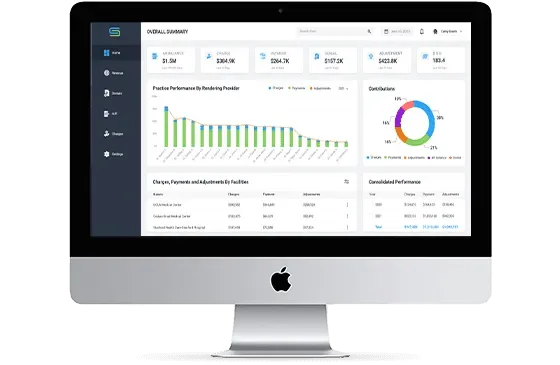
Technology also makes service partnerships more effective. When an outsourced or internal RCM team works from clean data, automated task queues, and shared dashboards, performance becomes easier to measure. Leaders can review denial reasons, follow-up aging, staff productivity, payer trends, and collection status from one place. That visibility helps providers decide which processes should remain in-house, which can be supported by service teams, and which need deeper automation.
The most successful healthcare organizations do not treat RCM as only a billing function. They treat it as a connected financial performance system. By combining expert services with modern software, providers can improve reimbursement speed, reduce avoidable denials, strengthen cash flow, and support long-term operational growth.