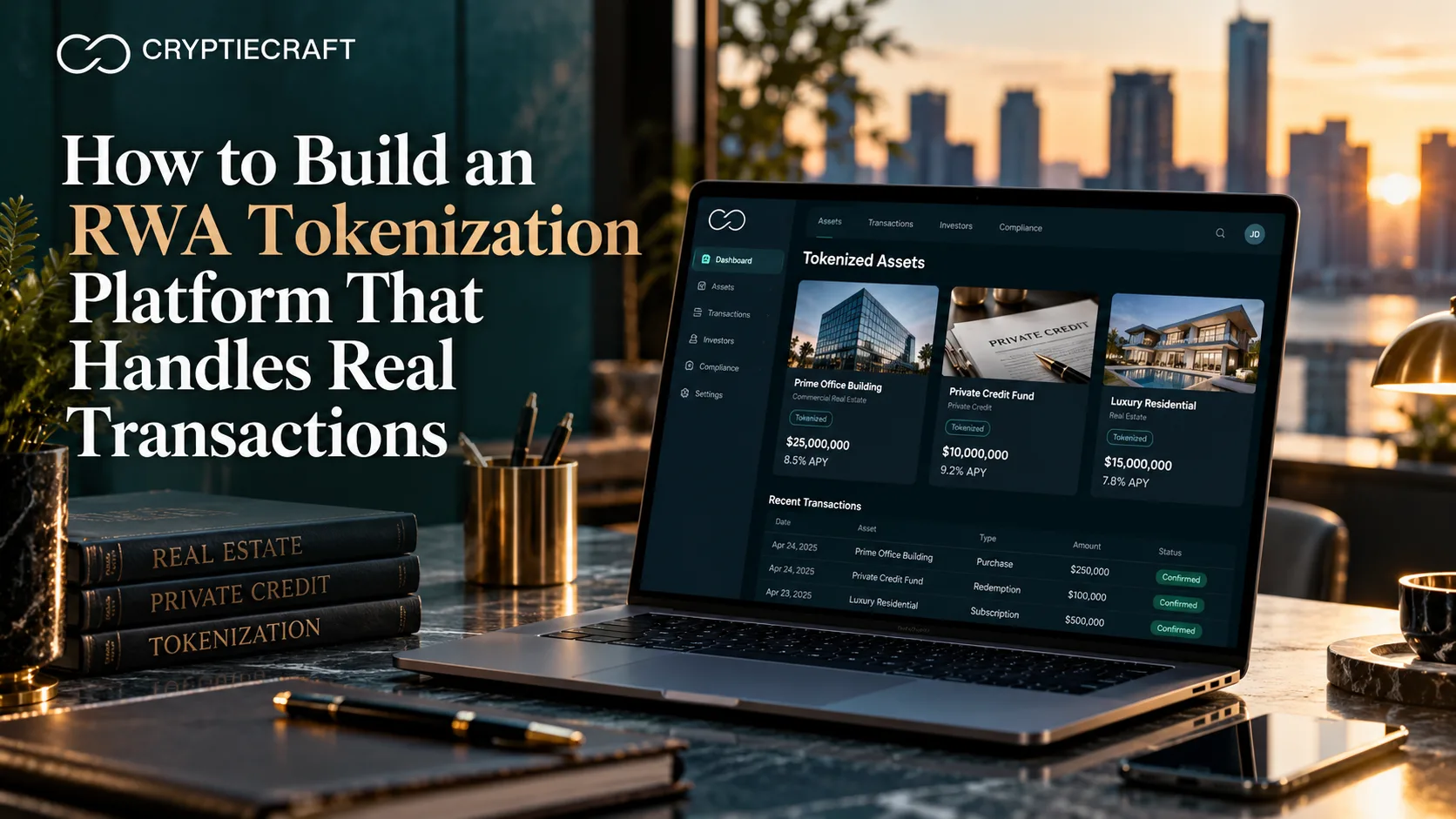

The global financial system is undergoing a foundational shift. Assets that were once illiquid, geographically constrained, and accessible only to institutional investors are being transformed into programmable digital instruments. At the center of this transformation is real world asset tokenization. By converting physical and traditional financial assets into blockchain-based tokens, tokenization platforms are redefining ownership, liquidity, and capital efficiency across industries.
Real world asset tokenization platforms are not simply technical infrastructure providers. They are becoming the backbone of a new asset economy where real estate, commodities, private equity, infrastructure, and even intellectual property can be fractionalized, traded, and governed with unprecedented transparency. As regulatory clarity improves and institutional adoption accelerates, a select group of platforms is emerging as category leaders.
This article explores the top ten real world asset tokenization platforms that are shaping the digital asset revolution through innovation, scalability, compliance readiness, and market impact.
Understanding the Role of Real World Asset Tokenization Platforms
Before examining the leaders, it is essential to understand what differentiates a true real world asset tokenization platform from basic blockchain tools. These platforms typically provide end to end capabilities including asset onboarding, legal structuring, token issuance, compliance enforcement, lifecycle management, secondary trading integration, and investor reporting.
What sets leading platforms apart is their ability to bridge traditional finance and decentralized infrastructure while maintaining trust, regulatory alignment, and operational efficiency. They are designed not just for crypto native users but also for enterprises, asset managers, and governments exploring digital transformation.
1. Enterprise Grade Real Estate Tokenization Platforms
Real estate remains the most dominant use case for real world asset tokenization. Leading platforms in this category focus on enabling property owners, developers, and funds to fractionalize residential, commercial, and industrial assets.
These platforms excel by offering structured workflows for asset valuation, investor onboarding, dividend distribution, and governance rights. They often integrate smart contract automation with off chain legal agreements to ensure enforceability across jurisdictions.
Their leadership stems from their ability to unlock global capital pools for property assets while reducing entry barriers for investors. By enabling fractional ownership and programmable income distribution, these platforms are transforming real estate into a liquid, borderless asset class.
2. Multi Asset Tokenization Infrastructure Providers
Some of the most influential real world asset tokenization platforms are designed to support multiple asset classes rather than specializing in a single vertical. These platforms act as modular infrastructure layers that can tokenize everything from commodities and bonds to art and carbon credits.
Their strength lies in flexibility and scalability. Asset issuers can customize token structures, compliance rules, and distribution models based on jurisdiction and asset type. This adaptability makes them attractive to financial institutions and enterprises experimenting with tokenization pilots.
By offering asset agnostic frameworks, these platforms are accelerating innovation across industries and reducing the time required to bring tokenized assets to market.
3. Institutional Focused Tokenization Platforms
Institutional adoption is one of the strongest indicators of long term success in the tokenization space. Platforms designed specifically for banks, asset managers, and funds are leading the digital asset revolution by aligning blockchain capabilities with enterprise grade requirements.
These platforms emphasize security, governance, auditability, and integration with legacy systems. They often support permissioned blockchain environments and robust identity verification to meet institutional compliance standards.
Their leadership position is reinforced by their ability to tokenize large scale assets such as private credit portfolios, structured products, and alternative investment funds while maintaining operational control and regulatory confidence.
4. Commodity and Resource Tokenization Platforms
Tokenization is redefining how physical commodities are traded and financed. Platforms specializing in commodities such as gold, energy resources, and agricultural products are creating digital representations that can be transferred instantly and transparently.
These platforms focus heavily on proof of reserve mechanisms, custody transparency, and redemption frameworks. Their value proposition lies in improving liquidity, reducing settlement times, and enabling fractional exposure to traditionally capital intensive assets.
By digitizing commodities, these platforms are creating new financial instruments that appeal to both retail and institutional investors seeking stable and asset backed digital investments.
5. Private Equity and Venture Asset Tokenization Platforms
Private markets have historically been opaque and illiquid. Tokenization platforms targeting private equity and venture capital assets are addressing these limitations by enabling fractional ownership and secondary market access.
These platforms support complex cap table management, investor rights enforcement, and compliance with securities regulations. Their innovation lies in making private investments more accessible without compromising governance or confidentiality.
As demand for alternative investments grows, these platforms are positioned as key enablers of liquidity and transparency in private capital markets.
6. Infrastructure and Public Asset Tokenization Platforms
Infrastructure assets such as roads, energy grids, and public utilities represent long term value but often require significant capital investment. Tokenization platforms focusing on infrastructure assets are enabling new financing models through fractional participation.
These platforms often collaborate with public entities and institutional investors to structure compliant offerings. Their focus on long term yield distribution and governance transparency makes them uniquely suited for infrastructure projects.
By digitizing infrastructure ownership, these platforms are opening the door to broader participation in assets that were once limited to sovereign funds and large institutions.
7. Compliance First Tokenization Platforms
Regulatory alignment is a critical success factor for real world asset tokenization. Platforms that prioritize compliance by design are emerging as trusted partners for enterprises operating in regulated markets.
These platforms embed compliance logic directly into smart contracts, ensuring that investor eligibility, transfer restrictions, and reporting requirements are enforced automatically. Their approach reduces legal risk while improving operational efficiency.
Leadership in this category is defined by the ability to adapt to evolving regulations across multiple jurisdictions without compromising scalability or user experience.
8. Secondary Market Enablement Platforms
Liquidity is the ultimate promise of tokenization. Platforms that enable secondary market trading of real world assets are playing a pivotal role in fulfilling this promise.
These platforms focus on creating compliant marketplaces where tokenized assets can be exchanged peer to peer or through regulated venues. They often integrate with custody solutions and identity frameworks to ensure secure transactions.
By enabling continuous price discovery and liquidity, these platforms are transforming traditionally static assets into dynamic financial instruments.
9. Developer Centric Tokenization Platforms
Innovation in the tokenization ecosystem is driven not only by asset issuers but also by developers building new financial products. Developer centric platforms provide toolkits, APIs, and smart contract frameworks that simplify the creation of tokenized assets.
Their leadership comes from fostering ecosystems rather than controlling end to end workflows. By empowering developers, these platforms accelerate experimentation and adoption across diverse use cases.
They play a critical role in expanding the boundaries of what can be tokenized and how tokenized assets interact with decentralized finance applications.
10. End to End Asset Lifecycle Platforms
The most advanced real world asset tokenization platforms offer complete lifecycle management from asset onboarding to retirement. These platforms integrate issuance, compliance, custody, distribution, and reporting into a unified system.
Their value lies in operational simplicity and scalability. Asset issuers can manage complex portfolios without navigating fragmented tools or vendors.
By delivering holistic solutions, these platforms are setting new standards for efficiency and trust in the digital asset economy.
Why These Platforms Are Leading the Digital Asset Revolution
What unites these top platforms is their focus on solving real economic challenges rather than chasing speculative trends. They address inefficiencies in asset ownership, liquidity, and access through practical applications of blockchain technology.
Their leadership is reinforced by strong partnerships, regulatory foresight, and a commitment to enterprise readiness. Rather than replacing traditional finance, they are augmenting it with programmable infrastructure that enhances transparency and efficiency.
As tokenization moves from experimentation to mainstream adoption, these platforms are shaping market expectations and influencing regulatory frameworks worldwide.
The Future of Real World Asset Tokenization Platforms
The next phase of the digital asset revolution will be defined by scale and interoperability. Leading platforms will increasingly focus on cross chain compatibility, integration with traditional financial systems, and global regulatory alignment.
Artificial intelligence, automation, and advanced analytics will further enhance asset management and risk assessment. Tokenization platforms will evolve into intelligent financial operating systems rather than static issuance tools.
As capital markets continue to digitize, real world asset tokenization platforms will become essential infrastructure for a more inclusive, efficient, and transparent global economy.
Conclusion
Real world asset tokenization is no longer a conceptual innovation. It is an active transformation reshaping how assets are owned, financed, and traded. The platforms leading this movement are not defined solely by technology but by their ability to bridge trust, compliance, and scalability.
The top ten real world asset tokenization platforms highlighted in this article represent the forefront of the digital asset revolution. Through their diverse approaches and specialized capabilities, they are collectively building the foundation of a new asset economy.
As adoption accelerates across industries and regions, these platforms will play a decisive role in determining how value flows in the digital age.