
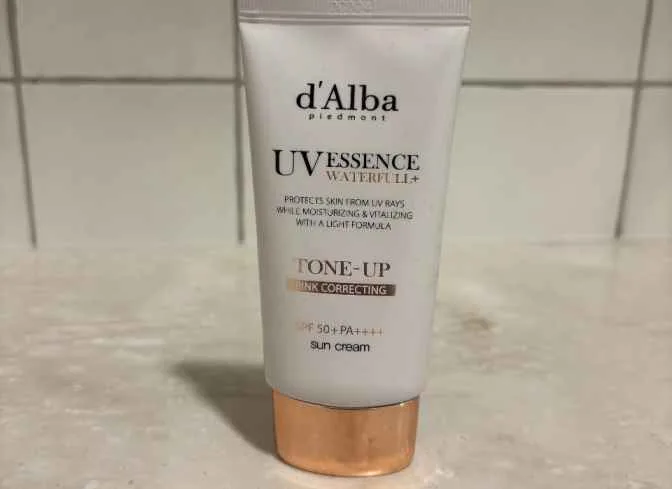
Tone-Up Sunscreen Explained: What It Actually Does for Your Skin
I went through a dozen sunscreens before I understood what tone-up sunscreen actually meant. The term is used quite loosely online. Sometimes, it refers to tinted sunscreen, while other times, it describes any sunscreen that leaves a slight tint on the skin. It is easy to see why the category can be confusing. After looking into it more closely, I got a better idea of how it differs from regular sunscreen, what it offers, and who might find it useful.
What Makes a Tone-Up Sunscreen Different From Regular Sunscreen?
Regular sunscreen is primarily designed to protect the skin from UV rays. Most formulas focus on sun protection without necessarily changing how the skin looks after application.
A tone-up sunscreen offers UV protection while giving the skin a brighter, more even-looking finish. Its subtle tint can help soften the appearance of dullness and redness, leaving the skin looking fresh rather than covered by a colourless layer of product.
The difference is mainly in the finish. Instead of only protecting the skin, it also gives the face a naturally brighter appearance, which can be useful if you prefer a little coverage without applying a separate makeup product.
Why a Tone-Up Sunscreen Is Not Just About Mineral Filters
I used to think that any mineral sunscreen containing zinc oxide or titanium dioxide would inevitably leave a white cast. I also assumed that switching to a chemical sunscreen would solve the problem completely. The reality is a little more complicated.
Mineral filters can scatter visible light and sometimes leave a white or greyish appearance. However, that does not mean every mineral sunscreen will look ashy on the skin. The result depends on the overall formulation, including the particle size, pigment balance, and how evenly the ingredients are distributed.
For example, d'Alba's formula uses titanium dioxide and zinc oxide, but I did not find that it left an obvious ashy finish on my skin. The tint and the balance between the pigments and mineral filters make a difference here. When these elements work well together, the sunscreen can provide protection without leaving a noticeable white layer. When the formulation is not balanced properly, the finish may look pale or uneven.
This is why choosing a sunscreen based only on whether it uses mineral or chemical filters does not always tell you how it will look after application.
Is It Worth Paying More for This Type of Sunscreen?
This was one of my first concerns. A regular sunscreen usually costs less and can provide the SPF protection you need, so I initially found it difficult to justify paying extra for a tone-up formula.
The difference became clearer when I considered what I was getting from the product. Along with sun protection, it offers a lightweight, primer-like texture that can soften the appearance of pores and fine lines. The tint also gives the skin a more even-looking finish, which can reduce the need for a separate base product.
Earlier, my morning routine involved sunscreen, primer, and tinted moisturiser as three separate steps. With this format, I could simplify that routine by combining some of those functions into one product.
The ingredients were another factor in my decision. I use d'Alba's Waterfull Tone-Up Sunscreen, which contains Italian White Truffle Extract alongside Niacinamide, Centella Asiatica Extract, and Hyaluronic Acid. White truffle is a premium ingredient, and its sourcing can contribute to the overall cost of a formula.
For me, the product feels more like a combination of skincare, sun protection, and a cosmetic tint than sunscreen alone. Of course, whether the higher price is justified depends on your budget and preferences. As discussed in this conversation about whether a tone-up sunscreen is worth buying over a regular sunscreen, the value comes down to what you want from the product and whether you will use its additional features.
Who Can Benefit From This Type of Sunscreen?
A tone-up sunscreen can be useful for people who want sun protection along with a brighter-looking finish. However, the tint may not suit every skin tone equally well. Some formulas are designed to brighten the complexion rather than match an individual's natural shade, so they can look lighter on deeper skin tones.
Before applying it across your face, try a small amount along your jawline and check how it looks after settling. This is a simple way to see whether the tint blends comfortably with your complexion.
Based on my experience, this format may be worth considering for a few groups:
- People who wear makeup: If sunscreen does not sit comfortably beneath your makeup, a lightweight formula with a smooth finish may be easier to work with.
- Anyone with a busy morning routine: Combining sun protection and a subtle tint can help reduce the number of products you apply.
- People with oily or combination skin: A lightweight, non-greasy formula may feel more comfortable, depending on its specific formulation.
- Those concerned about dullness or uneven-looking skin: The tint can give the complexion a brighter appearance without requiring a full layer of foundation.
The important thing is to choose a formula based on your skin type, complexion, and preferred finish rather than assuming every tone-up product will work the same way.
How to Apply a Tone-Up Sunscreen Correctly
Getting the finish right is not just about the formula. Application also matters.
- Cleanse and moisturise: Follow your usual skincare routine, preferably using a lightweight moisturiser if you do not want a heavy finish.
- Apply sunscreen as your final skincare step: Use it before applying makeup, and follow the product's instructions for the amount needed to achieve the labelled SPF.
- Give it time to settle: Allow a minute or two before judging the finish. Checking immediately can make the product appear less even than it will once it has settled.
- Let it fit into your routine: Use those few minutes to get dressed or prepare for the day, then check how the sunscreen looks on your skin.
- Add concealer only where needed: If you want extra coverage, apply a little concealer to specific areas instead of covering your entire face with another base product.
Remember that a tone-up finish does not replace adequate sunscreen application. Use enough product for the intended sun protection and reapply as directed, particularly after sweating, swimming, or spending extended periods outdoors.
Frequently Asked Questions
Does a tone-up sunscreen work for oily or combination skin?
It can, provided the particular formula suits your skin. If you prefer a lightweight finish, look for descriptions such as non-greasy or matte, and check the product's ingredient and finish information. The tint itself does not determine whether a sunscreen will feel oily; the base formulation matters more.
What is the difference between a tone-up sunscreen and a tinted sunscreen?
A tinted sunscreen generally uses pigments to add colour and may be designed to blend more closely with your natural skin tone. A tone-up sunscreen usually aims to brighten the appearance of the complexion rather than match it precisely. Both can provide sun protection, but their intended finishes differ. The actual result depends on the formula and the shade of the product.
What should you look for in the best tone up sunscreen?
When comparing options for the best tone up sunscreen, start with broad-spectrum sun protection and look for a product with an SPF of 50 or higher if that suits your needs. In India, PA++++ is another rating worth checking for UVA protection. You should also consider whether the tint suits your skin tone, whether the texture feels comfortable, and whether the formula works well with your usual skincare or makeup.
Ingredients such as Niacinamide, Vitamin E, and Hyaluronic Acid may be useful additions, but they should not be the main reason for choosing a sunscreen. Sun protection, suitability for your skin, and consistent application should come first.
The Bottom Line
For me, a tone-up sunscreen turned out to be more practical than I initially expected. It combines sun protection with a subtle tint and a skincare-like feel, making it easier to simplify my morning routine.
I also realised that a white cast is not determined by the filter type alone. The formulation, pigment balance, and how the product sits on the skin all play a part. In my experience, d'Alba's Waterfull Tone-Up Sunscreen offers a combination of sun protection and a brighter-looking finish, with ingredients such as White Truffle Extract and Niacinamide adding to its skincare appeal.
It has not replaced every step of my routine, nor does it need to. It simply combines a few steps in a way that works for me. If you want sun protection with a subtle brightening effect, it may be worth considering, provided the tint and formula suit your skin.