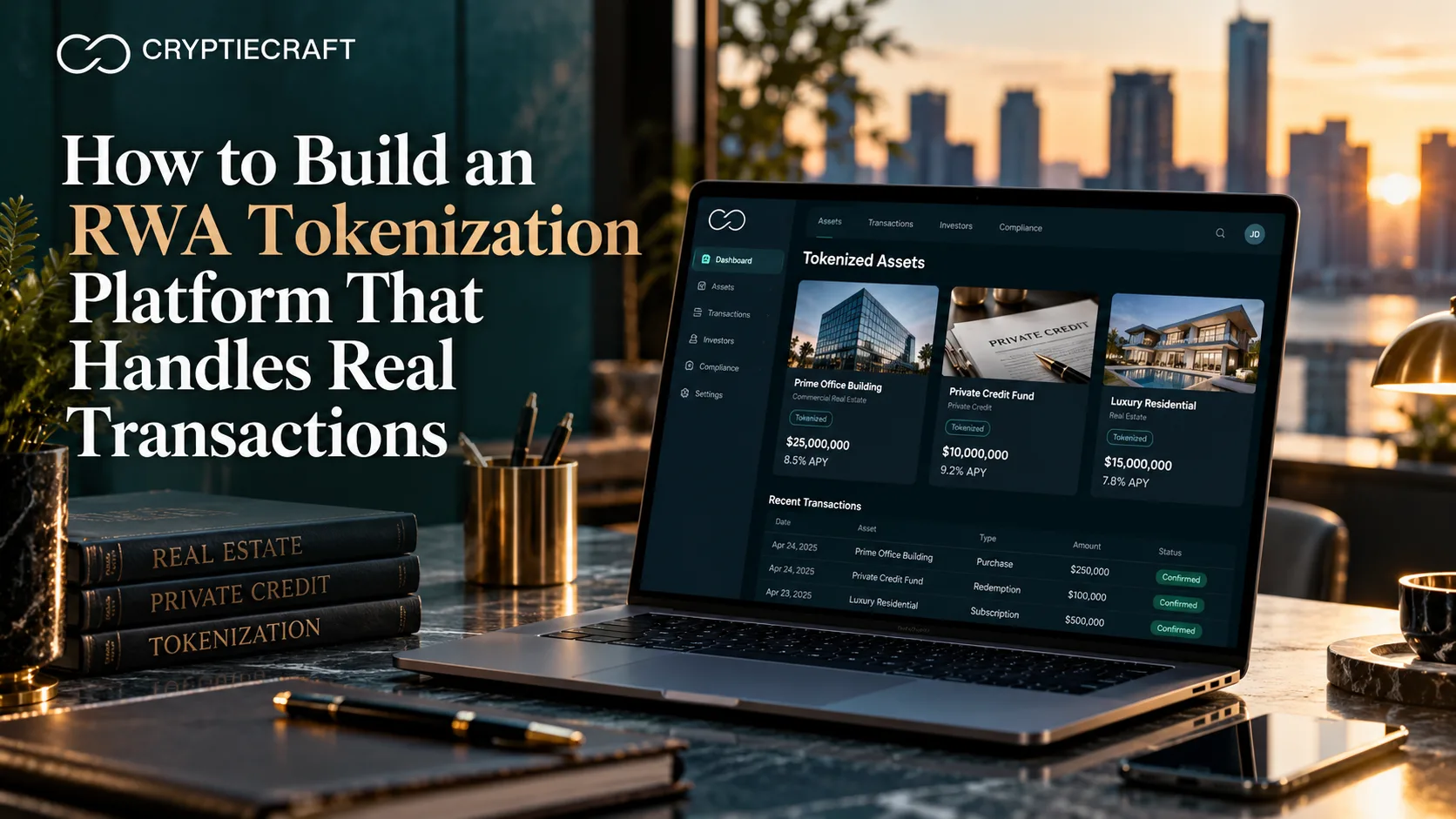

The global property market is undergoing a structural shift in 2026. What began as experimental blockchain pilots has evolved into sophisticated digital ecosystems powered by tokenized real estate platforms. Investors, developers, asset managers, and institutions are no longer asking whether real estate tokenization will work. They are asking how to scale it efficiently, how to ensure compliance across jurisdictions, and how to unlock true liquidity in traditionally illiquid markets.
In 2026, the focus has moved beyond hype. The conversation now centers on infrastructure strength, regulatory alignment, interoperability, and investor confidence. Tokenized real estate platforms are being evaluated on their ability to handle large asset volumes, process compliant cross border investments, and integrate seamlessly with existing financial systems.
Liquidity, compliance, and scalability are the three pillars shaping this evolution. Together, they define the competitive advantage of next generation tokenized real estate ecosystems.
The Evolution of Real Estate Tokenization
Real estate tokenization refers to the process of converting ownership rights in physical property into digital tokens on a blockchain. These tokens represent fractional ownership and can be transferred, traded, or held by investors globally. While the concept has existed for several years, 2026 marks a turning point in its practical implementation.
Earlier tokenization efforts focused on luxury assets or pilot projects. Today, entire portfolios of commercial, residential, industrial, and mixed use properties are being digitized. Asset classes such as student housing, co living spaces, data centers, and logistics parks are increasingly structured through digital token frameworks.
The shift is largely driven by infrastructure maturity. Blockchain networks have improved in speed and cost efficiency. Smart contracts are more secure and programmable. Digital identity verification systems are more robust. Regulatory clarity in several major markets has given institutions the confidence to enter the space.
As a result, real estate tokenization is moving from experimentation to enterprise scale deployment.
Liquidity as the Primary Growth Driver
One of the most powerful arguments for tokenized real estate platforms is liquidity. Traditional real estate investments are capital intensive and time consuming to trade. Transactions can take months to close and often require large minimum investments.
Tokenization changes this dynamic by enabling fractional ownership. Instead of purchasing an entire property, investors can acquire smaller tokenized shares. This opens access to a wider pool of participants, including retail investors and international buyers.
In 2026, secondary trading markets for tokenized assets are becoming more structured. Regulated digital asset exchanges now support compliant trading of property backed tokens. Liquidity pools are deeper, and price discovery mechanisms are more transparent.
Advanced tokenized real estate platforms integrate built in transfer controls to ensure that only eligible investors can trade. This allows liquidity without compromising compliance. Smart contract driven settlement reduces administrative friction and enhances trust.
For developers and asset owners, this liquidity translates into faster capital rotation. Projects can be funded more efficiently, and capital can be redeployed into new developments without lengthy exit processes.
Institutional Participation and Market Confidence
The entry of institutional capital is a defining trend in 2026. Pension funds, private equity firms, and family offices are allocating capital to tokenized real estate structures. Their involvement signals market maturity.
Institutions are attracted by enhanced transparency and operational efficiency. Blockchain based records provide immutable transaction histories. Smart contracts automate dividend distributions and revenue sharing. Reporting frameworks are increasingly aligned with traditional financial standards.
To support institutional participation, platforms are investing heavily in compliance infrastructure. Many are partnering with established custodians and regulated financial entities. This blend of traditional finance and blockchain technology strengthens credibility.
White Label Real Estate Tokenization Platform solutions are playing a major role in accelerating institutional adoption. Financial firms can launch their own branded platforms while leveraging pre built compliance modules and scalable blockchain architecture. This approach reduces time to market and lowers technical complexity.
Compliance as a Strategic Differentiator
Regulatory compliance has become a core competitive factor in tokenized real estate. In 2026, jurisdictions are implementing clearer digital asset regulations. Securities laws, investor accreditation requirements, and anti money laundering standards are being integrated directly into token frameworks.
Modern tokenized real estate platforms embed compliance at the protocol level. Identity verification, know your customer processes, and investor eligibility checks are automated. Smart contracts restrict token transfers to approved wallets. Audit trails are transparent and tamper resistant.
White Label Real Estate Tokenization Services are designed to help asset owners navigate complex regulatory environments. By incorporating jurisdiction specific compliance layers, these services enable cross border offerings without compromising legal integrity.
Multi jurisdictional compliance is particularly important for global property portfolios. Platforms that can handle diverse regulatory requirements across regions gain a significant advantage. Real estate tokenization in 2026 is not just about digitization. It is about lawful digitization at scale.
Scalability Through Advanced Infrastructure
Scalability is essential as tokenized platforms manage larger asset portfolios and growing investor bases. In earlier phases, blockchain congestion and high transaction costs limited growth. Today, layer two scaling solutions and improved consensus mechanisms support higher throughput.
Tokenized real estate platforms are increasingly built with modular architectures. Core components such as asset onboarding, compliance management, investor dashboards, and secondary trading interfaces are designed to scale independently. Cloud integration and microservices frameworks allow dynamic resource allocation.
White Label Tokenization Platform providers are responding to demand by offering enterprise grade infrastructure. Their systems are capable of handling thousands of concurrent users, high volume transactions, and real time reporting.
White Label Real Estate Tokenization Development has become a specialized discipline. Development teams focus on secure smart contract design, interoperability with financial systems, and integration with digital payment gateways. Scalability is no longer an afterthought. It is embedded in the development process from day one.
Interoperability and Ecosystem Integration
Another key trend in 2026 is interoperability. Tokenized real estate platforms are no longer isolated ecosystems. They interact with digital banks, custodians, payment processors, and decentralized finance protocols.
Standardized token frameworks facilitate cross platform compatibility. This enables tokens issued on one platform to be recognized and traded within broader digital asset markets, subject to regulatory constraints.
Interoperability also supports portfolio diversification. Investors can manage tokenized property assets alongside other digital securities within unified dashboards. This integrated experience enhances usability and strengthens investor engagement.
White Label Real Estate Tokenization Platform Development increasingly includes API driven architectures. These allow seamless integration with external accounting systems, property management software, and reporting tools. The result is a cohesive digital ecosystem that bridges traditional and tokenized finance.
Fractional Ownership and Democratized Access
Fractional ownership remains a transformative force in 2026. By lowering entry barriers, tokenization expands participation in premium real estate markets. Investors from emerging economies can gain exposure to properties in global financial hubs without significant capital commitments.
This democratization is reshaping capital flows. Developers can tap into international investor communities. Investors gain access to diversified property portfolios that were previously inaccessible.
White label tokenization solutions make it easier for regional developers to adopt tokenization models. Instead of building infrastructure from scratch, they can deploy White Label Real Estate Tokenization Platform solutions tailored to their brand and compliance environment.
As fractional ownership becomes normalized, the perception of real estate shifts. Property is no longer viewed solely as a long term illiquid asset. It becomes a programmable financial instrument that can be structured to meet diverse investment strategies.
Enhanced Transparency and Investor Trust
Transparency is central to the success of tokenized real estate. Blockchain technology provides immutable records of ownership and transactions. Smart contracts automate distributions and reduce manual intervention.
In 2026, platforms emphasize real time performance tracking. Investors can view rental income distributions, occupancy rates, and asset valuations through digital dashboards. Data integrity enhances confidence and reduces information asymmetry.
White Label Real Estate Tokenization Services often include advanced analytics modules. These provide insights into asset performance and investor behavior. Enhanced reporting capabilities align tokenized investments with institutional expectations.
Trust is reinforced through third party audits and secure custody solutions. As the ecosystem matures, transparency is no longer a marketing claim. It is a measurable operational standard.
Secondary Markets and Programmatic Trading
Secondary trading is evolving rapidly. Regulated digital exchanges now facilitate compliant trading of tokenized property shares. Automated market making mechanisms improve liquidity while maintaining investor protection.
Programmatic trading strategies are emerging in tokenized real estate markets. Institutional investors use algorithmic models to adjust portfolio allocations based on performance metrics and macroeconomic trends.
White Label Real Estate Tokenization Development increasingly incorporates built in secondary trading capabilities. Platforms integrate order books, settlement engines, and compliance filters directly into their architecture. This reduces dependency on external marketplaces and strengthens ecosystem control.
The result is a more dynamic investment environment. Property backed tokens can be traded with greater flexibility, supporting short term and long term strategies alike.
Risk Management and Security Innovations
Security remains a priority in 2026. High profile digital asset breaches in earlier years have led to stronger cybersecurity practices. Tokenized real estate platforms invest heavily in secure key management, multi factor authentication, and penetration testing.
Smart contract audits are standard practice. Independent security firms review code before deployment. Insurance coverage for digital assets is becoming more common, providing an additional layer of protection.
White Label Tokenization Platform providers differentiate themselves by offering enterprise grade security frameworks. These include encrypted data storage, role based access controls, and continuous monitoring systems.
Effective risk management enhances investor confidence and supports regulatory compliance. As the value of tokenized property portfolios grows, robust security infrastructure becomes indispensable.
The Role of White Label Solutions in 2026
White label tokenization models are central to the expansion of tokenized real estate. They enable property developers, asset managers, and financial institutions to enter the market quickly without extensive in house technical development.
White Label Real Estate Tokenization allows businesses to customize user interfaces, branding, and investment structures while leveraging established backend technology. This reduces development costs and accelerates launch timelines.
White Label Real Estate Tokenization Platform Development focuses on modular, compliant, and scalable frameworks. These platforms can be adapted to different asset types and regulatory environments. White Label Real Estate Tokenization Services often include ongoing maintenance, compliance updates, and technical support.
By lowering entry barriers, white label tokenization expands market participation. More stakeholders can experiment with tokenized models, driving innovation and competition across the ecosystem.
Global Expansion and Cross Border Capital Flows
Cross border investment is one of the most promising aspects of tokenized real estate in 2026. Blockchain based platforms enable investors to participate in international property markets with greater ease.
Digital onboarding processes streamline investor verification. Automated compliance checks ensure adherence to local securities regulations. Currency conversion and digital payment integration simplify transactions.
White Label Real Estate Tokenization Platform solutions designed for global deployment include multi currency support and jurisdiction specific compliance modules. This enables property issuers to attract capital from diverse geographic regions.
As regulatory cooperation increases between countries, cross border tokenized offerings become more viable. Real estate tokenization is emerging as a bridge between global investors and localized property markets.
The Road Ahead: Sustainable Growth and Market Stability
Looking beyond 2026, sustainable growth will depend on continued regulatory clarity, technological innovation, and responsible governance. Platforms that prioritize investor protection and transparent operations will gain long term trust.
Scalability will remain critical as asset volumes expand. Interoperability with traditional financial systems will deepen. Institutional frameworks will continue to shape best practices.
Real estate tokenization is evolving from a disruptive concept into a foundational component of digital finance. Liquidity, compliance, and scalability are not isolated trends. They are interconnected drivers shaping the future of property investment.
Tokenized real estate platform that integrate secure infrastructure, regulatory alignment, and flexible white label tokenization models are positioned to lead this transformation. In 2026, the industry stands at the intersection of technology and finance, redefining how property is owned, traded, and managed in a borderless digital economy.
The next phase of growth will reward platforms that balance innovation with compliance and ambition with stability. As capital flows increasingly into tokenized ecosystems, the real estate market is being reimagined as a programmable, accessible, and globally connected asset class.