
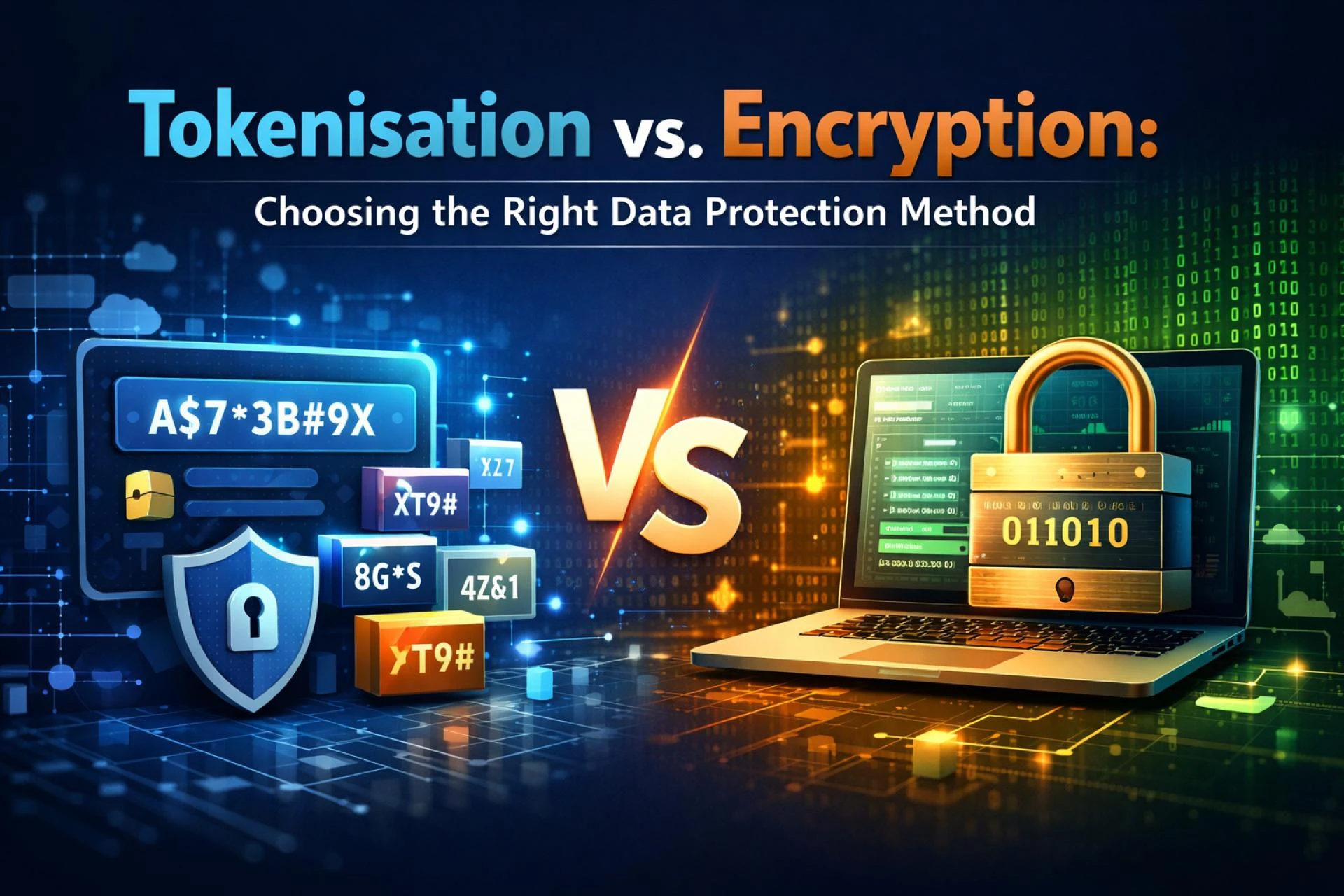
Enterprises operating in high-risk digital environments have recognised protecting sensitive information as a strategic priority due to increased regulatory pressures and rising levels of sophisticated cybercrime activity emanating from both India and the United States. The two most popular means of securing data, tokenization and encryption, are currently the predominant topics of discussion among businesses surrounding the protection of their data. Tokenization and encryption are both used to protect sensitive information; however, they accomplish this in different ways and are designed to address different customer business requirements.
How Tokenization Works
Sensitive information - like credit card numbers or personal identifiers - can be made non-sensitive very safely and easily by replacing them with Tokenized (randomly generated) Tokens.
- The original information would remain secure inside a Token Vault.
- Tokens continue to be formatted like their original values, but they provide no exploitable meanings.
- If attackers intercept the Token, they cannot reverse-engineer it.
Tokenization is suitable for industries that handle large amounts of regulated data (banks/financial companies, retail, and medical) and where protecting that data, whether at rest or in transit, is necessary.
How Encryption Works
Using cryptographic algorithms and keys, encryption converts readable data into unreadable ciphertext.
- Data can only be returned to its original form by authorised users with the proper decryption key.
- Encryption can provide data protection for any type of endpoint (computer/laptop), any network, any cloud workload, and any communication channel.
The encryption method is one of the most common ways to secure enterprise systems, cloud workloads, file transfers, backups, and identity data, and it enables secure remote access.
Security Considerations: Comparing Tokens vs. Encrypted Data
Advantages of Tokenization
- Eliminates sensitive information from potential exposure
- Assists with compliance by implementing regulations such as PCI DSS and HIPAA
- Minimises the impact of data breaches (removing the value of the data) across any system.
Advantages of Encryption
- Provides data protection through end-to-end encryption
- Can be deployed across multiple large-scale IT infrastructures
- Allows for the use of Zero Trust security models and strong access control policies.
Final Thoughts
Tokenization and encryption are valuable ways to enhance data protection in enterprises; however, the choice depends on several factors, including regulations, data sensitivity, and architecture.
Seqrite uses Artificial Intelligence to analyse threat data globally and provide businesses with enterprise-level protection to manage data risk today.
For further information on Seqrite's Data Security and Zero Trust Solutions, please feel free to reach out now!