Today's Education Ministry Updates (27 July 2026): A New Minister, A New Task Force, and What It Means for NEET Aspirants
If you've been following the news even loosely over the past month, you already know that India's education system has been going through one of its most turbulent stretches in years. And today, 27 July 2026, the dust is only just beginning to settle. Here's a plain-language rundown of what actually happened, why it happened, and — most importantly — what it means if you or someone in your family is preparing for NEET.
A New Face at the Education Ministry
The biggest headline this week is the change of guard at the top. Dharmendra Pradhan, who had been Union Education Minister for years, resigned over the weekend after weeks of sustained student protests over irregularities in the NEET-UG examination. His resignation was widely seen as a response to mounting public pressure rather than a routine reshuffle. Just a day later, Pralhad Joshi officially took charge of the ministry, walking into what can only be described as a crisis in progress.
Joshi isn't new to the cabinet — he continues to hold his existing portfolios in consumer affairs, food, and renewable energy alongside this new responsibility. But make no mistake, this is a heavy inheritance. His first day was reportedly spent in internal meetings with ministry staff, and he now has to juggle restoring public trust in the National Testing Agency (NTA), pushing forward NEP 2020 implementation, and steering a tougher anti-paper-leak law through Parliament, all at once.
How We Got Here
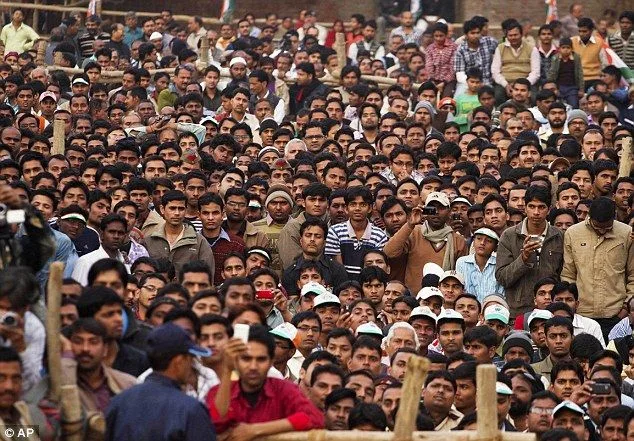
For anyone who hasn't followed the details closely, the crisis traces back to irregularities found in the NEET-UG exam conducted on 3 May this year. The controversy escalated quickly — the government eventually cancelled the exam, handed the investigation over to the CBI, and announced a retest. Along the way, protests organised under the banner of a youth movement calling itself the Cockroach Janta Party (CJP) grew large enough to shut down all 18 metro stations in a part of New Delhi at one point, reflecting just how deeply this issue has struck a nerve with an entire generation of aspirants.
Behind the scenes, the government has already made some structural moves. The education secretary has been replaced, and 47 officials at the NTA have reportedly been removed as part of a wider accountability push. None of this undoes the anxiety and disruption students have already been through, but it does signal that the ministry is treating this as more than a public-relations problem.
The Nilekani Task Force: A Tech-First Approach
Perhaps the most consequential announcement to come out of this whole episode is the formation of a high-powered task force on examination reforms, led by Infosys co-founder Nandan Nilekani. Given his history building Aadhaar and shaping the Unified Payments Interface, his appointment is a strong hint about where the government wants to take exam security — toward biometric verification, AI-based anomaly detection, and eventually a fully computer-based testing model.
The task force isn't working alone either. It includes former ISRO chairman S. Somanath, a former Intelligence Bureau director, the director of IIT Madras, a former education secretary, and a logistics specialist with deep experience in large-scale government operations. That mix tells you the ministry isn't just looking at software fixes — they're also examining how question papers are printed, stored, and transported, since weak links in physical logistics were a major factor in past leaks.
One concrete outcome already flagged before Pradhan's resignation: NEET-UG is expected to move to a computer-based testing format starting in 2027, replacing the traditional pen-and-paper mode that has proven vulnerable to leaks. This is a significant shift for an exam that over 20 lakh students take every year, and it will require serious infrastructure planning to make sure no candidate, especially in rural or remote areas, is disadvantaged by the change.
Legislative Changes on the Horizon
Alongside the technological push, the government is also working on amendments to the existing anti-paper-leak law, aiming for stricter punishments and steeper fines for anyone involved in compromising exam integrity. This follows the 2024 Public Examinations (Prevention of Unfair Means) Act, which was the first major legislative attempt to criminalise organised cheating and leak networks. The new amendments are expected to be debated in the upcoming parliamentary session, and Joshi will be the one carrying that bill forward as his first big legislative test.
What This Means for NEET Aspirants Right Now
If you're currently preparing for NEET, it's natural to feel unsettled by all this. Exam formats may shift, timelines could be adjusted, and there's understandable anxiety about whether the system can be trusted going forward. But here's the practical reality: none of these reforms change the syllabus, the core competition, or the discipline it takes to crack this exam. What they do change is the exam's delivery mechanism and its security — not the preparation you need to put in.
This is actually a good moment to be deliberate about how you're preparing. With formats potentially shifting toward computer-based testing, students who get comfortable with online mock tests and digital problem-solving early will have a real edge. This is exactly where picking the best coaching for NEET makes a genuine difference — not just for content delivery, but for adapting your test-taking strategy to a changing exam environment.
When evaluating options, look for institutes that already have strong CBT-style mock testing infrastructure, transparent faculty credentials, and a track record that isn't just built on marketing claims. The best coaching for NEET isn't necessarily the one with the biggest hoardings in your city — it's the one that tracks your individual progress, adapts to your weak areas, and keeps you updated on exactly these kinds of policy changes as they happen, so you're never caught off guard on exam day.
The Bigger Picture
Today's updates aren't the end of this story — they're really the beginning of a longer reform process that will likely play out over the next year or two. Between the Nilekani task force's recommendations, the shift to computer-based testing, and new legislation working its way through Parliament, the exam ecosystem in India is being rebuilt in real time. For students, the smartest move right now is to stay informed, stay flexible, and lean on the best coaching for NEET you can find — one that treats these changes as part of your preparation, not a distraction from it.