
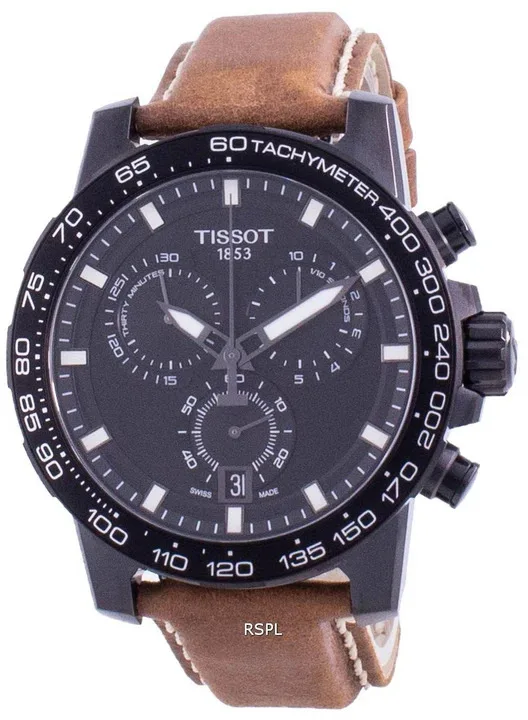
Quick Answer: Tissot's Seastar line delivers 300m water resistance with Powermatic 80 automatic movement and roughly eighty hours of power reserve against the forty typical elsewhere. On a dive watch left between dives, the extended reserve means it is more likely to still be running when next picked up.
Tissot's Seastar line delivers 300m water resistance with Swiss automatic movement, which is genuine dive capability rather than sport styling.
What the Seastar Is
Tissot's dive-oriented collection, built around 300m water resistance, a unidirectional bezel, and the Powermatic 80 automatic movement with its extended power reserve.
The Core Reference
The Tissot T-Sport Seastar 1000 T120.407.17.041.00 delivers 300m with Powermatic 80 automatic movement.
The Alternative Treatment
The Tissot T-Sport Seastar Powermatic 80 T120.407.37.051.00 covers the same specification in a different dial and case finish.
Why 300m Matters
It provides substantial margin beyond recreational diving. The figure comes from static pressure testing, and dynamic pressures during use exceed the static equivalent, so margin is useful rather than excessive.
The Extended Reserve Advantage
Powermatic 80 delivers roughly eighty hours against the forty typical elsewhere. On a dive watch left between dives, this means it is more likely to still be running when you next pick it up.
Why That Matters on a Dive Watch
An automatic that stops needs resetting before use. An eighty-hour reserve means a watch set aside over a weekend is still running and still accurate enough to rely on.
The Bezel Works Independently
A dive bezel measures elapsed time mechanically, independent of the movement. It stays accurate for timing even when the movement has drifted over the preceding week.
Why the Bezel Turns One Way
Unidirectional counterclockwise rotation means an accidental knock can only reduce apparent remaining dive time, never extend it. A diver misreading in the safe direction surfaces early.
The Quartz Chronograph Alternative
The Tissot PRC 200 Chronograph delivers 200m with quartz chronograph function for buyers wanting timing alongside water capability.
What Swiss Made Guarantees
Movement assembly, casing, and a minimum proportion of production cost occurring in Switzerland. It guarantees origin rather than finishing standards.
The Step Up
The TAG Heuer Aquaracer Professional 300 WBP201C.BA0632 covers the same depth with stronger brand recognition.
The Japanese Alternative
The Seiko Automatic Diver SKX007K1 carries ISO 6425 certification at 200m, which tests legibility and shock resistance beyond the depth figure.
Maintaining the Rating
Gaskets degrade gradually regardless of build quality. Budget for periodic pressure testing if you genuinely dive.
Measuring Your Wrist Properly
Measure the flat width across the top of your wrist rather than the circumference, since that flat span is what the lug-to-lug measurement must sit within. A watch whose lug-to-lug exceeds your wrist width will overhang the edges and feel wrong regardless of how good its specification is. This takes under a minute and resolves the most common source of purchase regret.
Total Ownership Cost
Purchase price is only part of the picture. Mechanical watches need periodic professional servicing, conventional quartz needs battery replacement every few years, and light-powered references need eventual cell replacement after a decade or more. Factoring these in gives a far truer comparison than purchase price alone.
Buying From Reputable Sellers
Authentic product with proper warranty coverage and a workable returns position matters more than the channel itself. Clear returns terms effectively replace the reassurance that handling a watch in person would provide, which is what makes confident online buying possible at every price point.
Common Mistakes to Avoid
Assuming a depth rating implies ISO certification is the most consequential. Assuming water resistance is permanent is the most expensive. Overlooking Swiss servicing cost is the most underestimated. Not checking lug-to-lug is the most uncomfortable.
Judging Value Honestly
The most reliable way to assess any watch is separating three things: build quality, movement specification, and brand value. All three are legitimate reasons to pay, but conflating them produces confused comparisons. A watch leading on one and trailing on another is not worse than one scoring moderately across all three, provided it leads on the attribute you actually care about for how you will wear it.
Setting Expectations Before You Buy
The most reliable predictor of satisfaction is whether expectations matched what the watch was built to deliver. A watch optimised for durability will not feel refined, one optimised for finishing will not survive rough treatment, and one optimised for accuracy will not carry mechanical character. None of those is a flaw; each is a deliberate design priority. Identifying which priority a watch was built around, and whether it matches yours, prevents nearly every form of buyer disappointment.
Why Returns Matter More Than Expected
Fit and comfort only become fully apparent after wearing a watch for several days, which is longer than any shop visit allows. A returns window of meaningful length is therefore not a fallback but the main mechanism by which you establish whether a watch suits you. Confirming the window, the conditions attached to it, and who bears return shipping before ordering means the decision stays reversible long enough to be made properly.
Strap and Bracelet Considerations
A second strap is the cheapest way to extend one watch across more contexts, shifting it between formal and casual without buying anything else. Confirm lug width before ordering, measured between the inner edges of the lugs in millimetres, since it must match exactly. Note also that integrated-bracelet designs flow directly into the case and cannot accept standard straps at all.
The Bottom Line
The Seastar delivers 300m with Swiss automatic movement and an eighty-hour reserve, which suits a dive watch particularly well. Browse the Tissot collection.
Frequently Asked Questions
What is the Tissot Seastar?
Tissot's dive-oriented collection built around 300m water resistance, a unidirectional bezel, and Powermatic 80 automatic movement.
Why does 300m matter?
It provides substantial margin beyond recreational diving, since dynamic pressures during use exceed the static test equivalent.
What does the extended reserve add?
Roughly eighty hours against the typical forty, so a watch set aside between dives is more likely to still be running.
Does the bezel depend on the movement?
No. It measures elapsed time mechanically and independently, staying accurate even when the movement has drifted.
Why does the bezel turn one way?
So an accidental knock can only reduce apparent remaining dive time, meaning a diver misreading it surfaces early.
Is it ISO certified?
The depth rating is genuine, but ISO 6425 certification additionally tests legibility, shock resistance, and bezel function.
Does the rating last forever?
No. Gaskets degrade gradually, so periodic pressure testing is needed if you genuinely dive.
Verdict
The Seastar delivers 300m with Swiss automatic movement and an eighty-hour reserve, which suits a dive watch particularly well since it is more likely to be running between uses. Verify whether you need ISO certification, and budget for pressure testing. Browse the Tissot collection.