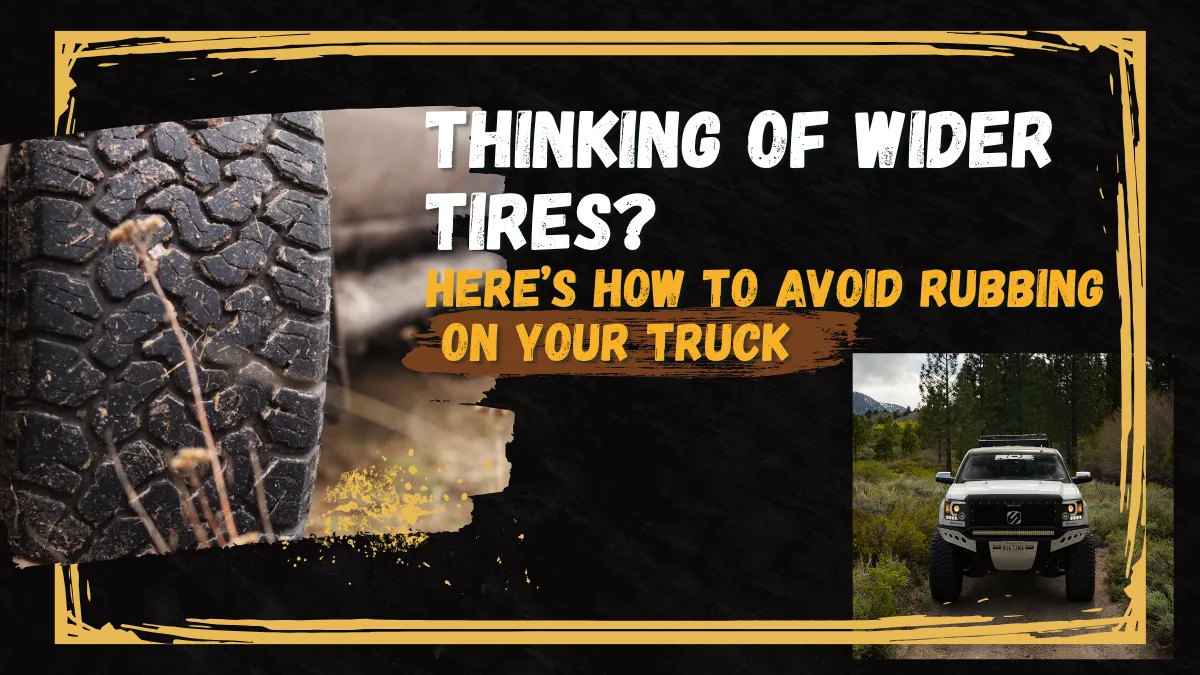
Upgrading to wider tires is one of the most popular modifications for truck owners. A wider footprint can improve traction, enhance stability, and give your truck a more aggressive stance. However, fitting wider tires isn't always as simple as choosing a larger size. Without proper planning, tire rubbing can occur during turns, suspension movement, or off-road driving, leading to premature tire wear and possible damage to surrounding components. Before making the switch, it's important to understand what causes rubbing and the adjustments that may be needed. Here's how to upgrade to wider tires while minimizing clearance issues.
Understand Why Tire Rubbing Happens
Tire rubbing occurs when the tire contacts another part of the truck during normal operation. This often happens while turning, when the suspension compresses over uneven terrain, or when the vehicle is carrying heavy loads.
Common contact points include the inner fender liners, frame rails, suspension components, mud flaps, wheel wells, and, sometimes, the bumper corners. Exactly where rubbing occurs depends on the truck's suspension design, wheel specifications, and tire dimensions.
Before purchasing new tires, it's worth inspecting the available clearance around your current setup. This is also a good opportunity to examine important truck parts that influence wheel fitment, including suspension bushings, ball joints, steering components, and wheel bearings. Excessive wear in these components can allow additional movement, which can contribute to rubbing, even if the tire size itself isn't significantly larger.
Tire Width Isn't the Only Measurement That Matters
It's easy to focus on tire width, but width is only part of the equation.
A wider tire extends farther toward the suspension and outer bodywork, while a taller tire increases the overall diameter and occupies more vertical space inside the wheel well. In many cases, increasing tire diameter creates more clearance challenges than increasing width alone.
For example, two tires may have similar widths but different overall heights. The taller tire may contact the rear of the wheel well during suspension compression, even though the wider tire does not.
That's why it's important to compare the complete tire dimensions rather than just the width. Even relatively small increases can affect clearance depending on your truck's factory design.
Don't Forget About Fender Coverage
Many truck owners install fender flares when upgrading to wider tires. While these accessories provide additional tire coverage beyond the body, they are often misunderstood.
Fender flares help shield the body from rocks, mud, and road debris while also helping comply with local regulations requiring tires to remain covered. However, they generally do not create additional clearance inside the wheel well.
If rubbing is occurring against the inner fender liner or suspension components, adding fender flares alone won't solve the problem. They're primarily an exterior solution for tire coverage rather than an internal clearance modification.
When planning wider tires, think of fender flares as a complementary upgrade rather than a fix for rubbing.
Pay Close Attention to Wheel Offset and Backspacing
The wheels you choose have just as much influence on fitment as the tires themselves.
Wheel offset determines how far the wheel sits inward or outward relative to the hub. Backspacing measures the distance between the mounting surface and the wheel's inner edge.
An offset that pushes the wheel too far inward can cause the tire to contact suspension components or the frame. On the other hand, pushing the wheel too far outward may increase the likelihood of rubbing against the fenders during turns or suspension travel.
Finding the right combination of wheel width, offset, and backspacing is often the key to successfully fitting wider tires. Simply copying another truck's setup isn't always reliable because factory options and previous modifications can affect available clearance.
Measure Before You Buy
One of the biggest mistakes truck owners make is assuming a certain tire size will fit because someone else installed it successfully.
Even trucks with the same year and model can have different suspension packages, factory wheel options, leveling kits, or aftermarket components that affect available space.
Before purchasing new tires, measure the distance between your current tires and nearby components. Turn the steering wheel fully in both directions and check for tight areas. If possible, inspect the suspension while it's compressed to gauge how much clearance remains under real-world driving conditions. Spending a little time measuring can prevent expensive surprises after installation.
Consider Suspension Modifications Carefully
Many truck owners install leveling kits or lift kits before upgrading to wider tires. These modifications can create additional space inside the wheel wells, but they are not guaranteed to eliminate rubbing.
Increasing ride height improves static clearance, but the tires still move through the suspension's full range of travel. During sharp turns or heavy suspension compression, rubbing may still occur if the tire size or wheel specifications exceed the available space.
It's also important to remember that suspension geometry changes after lifting or leveling a truck. Those changes can affect steering angles and tire positioning throughout suspension travel.
Rather than relying solely on added ride height, evaluate how the entire wheel-and-tire combination works together.
Think About How You Actually Use Your Truck
Your intended use should play a major role in selecting tire size. A truck that spends most of its time commuting on paved roads may require a different setup than one that's regularly driven off-road or used for towing heavy trailers.
Off-road driving places greater articulation demands on the suspension, increasing the likelihood of tire rubbing over uneven terrain. Likewise, carrying heavy cargo causes the suspension to compress farther than it normally would during everyday driving.
Choosing a tire size that works under your typical driving conditions is often more beneficial than simply selecting the largest size that can physically fit while parked.
Small Adjustments May Be All That's Needed
Not every rubbing issue requires major modifications. If contact occurs only at one small location, relatively minor adjustments may solve the problem. Depending on where the interference occurs, repositioning wheel well liners, trimming small sections of plastic trim, replacing worn suspension components, or adjusting mud flaps may provide enough clearance.
The important step is identifying exactly where the tire is making contact before modifying anything.
Avoid making unnecessary cuts or permanent changes without confirming the source of the rubbing. Taking a careful, measured approach often yields a cleaner, more reliable solution.
Test Fit Whenever Possible
If you're investing in new wheels and tires, a test fit can save considerable time and money. A temporary installation allows you to verify steering clearance, suspension travel, and wheel positioning before committing to a complete set. It's also an opportunity to identify potential rubbing points while the truck is stationary, rather than discovering them after everything has been installed.
Testing fitment beforehand is especially valuable when you're moving to significantly wider tires or using aftermarket wheels with different offsets. While not always possible, a test fit provides valuable peace of mind and reduces the chances of unexpected fitment issues.
When in Doubt, Ask a Professional
If you're unsure whether a particular tire and wheel combination will fit your truck, don't hesitate to consult a qualified installer or suspension specialist before making a purchase. Professionals can evaluate your truck's current setup, take accurate measurements, and identify potential clearance issues based on your vehicle's specifications and intended use. Getting expert advice can help you avoid costly mistakes, reduce the need for additional modifications, and ensure that your wider-tire upgrade is both safe and properly fitted.
Plan First, Upgrade Second
Installing wider tires can improve your truck's capability and appearance, but achieving the right fit requires more than selecting a larger size. Tire width, diameter, wheel specifications, suspension geometry, and available clearance all work together to determine whether rubbing becomes an issue. By carefully measuring your truck, understanding the factors that affect fitment, and making informed decisions before installation, you can enjoy the benefits of wider tires while minimizing unwanted contact and preserving both tire life and vehicle performance.