Becoming a CPR instructor is not a line on your resume; it’s a responsibility. It’s knowing that the skills you teach might be the ones someone relies on in a heartbeat. You’re not just learning to perform compressions or breaths; you’re learning to multiply that knowledge through every person you train. That’s the power of CPR teacher certification. It proves you can act, and more importantly, that you can guide others to act when seconds matter.
What It Means to Be an AHA Instructor?
Showing someone how to push on a chest or give rescue breaths is the easy part. The real challenge is teaching people to act under pressure. A CPR instructor approved by the American Heart Association does more than demonstrate techniques; they notice hesitation, correct mistakes subtly, and instill confidence. You learn to read micro-signals: a trembling hand, a nervous pause, a student questioning themselves. Guiding learners past those moments is where the instruction actually matters.
Steps to Certification
1. Start as a Provider
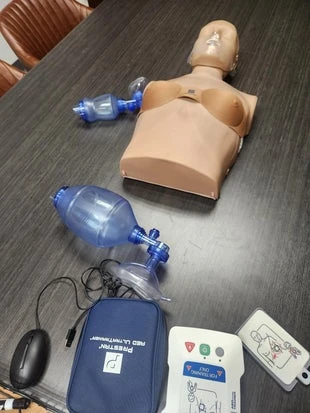
Before you teach, you must master it yourself. AHA-approved CPR courses provide hands-on experience for adults, children, and infants. AED use, choking response, and timing, all of it become second nature.
2. Instructor Training
This is the real test. You practice teaching peers, receiving instant feedback. You learn to pace a class, simplify challenging concepts, and anticipate the struggles the students will not say aloud. Teaching CPR is part skill, part psychology, part patience.
3. Evaluation
Both practical and written tests ensure you can teach clearly, calmly, and convincingly. It's not just showing the student how to do the technique but showing them how to trust their own muscle memory.
4. Ongoing Renewal
Keeping certification up to date ensures you keep your instruction current and that your teaching is in alignment with the most current and effective life-saving techniques.
Why Certification Matters?
A CPR approved by the American Heart Association is credible. Schools, hospitals, and workplaces recognize it; students respect it. And as you teach, your own instincts sharpen. Every class reinforces your skills and your ability to respond instinctively in real emergencies.
The Real Impact
Here is what generally goes unnoticed, as every student you train could one day save a life. Your influence does not stop at the classroom door. One instructor can reach hundreds, even thousands, over time. You’re shaping confidence and readiness, not just technique. That impact is not abstract; it’s tangible, immediate, and profound.
Why Choose CPR Fujahn Life Support Training
If you are looking for training that prepares you to teach with confidence, CPR Fujahn Life Support Training is an option. The instructors are either military veterans or active registered nurses. The courses give you hands-on experience, are interactive, and utilize feedback-enabled models that feel real. You can start teaching right away after you earn your CPR and BLS certification on the same day. You will not have to wait weeks, nor have to deal with paperwork. You will leave with usable skills, confidence, and insight.
Conclusion
In this blog, we talked about the steps, the importance of getting certified as a CPR teacher, and how American Heart Association-approved CPR can give you hands-on experience and good training. We talked about teaching under pressure, the power of teachers as facilitators, and how teaching has the power to impact entire communities. There is something to be said of gaining your certification with CPR Fujahn Life Support Training. We are not just providing you with a certificate; we are inviting you to join a community of instructors that can save lives and share that knowledge and passion with others.