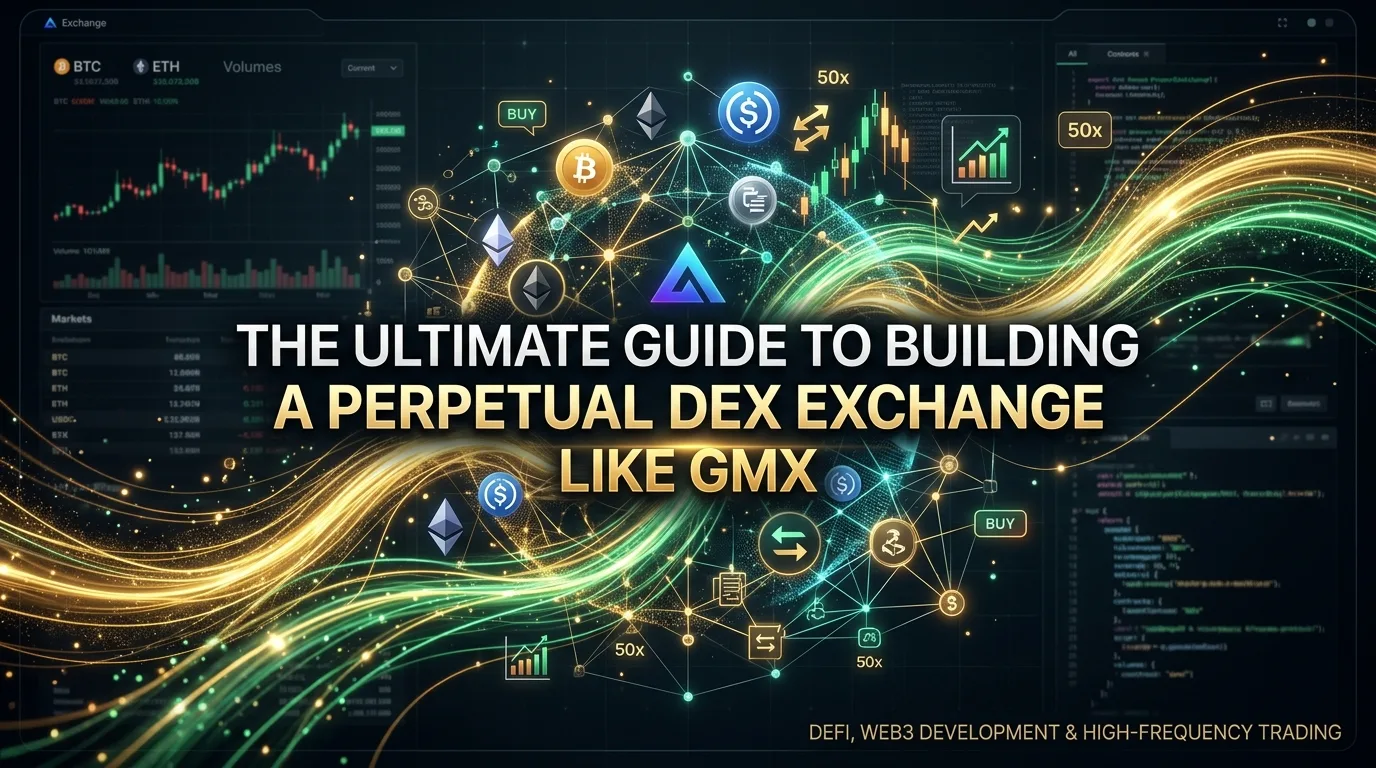
The decentralized finance (DeFi) ecosystem has evolved dramatically over the last few years, moving far beyond simple token swaps and yield farming. One of the most significant innovations in this space has been the emergence of perpetual decentralized exchanges (DEXs), which allow traders to speculate on asset prices without owning the underlying assets and without expiration dates on contracts. Among the platforms that have successfully pioneered this model, GMX has become a standout example, demonstrating how decentralized perpetual trading can compete with centralized exchanges in terms of liquidity, user experience, and capital efficiency.
As institutional interest in DeFi continues to grow and traders seek alternatives to centralized platforms, the demand for perpetual DEX platforms is increasing rapidly. Entrepreneurs and blockchain businesses are now actively exploring Perpetual DEX Development to capitalize on this expanding market. Building a perpetual DEX similar to GMX, however, requires far more than launching a trading interface. It demands sophisticated liquidity architecture, advanced risk management systems, secure smart contracts, and a scalable blockchain infrastructure.
This guide explores the essential components, architecture, technologies, and strategic considerations involved in building a perpetual DEX exchange like GMX.
Understanding the GMX Model
Before discussing development, it is important to understand why GMX has become one of the most successful perpetual DEX platforms in the industry.
Unlike traditional order-book exchanges that require matching buyers and sellers, GMX utilizes a unique multi-asset liquidity pool known as GLP. This pool acts as the counterparty to traders. Liquidity providers deposit a basket of assets, and traders execute leveraged positions against the pool.
This model offers several advantages:
- Deep liquidity without relying on market makers
- Reduced slippage for traders
- Simplified trading experience
- Efficient capital utilization
- Sustainable revenue generation for liquidity providers
GMX also integrates decentralized price oracles, primarily through Chainlink, to ensure accurate asset pricing and minimize manipulation risks. The result is a platform capable of supporting leveraged trading while maintaining decentralization and transparency.
For businesses pursuing Perpetual DEX Development, understanding this liquidity architecture is critical because it forms the foundation of platform performance and profitability.
Market Opportunity for Perpetual DEX Platforms
The growth of decentralized derivatives trading reflects a broader shift in the cryptocurrency industry. According to multiple DeFi analytics reports, decentralized derivatives have become one of the fastest-growing sectors in blockchain finance. Billions of dollars in monthly trading volume now flow through perpetual DEX platforms.
Several factors are driving this growth:
First, users increasingly prioritize self-custody. High-profile exchange failures have highlighted the risks associated with centralized custody, prompting traders to seek decentralized alternatives.
Second, regulatory uncertainty surrounding centralized exchanges has encouraged traders to migrate toward permissionless platforms.
Third, improvements in Layer-2 scalability solutions have dramatically reduced transaction costs, making decentralized trading more practical for retail and institutional participants.
As a result, organizations investing in Perpetual DEX Development are entering a market with substantial long-term growth potential and increasing user adoption.
Core Components of a Perpetual DEX Exchange
Building a platform comparable to GMX requires multiple interconnected systems working together seamlessly.
Liquidity Pool Infrastructure
Liquidity pools are the backbone of any perpetual DEX.
Unlike conventional exchanges that depend on order books, perpetual DEXs often use pooled liquidity models. The platform must support:
- Multi-asset liquidity pools
- Dynamic asset allocation
- Real-time valuation mechanisms
- Liquidity provider rewards
- Automated rebalancing systems
Developers must create algorithms capable of maintaining pool stability during periods of high volatility. Poor liquidity management can result in excessive trader profits, liquidity provider losses, and eventual platform instability.
Leveraged Trading Engine
The trading engine serves as the platform's operational core.
A robust perpetual trading engine should support:
- Long and short positions
- Adjustable leverage levels
- Margin calculations
- Position management
- Profit and loss calculations
- Funding rate mechanisms
Real-time execution accuracy is critical because even minor discrepancies in calculations can lead to significant financial losses.
Oracle Integration
Price accuracy is one of the most important requirements for perpetual trading.
Decentralized oracles provide external market data that smart contracts use for position calculations and liquidations. Reliable oracle systems help prevent:
- Flash loan attacks
- Price manipulation
- Arbitrage exploitation
- Incorrect liquidations
Most successful perpetual DEXs utilize decentralized oracle networks combined with multiple data sources to enhance reliability.
Liquidation Framework
Leveraged trading introduces risk, making liquidations essential.
The liquidation engine automatically closes positions when trader collateral falls below required maintenance levels. Effective liquidation systems protect:
- Liquidity providers
- Platform solvency
- Market stability
An advanced liquidation architecture should execute quickly while minimizing unnecessary liquidations caused by temporary market fluctuations.
Blockchain Selection and Infrastructure
The choice of blockchain significantly impacts platform performance.
GMX initially gained traction by leveraging Arbitrum and Avalanche, both of which offer lower fees and higher throughput than Ethereum mainnet.
Key factors when selecting a blockchain include:
Scalability
Perpetual trading generates frequent transactions. Networks must support high throughput while maintaining low latency.
Transaction Costs
High gas fees discourage active traders. Layer-2 networks have become increasingly attractive because they reduce execution costs significantly.
Security
The underlying blockchain should possess a proven security track record and strong validator participation.
Ecosystem Support
A mature ecosystem provides access to wallets, bridges, liquidity providers, analytics tools, and developer resources.
Many modern Perpetual DEX Development projects choose Layer-2 ecosystems because they balance performance, security, and cost efficiency.
Smart Contract Development
Smart contracts define the operational logic of a perpetual DEX.
Because these contracts directly manage user funds, security must be treated as the highest priority throughout development.
Core smart contracts typically include:
Trading Contracts
These handle trade execution, position management, leverage calculations, and settlement processes.
Liquidity Management Contracts
These govern liquidity deposits, withdrawals, reward distribution, and pool accounting.
Governance Contracts
Governance mechanisms enable decentralized decision-making regarding protocol upgrades, fee adjustments, and treasury management.
Staking Contracts
Staking modules incentivize long-term participation and strengthen ecosystem engagement.
Every smart contract should undergo multiple security audits and extensive testing before deployment. Numerous DeFi protocols have suffered multimillion-dollar losses due to preventable vulnerabilities.
Risk Management Systems
One of the most overlooked aspects of perpetual DEX creation is risk management.
A successful platform must protect both traders and liquidity providers.
Dynamic Funding Rates
Funding rates maintain balance between long and short positions. They encourage market equilibrium and reduce directional bias.
Position Limits
Restricting oversized positions prevents individual traders from creating systemic risk.
Exposure Controls
Risk engines monitor overall market exposure and adjust parameters when concentration risks become excessive.
Insurance Funds
Many leading platforms maintain insurance reserves that absorb losses during extreme market conditions.
Without effective risk controls, even a technically advanced perpetual DEX can become vulnerable to insolvency during periods of market turbulence.
User Experience and Interface Design
Technology alone does not guarantee success.
Many decentralized trading platforms struggle because they prioritize protocol functionality over usability. GMX gained significant adoption partly because it delivered a trading experience comparable to centralized exchanges.
Key UI considerations include:
- Real-time market data
- Intuitive trading dashboards
- Portfolio tracking tools
- Mobile responsiveness
- Fast wallet connectivity
- Advanced charting capabilities
Traders expect seamless experiences regardless of whether a platform is decentralized or centralized.
The most successful Perpetual DEX Development projects invest heavily in frontend optimization and user onboarding processes.
Revenue Models and Tokenomics
A sustainable business model is essential for long-term viability.
Perpetual DEX platforms typically generate revenue through:
Trading Fees
Each trade generates protocol revenue.
Borrowing Fees
Some platforms charge borrowing fees for leveraged positions.
Liquidation Fees
Liquidation events often include fees that support protocol operations.
Token Utility
Native tokens can create additional value through governance participation, staking rewards, and fee-sharing mechanisms.
GMX demonstrated the effectiveness of aligning incentives between traders, liquidity providers, and token holders. Proper tokenomics can significantly improve user retention and ecosystem growth.
Security Considerations
Security remains one of the most critical challenges in DeFi.
According to blockchain security reports, billions of dollars have been lost to exploits across the industry over the past several years. Perpetual DEX platforms face additional complexity because they combine leverage, liquidity pools, and real-time trading mechanics.
Best practices include:
- Multiple independent audits
- Formal smart contract verification
- Bug bounty programs
- Continuous monitoring
- Oracle redundancy
- Emergency shutdown mechanisms
Security should be integrated into every stage of development rather than treated as a final checklist item.
Regulatory and Compliance Factors
While decentralized platforms operate differently from traditional financial institutions, regulatory considerations cannot be ignored.
Global regulators continue developing frameworks for digital asset trading and derivatives products. Depending on the target market, operators may need to consider:
- KYC requirements
- AML procedures
- Licensing obligations
- Jurisdictional restrictions
- Consumer protection standards
Forward-thinking organizations engaged in Perpetual DEX Development increasingly incorporate compliance flexibility into platform architecture to prepare for evolving regulations.
Future Trends Shaping Perpetual DEX Development
The perpetual DEX landscape continues to evolve rapidly.
Several emerging trends are expected to influence future platform design:
Cross-Chain Trading
Users increasingly demand seamless trading across multiple blockchain ecosystems.
AI-Powered Risk Management
Machine learning models may improve exposure monitoring and liquidation efficiency.
Institutional Participation
Professional trading firms are gradually entering decentralized derivatives markets.
Hybrid Liquidity Models
Future platforms may combine order books, liquidity pools, and automated market-making systems.
Real-World Asset Integration
Perpetual contracts linked to commodities, equities, and other real-world assets may expand trading opportunities significantly.
Projects that embrace these innovations will likely gain competitive advantages as the market matures.
Conclusion
Building a perpetual DEX exchange like GMX requires a sophisticated combination of blockchain engineering, liquidity management, risk controls, security architecture, and user-centric design. Success depends not only on creating a functional trading platform but also on establishing a sustainable ecosystem that balances the interests of traders, liquidity providers, token holders, and governance participants.
The rapid growth of decentralized derivatives demonstrates that perpetual DEXs are becoming a fundamental component of the broader digital asset economy. Businesses investing in Perpetual DEX Development have a unique opportunity to participate in one of the most dynamic sectors of blockchain finance. By focusing on robust infrastructure, secure smart contracts, effective risk management, and exceptional user experience, developers can create platforms capable of competing with both decentralized and centralized trading venues in the years ahead.