
The Ultimate Glossary of Essential Email Marketing Terms
Email marketing is a powerful and versatile way to engage audiences, but it has its own terminology. To succeed, it is crucial to master terms related to performance measurement and regulatory compliance. With this in mind, this glossary delivers a concise, original overview of key email marketing terms every marketer should know.
Key Metrics & Performance
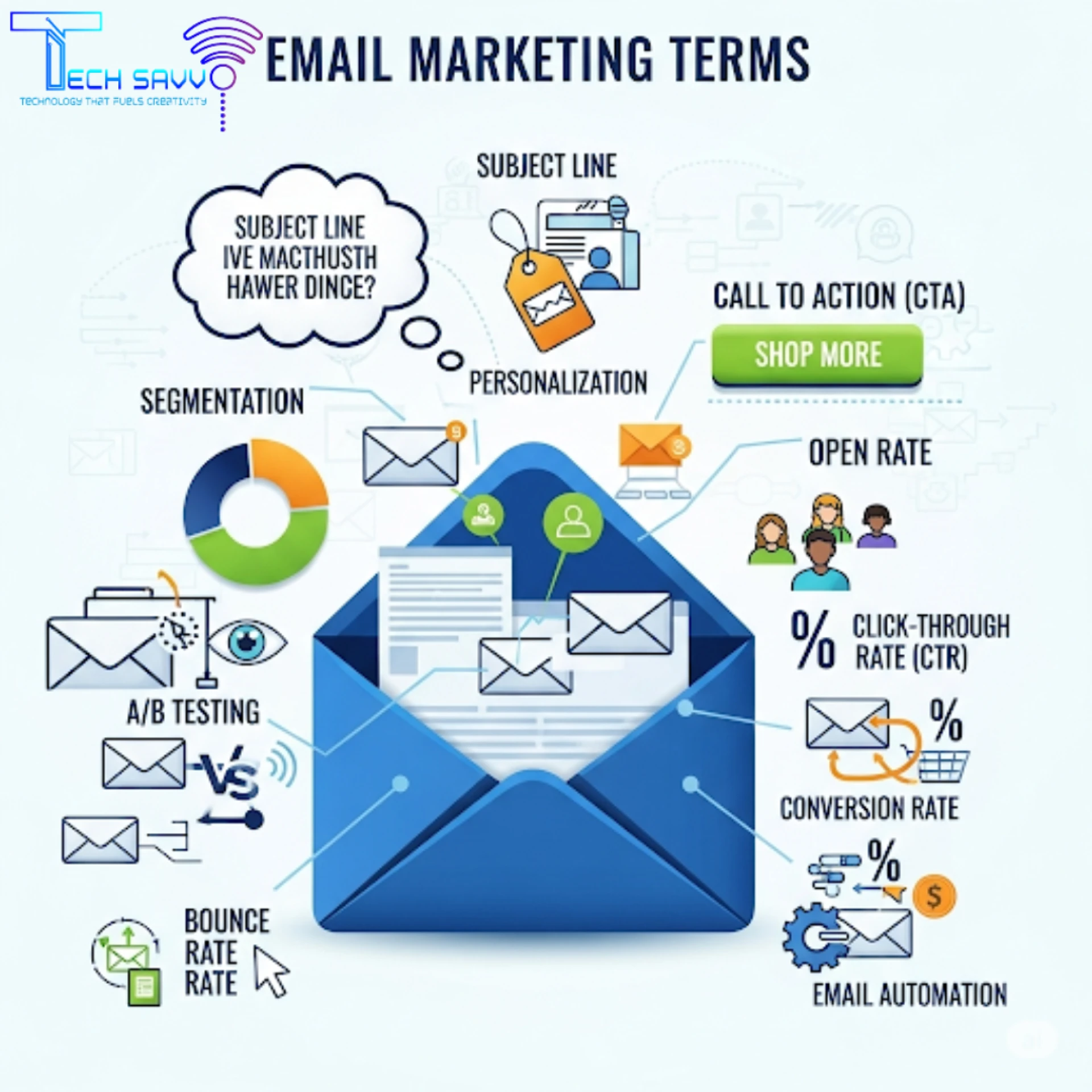
A/B Test (Split Test): A method of comparing two versions of an email (e.g., different subject lines, CTAs, or designs) to see which one performs better with your audience.
Acceptance Rate: The percentage of emails that a mail server successfully accepts for delivery.
Bounce Rate: The percentage of emails that could not be delivered to a recipient's inbox. Bounces are categorized as hard bounces (permanent failures due to an invalid or non-existent address) or soft bounces (temporary failures, like a full inbox).
Click-Through Rate (CTR): The percentage of recipients who click on one or more links within your email. It measures how engaging your content is.
Conversion Rate: The percentage of recipients who complete a desired action after clicking a link in your email, such as making a purchase or filling out a form.
Open Rate: The percentage of recipients who open your email. It’s a key indicator of the effectiveness of your subject line.
Unique Clicks: The number of individual recipients who click a link in your email, regardless of how many times they click it.
Unsubscribe Rate: The percentage of recipients who opt out of your email list after receiving a specific email.
List Management & Deliverability
- Blacklist: A real-time list of IP addresses or domains identified as sources of spam, which can harm your sender reputation and email deliverability.
- Double Opt-In: A two-step process where a new subscriber must first sign up and then confirm their subscription by clicking a link in a confirmation email. This ensures a high-quality, engaged list.
- Email Service Provider (ESP): A company that provides a platform for sending, managing, and tracking email campaigns.
- Hard Bounce: A permanent delivery failure. These addresses should be removed from your list immediately to protect your sender reputation.
- House List (Retention List): A high-value, permission-based email list that you have built yourself with opt-in subscribers.
- IP Warmup: The process of gradually increasing the volume of emails sent from a new IP address to build a good reputation with internet service providers (ISP s).
- List Segmentation: The practice of dividing your email list into smaller, more targeted groups based on specific criteria like demographics, behavior, or location.
- Opt-In: The act of a person giving permission to receive marketing emails from a business.
- Soft Bounce: A temporary delivery failure, such as a recipient's inbox being full or a server being down. You can attempt to resend to these addresses.
- Spam: Unsolicited, irrelevant, or inappropriate commercial email sent in bulk.
- Spam Trap: An email address used by anti-spam organizations to identify senders who are using improper list-building techniques.
- Whitelist: A list of approved senders whose emails are allowed to bypass a recipient's spam filter.
Legal & Technical Terms
- CAN-SPAM Act: The U.S. law that sets the rules for commercial email, requiring things like clear opt-out options and a physical mailing address.
- CASL (Canadian Anti-Spam Legislation): A Canadian law with strict rules regarding commercial electronic messages, including the need for express consent from recipients.
- Dedicated IP: An IP address used exclusively by a single sender, which gives them complete control over their sender reputation.
- DKIM (Domain Keys Identified Mail): An email authentication method that uses a digital signature to verify that an email was sent from an authorized domain.
- SPF (Sender Policy Framework): An email authentication protocol that allows a sender's domain to specify which mail servers are authorized to send email on its behalf.
Campaign & Content Terms
- Autoresponder: A series of automated emails that are triggered by a specific event, like a new subscriber signing up for a newsletter.
- Call-to-Action (CTA): A phrase or button that encourages the recipient to take a specific action, such as "Shop Now" or "Download the Guide."
- Drip Campaign: A series of pre-written, automated emails sent to a subscriber over a specific period. It is often used for lead nurturing.
- Dynamic Content: Email content that changes automatically based on the recipient's personal data or behavior, such as their name, location, or past purchases.
- Email Campaign: A single email or a series of emails designed to achieve a specific marketing goal.
- HTML Email: An email that uses Hypertext Markup Language to create a visually rich design with images, colors, and specific fonts.
- Landing Page: The web page a subscriber is directed to after clicking a CTA in an email.
- Personalization: The practice of adding custom elements to emails to make them more relevant to the individual recipient.
- Plain Text Email: A simple email with no formatting, images, or special fonts.
- Transactional Email: An automated email sent in response to a specific action, such as a purchase confirmation or a password reset.
By getting to grips with this glossary, you'll be able to confidently explore the world of email marketing. It can also help you enhance the effectiveness of your campaigns and make sure your messages always land in front of the right group of people.