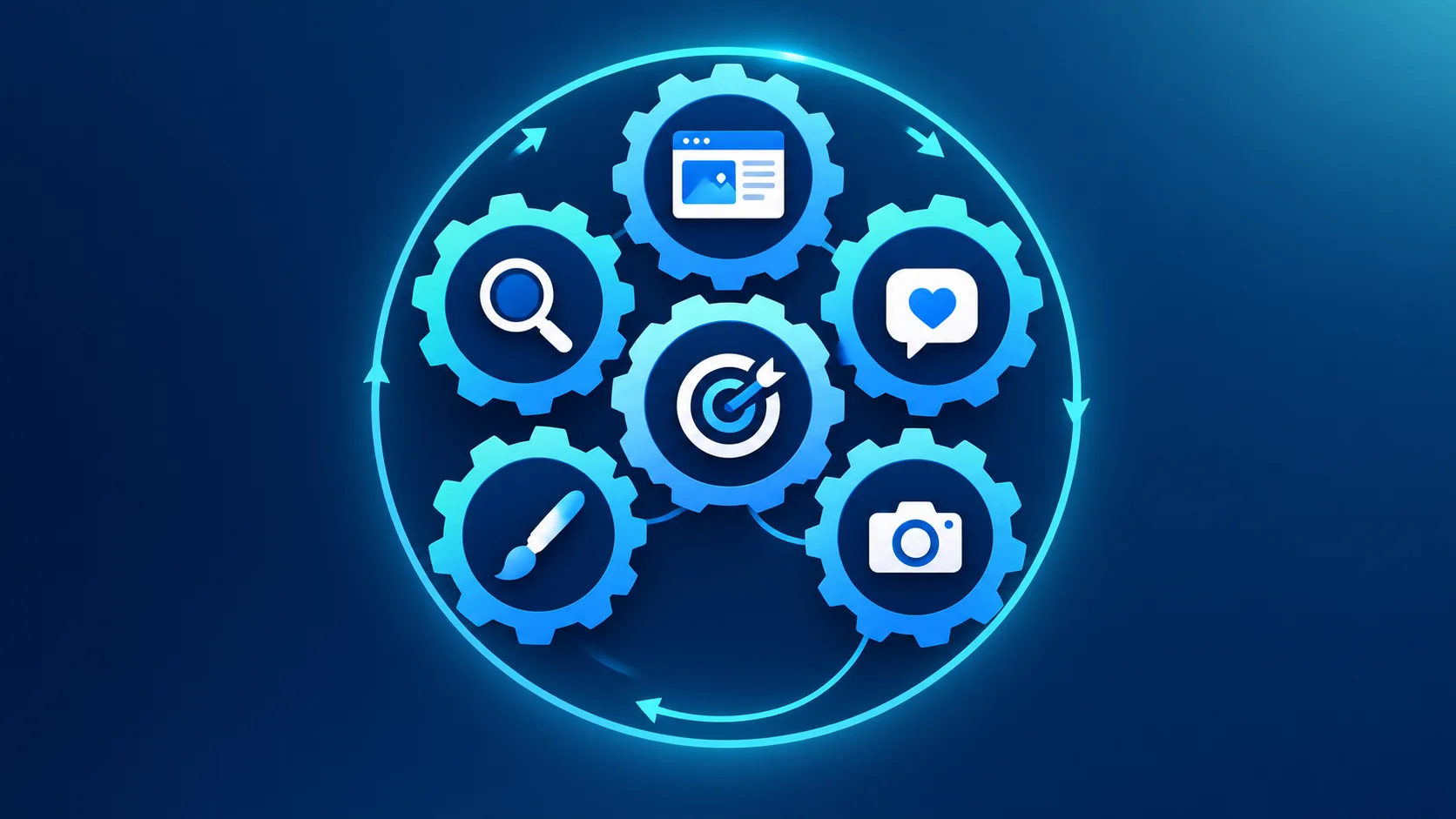

In recent years, businesses across industries have faced increasing pressure to manage larger volumes of customer data, produce content faster, and maintain consistent engagement across multiple digital platforms. As marketing operations become more complex, many organizations are turning to intelligent automation to improve efficiency without sacrificing quality. One approach gaining attention is the use of บริการ AI Marketing to streamline repetitive tasks and support decision-making processes.
AI-driven marketing tools are no longer limited to large enterprises with extensive technical resources. Companies of different sizes now use AI technologies to analyze customer behavior, automate workflows, personalize communication, and optimize campaign performance. Rather than replacing human marketers, these systems are often used to support strategic planning and reduce operational burdens.
This article explores how AI marketing solutions simplify modern marketing operations, the practical benefits they provide, and the considerations businesses should evaluate before implementation.
Understanding AI Marketing in Modern Business
Artificial intelligence in marketing refers to the use of machine learning, predictive analytics, natural language processing, and automation technologies to improve marketing activities. These systems analyze large amounts of data, identify patterns, and generate insights that help marketers make informed decisions.
Traditional marketing operations often involve manual data analysis, repetitive reporting, content scheduling, audience segmentation, and campaign adjustments. AI tools can automate many of these functions while improving speed and consistency.
Common AI marketing functions include:
- Automated email campaigns
- Customer segmentation
- Predictive analytics
- Personalized recommendations
- Chatbots and customer support
- Social media scheduling
- Content optimization
- Advertising performance analysis
By integrating these capabilities into daily workflows, organizations can reduce time-consuming manual work and focus more on strategic planning.
The Growing Complexity of Marketing Operations
Digital marketing environments have evolved significantly over the past decade. Businesses now operate across websites, search engines, social platforms, email campaigns, and e-commerce channels simultaneously.
This complexity creates several operational challenges:
Managing Large Volumes of Data
Modern marketing campaigns generate enormous amounts of customer data. Tracking user behavior, conversion rates, engagement metrics, and purchasing patterns manually can become overwhelming.
AI systems help organize and analyze this information in real time, allowing marketers to identify trends more efficiently.
Maintaining Consistent Customer Experiences
Consumers expect personalized interactions regardless of the platform they use. Maintaining consistency across multiple channels can be difficult when teams rely on disconnected tools or manual processes.
AI solutions help centralize customer insights and automate personalized communication at scale.
Increasing Demand for Content Production
Marketing teams often need to produce articles, advertisements, social media posts, videos, and email campaigns continuously. Meeting these demands manually can strain resources.
AI-assisted content tools can support ideation, optimization, and scheduling, reducing production bottlenecks.
Adapting Quickly to Market Changes
Consumer preferences and digital trends shift rapidly. AI-powered analytics can detect performance changes earlier and recommend adjustments before campaigns lose effectiveness.
How AI Marketing Simplifies Operational Workflows
AI technologies support marketing operations in several practical ways. Instead of focusing only on automation, businesses often benefit from improved organization, faster execution, and better use of resources.
Automated Data Analysis
One of the most valuable functions of AI in marketing is automated data processing.
Traditional reporting often requires teams to gather information from multiple platforms manually. AI tools can consolidate data automatically and generate insights within minutes.
This allows marketers to:
- Monitor campaign performance more efficiently
- Identify customer behavior trends
- Detect underperforming channels
- Improve reporting accuracy
- Reduce manual spreadsheet work
Automated analytics also help organizations make faster decisions based on real-time information rather than delayed reporting cycles.
Improved Audience Segmentation
Customer segmentation is essential for targeted marketing. However, manually dividing audiences based on demographics or behavior can be time-intensive and less accurate.
AI systems analyze customer interactions, purchase histories, browsing patterns, and engagement metrics to create more refined audience segments.
This enables businesses to:
- Deliver more relevant content
- Improve email targeting
- Personalize advertising campaigns
- Increase customer engagement
- Reduce irrelevant messaging
More precise segmentation often leads to improved marketing efficiency without increasing operational workload.
Personalized Customer Communication
Personalization has become a major expectation among digital consumers. AI marketing tools support personalization by analyzing customer preferences and behavior patterns automatically.
Examples include:
- Product recommendations
- Personalized email subject lines
- Dynamic website content
- Customized advertisements
- AI-powered chat support
Rather than creating individual campaigns manually for each audience group, marketers can use AI systems to automate personalization at scale.
This simplifies campaign management while improving the customer experience.
Streamlined Content Management
Content creation remains one of the most resource-intensive aspects of digital marketing. AI-assisted tools can help streamline parts of the process without eliminating human oversight.
AI systems may support:
- Topic research
- Keyword analysis
- Grammar improvement
- Content optimization
- Social media caption generation
- Content scheduling
These tools help marketing teams maintain consistency and reduce repetitive editing tasks.
Human review remains important, particularly for maintaining brand tone, accuracy, and ethical standards. However, AI support can significantly reduce production delays.
Enhanced Marketing Automation
Marketing automation platforms have existed for years, but AI introduces more advanced capabilities.
Traditional automation follows fixed rules. AI-powered systems can adapt based on customer behavior and campaign performance.
For example, AI can:
- Trigger emails based on user actions
- Predict the best time to send messages
- Adjust advertising bids automatically
- Recommend campaign modifications
- Optimize customer journeys
This flexibility helps organizations operate more efficiently while maintaining relevant communication.
Faster Decision-Making Through Predictive Analytics
Predictive analytics allows businesses to forecast potential outcomes using historical data and machine learning models.
AI tools help marketers anticipate:
- Customer churn risks
- Future purchasing behavior
- Campaign performance trends
- Seasonal demand fluctuations
- Lead conversion probabilities
These insights support proactive decision-making rather than reactive adjustments.
As a result, businesses can allocate budgets more effectively and reduce operational uncertainty.
Reducing Repetitive Administrative Tasks
Many marketing teams spend considerable time on repetitive administrative activities such as:
- Scheduling posts
- Updating reports
- Organizing leads
- Responding to common inquiries
- Monitoring campaign metrics
AI automation reduces the burden of these repetitive tasks, allowing teams to focus on strategic and creative responsibilities.
This operational efficiency can improve productivity without necessarily expanding team size.
Supporting Better Customer Service
Customer interactions increasingly occur through digital platforms, requiring faster response times and continuous availability.
AI-powered chatbots and virtual assistants help businesses handle routine customer inquiries more efficiently.
These systems can:
- Answer frequently asked questions
- Provide product recommendations
- Route support requests
- Assist with order tracking
- Operate outside business hours
Although human support remains important for complex issues, AI tools can improve response efficiency and reduce workload for support teams.
Challenges Businesses Should Consider
While AI marketing solutions offer operational advantages, implementation also comes with challenges.
Data Privacy and Compliance
AI systems rely heavily on customer data. Businesses must ensure compliance with privacy regulations and maintain transparent data practices.
Organizations should establish clear policies regarding:
- Data collection
- Consent management
- Information storage
- Security measures
- Ethical AI usage
Failure to manage data responsibly can damage customer trust.
Integration With Existing Systems
Some companies use multiple marketing platforms simultaneously. Integrating AI tools into existing workflows may require technical adjustments and staff training.
Compatibility issues can affect implementation speed and operational efficiency if not planned carefully.
Maintaining Human Oversight
AI systems improve efficiency, but they are not fully independent decision-makers.
Human oversight remains necessary for:
- Strategic planning
- Brand messaging
- Ethical considerations
- Creative direction
- Relationship management
Businesses that rely entirely on automation may risk producing impersonal or inaccurate communication.
Employee Training and Adaptation
Introducing AI technologies often changes internal workflows. Teams may need training to use new systems effectively.
Successful implementation usually involves:
- Staff education
- Workflow adjustments
- Clear operational guidelines
- Ongoing performance evaluation
Organizations that invest in training often achieve smoother adoption and better long-term results.
Industries Benefiting From AI Marketing Solutions
AI marketing technologies are being adopted across various industries due to their flexibility and scalability.
Examples include:
E-commerce
Retail businesses use AI for product recommendations, customer segmentation, and automated advertising optimization.
Healthcare
Healthcare providers apply AI tools for patient communication, appointment reminders, and educational content distribution.
Finance
Financial institutions use predictive analytics to improve customer targeting and retention strategies.
Hospitality
Hotels and travel companies utilize AI chatbots, personalized offers, and automated booking communication.
Education
Educational organizations use AI-driven email campaigns and student engagement analysis to improve communication strategies.
The Future of AI in Marketing Operations
AI marketing technologies are expected to continue evolving as machine learning models become more advanced.
Future developments may include:
- More accurate predictive analytics
- Improved conversational AI
- Advanced personalization
- Enhanced voice search optimization
- Better cross-platform integration
- Real-time adaptive campaigns
However, the role of human marketers will likely remain essential. Creativity, emotional intelligence, ethical judgment, and strategic thinking are areas where human expertise continues to play a critical role.
Rather than replacing professionals, AI is increasingly viewed as a tool that supports operational efficiency and informed decision-making.
Conclusion
Marketing operations have become increasingly complex due to the expansion of digital platforms, growing customer expectations, and rising data volumes. AI marketing solutions help businesses manage these challenges more effectively by automating repetitive processes, improving data analysis, supporting personalization, and streamlining workflows.
Organizations that implement AI thoughtfully can improve operational efficiency while maintaining strategic control and human oversight. Although challenges such as data privacy, integration, and employee adaptation remain important considerations, AI technologies continue to provide practical value across many industries.
As digital marketing environments continue to evolve, AI-supported operations may become a standard component of modern marketing management rather than a specialized advantage.
FAQs
What is AI marketing?
AI marketing refers to the use of artificial intelligence technologies such as machine learning, automation, and predictive analytics to improve marketing activities and operational efficiency.
How does AI help simplify marketing operations?
AI simplifies operations by automating repetitive tasks, analyzing customer data faster, improving audience targeting, and supporting personalized communication across digital channels.
Can small businesses use AI marketing tools?
Yes. Many AI marketing platforms are now accessible to small and medium-sized businesses through cloud-based services and scalable pricing models.
Does AI replace human marketers?
No. AI supports marketers by handling repetitive processes and data analysis, but human expertise remains important for strategy, creativity, and decision-making.
What are the main challenges of implementing AI marketing?
Common challenges include data privacy concerns, system integration, employee training, and maintaining human oversight throughout automated processes.