Air conditioning installation represents one of the most significant home improvement investments Bay Area homeowners make, typically ranging from $3,500 to $12,000 depending on system type, capacity, and installation complexity. Yet many homeowners focus exclusively on upfront costs rather than understanding the complete financial picture that determines whether their investment delivers value or disappointment.
Smart homeowners approach air conditioning installation as a long-term financial decision requiring careful analysis of initial expenses, ongoing operational costs, potential energy savings, and equipment longevity. This comprehensive cost perspective reveals why premium installations often prove less expensive over time than budget alternatives promising attractive initial pricing.
Understanding the complete financial implications of your cooling investment decisions helps avoid costly mistakes while maximizing comfort, efficiency, and return on investment. For detailed technical guidance on the installation process itself, explore our comprehensive air conditioning installation guide covering everything from system selection to maintenance strategies.
Breaking Down Air Conditioning Installation Costs
Professional air conditioning installation encompasses far more than equipment purchase price. Understanding all cost components helps homeowners budget accurately while avoiding surprise expenses that derail projects or force compromising decisions.
Equipment Costs (40-60% of total)
System pricing varies dramatically based on efficiency ratings, brand reputation, capacity requirements, and feature sets. Entry-level 14 SEER systems start around $1,500-$2,500 for equipment alone, while premium 20+ SEER models with advanced features range from $4,000-$8,000 or more. Heat pump systems providing both heating and cooling typically cost 10-20% more than cooling-only air conditioners with similar specifications.
Selecting appropriate equipment requires balancing efficiency benefits against budget constraints. Higher SEER ratings deliver genuine energy savings, but the incremental cost between efficiency levels doesn't always justify the marginal savings improvement for every situation.
Labor and Installation (30-40% of total)
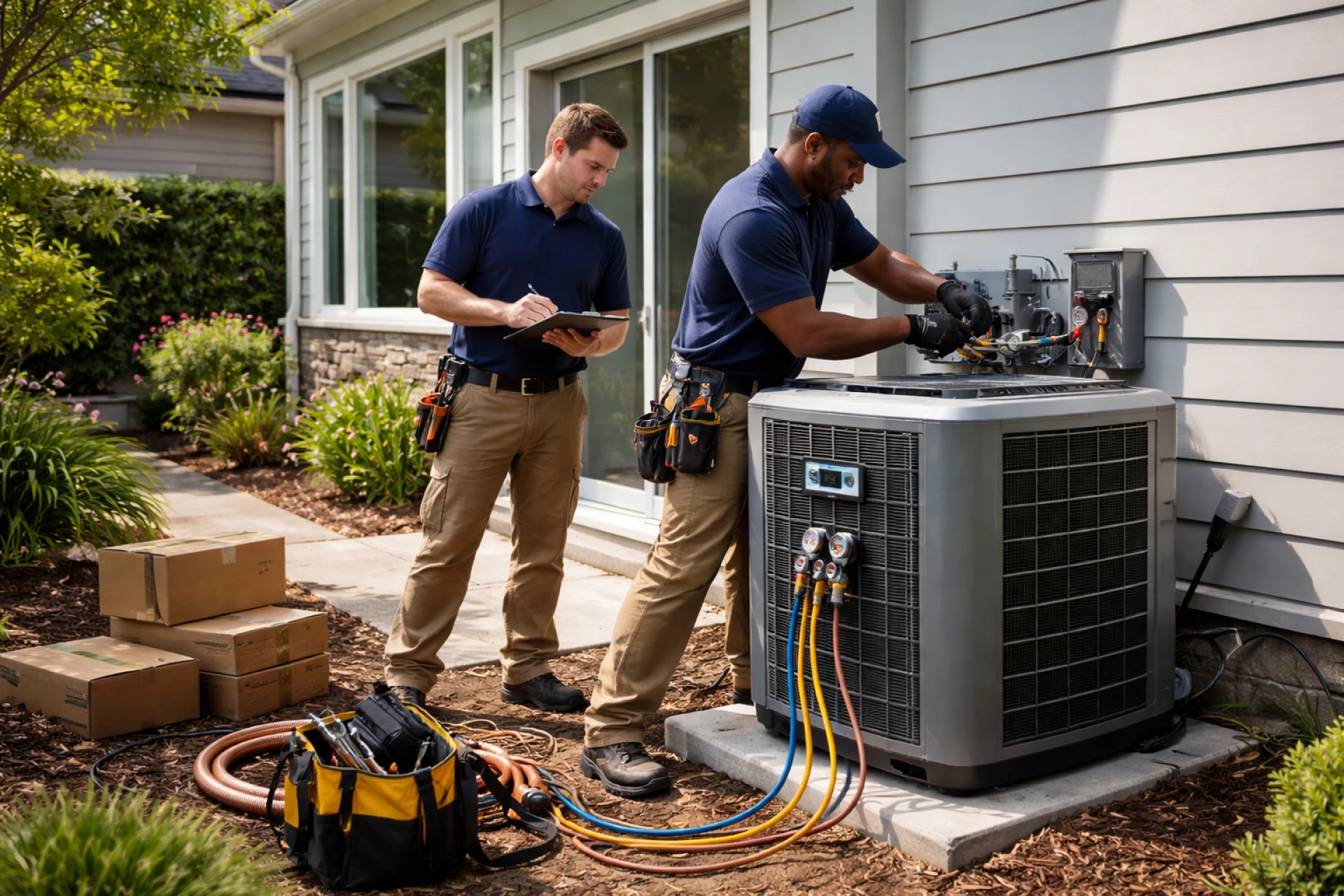
Professional installation labor costs reflect the skill, experience, and liability that licensed contractors bring to projects. Expect labor charges of $1,500-$4,000 depending on installation complexity, accessibility challenges, and local market rates. This investment includes system removal and disposal, new equipment installation, refrigerant charging, electrical connections, thermostat integration, and comprehensive testing.
Attempting DIY air conditioning installation or hiring unlicensed contractors saves money initially but typically creates problems costing far more than professional installation fees. Improper refrigerant charging alone can reduce efficiency by 20-30% while accelerating component wear that shortens equipment lifespan by years.
Supporting Infrastructure (10-30% of total)
Many installations require addressing existing infrastructure inadequacies before new equipment operates optimally. Common additional expenses include electrical panel upgrades ($500-$2,000), dedicated circuit installation ($200-$500), thermostat replacement ($150-$400), and condensate drain modifications ($100-$300).
Working with experienced pro air conditioning specialists ensures accurate project scoping that identifies necessary infrastructure work before installation begins, preventing mid-project surprises and budget overruns.
The Hidden Cost of Neglecting Air Duct Inspection
Homeowners investing thousands in premium air conditioning equipment often overlook the distribution system delivering cooled air throughout their homes. This oversight creates a paradox where high-efficiency equipment underperforms because compromised ductwork wastes the very efficiency gains justifying premium equipment purchases.
Professional air duct inspection before installation reveals problems that sabotage new system performance:
- Duct leakage allowing 20-30% of cooled air to escape into unconditioned spaces
- Inadequate insulation causing temperature loss during distribution
- Improper sizing creating restricted airflow and reduced efficiency
- Accumulated debris restricting airflow and circulating contaminants
According to research from Lawrence Berkeley National Laboratory, typical residential duct systems lose 25-40% of heating and cooling energy through leaks and poor insulation. Installing new air conditioning equipment while ignoring these problems means your efficiency investment literally escapes through holes in your ductwork.
Comprehensive air duct cleaning services combined with sealing and insulation improvements typically cost $1,000-$2,500 but deliver immediate efficiency improvements of 15-25%. This investment pays for itself through reduced energy consumption while ensuring your new air conditioning system achieves its rated performance specifications.
The U.S. Department of Energy confirms that sealing and insulating ducts can improve HVAC system efficiency by up to 20%, directly reducing monthly cooling costs while extending equipment lifespan through reduced operating hours achieving the same comfort levels.
Calculating True Return on Investment
Sophisticated air conditioning installation decisions evaluate total cost of ownership rather than focusing exclusively on initial purchase price. This comprehensive analysis reveals why premium equipment and professional installation frequently deliver superior financial returns despite higher upfront costs.
Energy Savings Analysis
Bay Area homeowners typically spend $300-$900 annually on air conditioning energy costs depending on home size, insulation quality, and system efficiency. Upgrading from a 10 SEER system to 16 SEER equipment reduces cooling energy consumption by approximately 37.5%, translating to annual savings of $110-$340 for typical homes.
These savings compound annually throughout the system's 15-20 year lifespan, totaling $1,650-$6,800 in reduced energy costs. When combined with federal tax credits up to $300 and utility rebates averaging $200-$500 for high-efficiency equipment, the net cost difference between budget and premium systems narrows substantially.
Maintenance and Repair Cost Differences
Equipment quality significantly impacts maintenance requirements and repair frequency over system lifespan. Budget systems using lower-grade components typically require more frequent air conditioner repair services, with average annual maintenance and repair costs of $200-$400. Premium systems with superior components and better warranties average $100-$200 annually in maintenance and repair expenses.
Over a typical 15-year lifespan, this difference amounts to $1,500-$3,000 in reduced service costs, further closing the gap between budget and premium equipment total ownership expenses.
Equipment Longevity Considerations
Quality air conditioning installation using premium equipment typically delivers 15-20 years of reliable service with proper maintenance. Budget equipment and substandard installation frequently fail within 10-12 years, requiring premature replacement that eliminates any initial cost savings.
The difference between 12-year and 18-year equipment life means replacing systems 50% more frequently over a 30-year homeownership period. This premature replacement cycle dramatically increases total cooling costs while creating inconvenience and disruption from emergency system failures.
Financing Options and Payment Strategies
Understanding that air conditioning installation represents significant expense, many contractors offer financing programs making premium equipment accessible despite higher upfront costs. These financing options typically include promotional periods with deferred interest, low monthly payments extending 36-60 months, and flexible approval criteria accommodating various credit situations.
Evaluating financing offers requires careful attention to interest rates, promotional period terms, and total payment amounts. Zero-interest promotional financing can make premium equipment financially attractive when monthly savings from reduced energy consumption offset payment amounts.
Additionally, many utility companies offer rebate programs for high-efficiency equipment installations, while federal tax credits provide additional financial incentives for qualifying systems. Climate Pro's HVAC services help homeowners navigate available incentives, maximizing financial benefits from efficiency investments.
Seasonal Timing and Cost Optimization
Air conditioning installation costs fluctuate based on seasonal demand patterns. Peak summer months when systems fail most frequently create high demand, often resulting in premium pricing, extended scheduling delays, and rushed installations as contractors juggle multiple emergency replacements.
Strategic homeowners schedule installations during shoulder seasons (spring and fall) when demand softens and contractors offer promotional pricing to maintain steady workflow. This timing flexibility typically saves 10-20% on total project costs while ensuring installers have adequate time for quality workmanship rather than rushing between emergency calls.
Planning air conditioning installation before urgent need arises also allows thorough contractor research, multiple competitive bids, and careful evaluation of equipment options rather than making hasty decisions during system failures in extreme weather.
Making Informed Investment Decisions
Air conditioning installation complexity extends beyond simple equipment purchase and connection. The financial implications of system selection, installation quality, and infrastructure adequacy determine whether your investment delivers value or creates ongoing problems costing far more than initial savings from budget choices.
Smart homeowners approach cooling system investments by evaluating total ownership costs including equipment, installation, energy consumption, maintenance requirements, and expected lifespan. This comprehensive analysis typically reveals that premium equipment with professional installation delivers superior long-term value despite higher initial costs.
Working with established professionals like Climate Pro's Heating and Cooling ensures your air conditioning installation receives the expertise, quality equipment, and attention to detail necessary for optimal performance and maximum return on investment.
Understanding the complete financial picture empowers informed decisions that protect your investment while delivering the comfort, efficiency, and reliability your home deserves. For homeowners wondering whether repair or replacement makes more financial sense, comparing air conditioning installation versus air conditioner repair services clarifies when complete system replacement justifies the investment.
Ready to make a smart investment in your home comfort? Contact Climate Pro's experienced team for transparent pricing, honest equipment recommendations, and professional installation that maximizes your return while delivering superior cooling performance for years to come.