Today, technology plays a central role in shaping how modern enterprises operate and grow. Across industries, organizations are redefining their business models, customer experiences, and operational capabilities with next-generation technologies. These innovations are fundamentally transforming how businesses operate, compete, and scale in a rapidly evolving global marketplace.
This blog explores the most influential tech innovations that are transforming enterprises and setting new standards for efficiency, agility, and intelligence.
1. Artificial Intelligence and Machine Learning
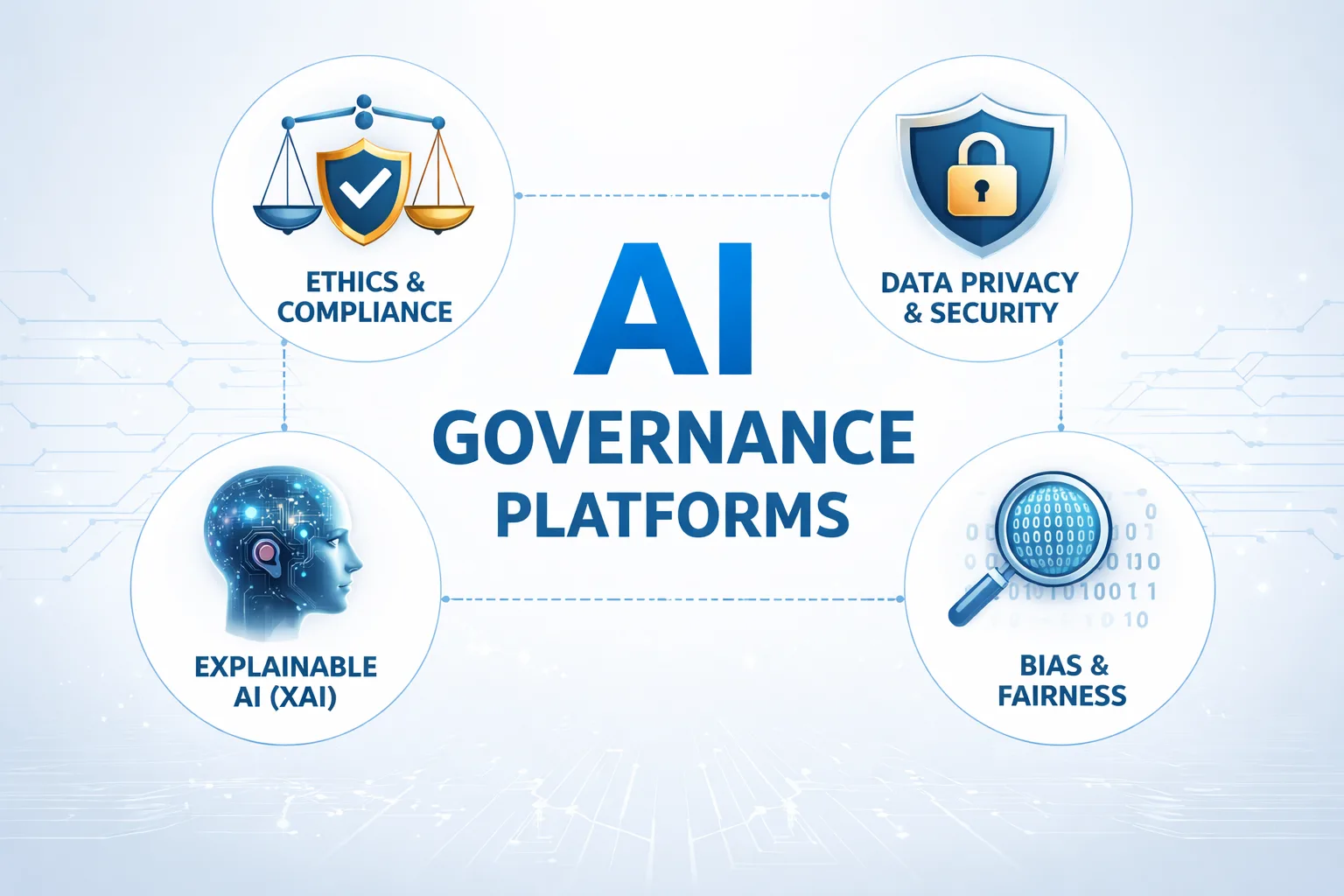
Artificial Intelligence (AI) and Machine Learning (ML) transform how enterprises operate, innovate, and engage with customers. Today, generative AI solutions are increasingly being used by organizations to automate content creation, speed up product development, and improve decision-making. These models support insight generation, personalization of user experiences, and the simulation of various business scenarios with great accuracy. Through the integration of AI within each layer from customer service to analytics, an organization benefits from deeper intelligence, speed, and efficiency.
2. Internet of Things (IoT)
IoT has revolutionized how businesses collect and use real-time data. Devices, sensors, and systems contribute to providing operational visibility that was previously unattainable.
IoT innovations are greatly effective in industries like manufacturing, logistics, healthcare, and retail. For example:
- Supply chains monitor shipments in real time.
- Hospitals monitor patient condition remotely.
- Retailers enhance inventory and footfall insights.
- Factories use IoT sensors for predictive maintenance.
IoT integrated with analytics and AI will enable enterprises to automate workflows, improve operational accuracy, and enhance customer experiences.
3. Cloud Computing
Cloud computing enables firms to scale up operations rapidly and simplify their infrastructure. Enterprises can design flexible architectures, optimize their workloads, and ensure seamless data accessibility across teams with modern cloud engineering services. These services empower organizations to adopt hybrid and multi-cloud ecosystems, improve collaboration, and enhance security. As remote work and digital ecosystems grow, the cloud continues to drive modernization focused on scalability, resilience, and innovation.
4. Blockchain Technology
Blockchain is now reforming enterprise operations, especially in fields where security, transparency, and traceability are critical.
Enterprises are adopting blockchain for:
- Smart contracts, which automate legal workflows
- Fraud prevention
- Secure electronic transactions
- Tamper-proof records of data
- Supply chain transparency
The decentralized nature of blockchain ensures data integrity without the need for intermediaries.
5. Robotic Process Automation (RPA)
RPA automates repetitive, rule-based tasks at incredible speeds and accuracy. This technology frees up human talent to focus on creativity, strategy, and innovation.
Enterprises use RPA for tasks like:
- Invoice processing
- Data entry
- Report generation
- Customer onboarding
- Compliance checks
6. Data Analytics and Decision Intelligence
Data has become one of the most important assets of any kind for modern enterprises if used effectively. Advanced analytics combined with decision intelligence empowers organizations to make meaningful insights from large volumes and complex sets of data.
Analytics help businesses optimize operations, predict trends, make customer experiences more personal, and boost overall performance across every function. Predictive and prescriptive analytics recommend actions that maximize outcomes. Across marketing, finance, supply chain, and HR, data-driven decision-making has become the default strategy for high-performing enterprises.
7. Cybersecurity Innovations
As digital operations expand, cyber threats also continue to grow. As a result, modern organizations are prioritizing next-generation cybersecurity solutions to protect sensitive information and retain consumer confidence.
Next-generation solutions include:
- Zero-Trust architecture
- AI-powered threat detection
- Identity and access management
- Behavioral analytics
- Multilayer encryption
These innovations ensure that enterprises stay resilient against growing cyber risks and maintain compliance with regulatory standards.
8. Augmented Reality (AR) and Virtual Reality (VR)
AR and VR are changing enterprise processes by merging immersive technologies with real-world applications. Retail, education, real estate, and manufacturing are using AR/VR to enhance training, improve product visualization, and increase customer engagement.
Some of its examples include:
- Virtual plant tours for training
- AR overlays for remote assistance
- VR simulations for employee training
- Immersive customer product demos
These technologies empower organizations with higher accuracy, reduced training costs, and more engaging user experiences.
Conclusion
For today’s businesses, innovation has become a necessity to stay competitive. Technologies such as AI, cloud, IoT, analytics, blockchain, and AR/VR are not only transforming enterprise operations but also introducing entirely new ways of working.
Organizations that invest in these innovations will be better equipped to drive efficiency, superior customer experiences, and long-term growth. Enterprises of the future will be more connected, intelligent, secure, and adaptive.