
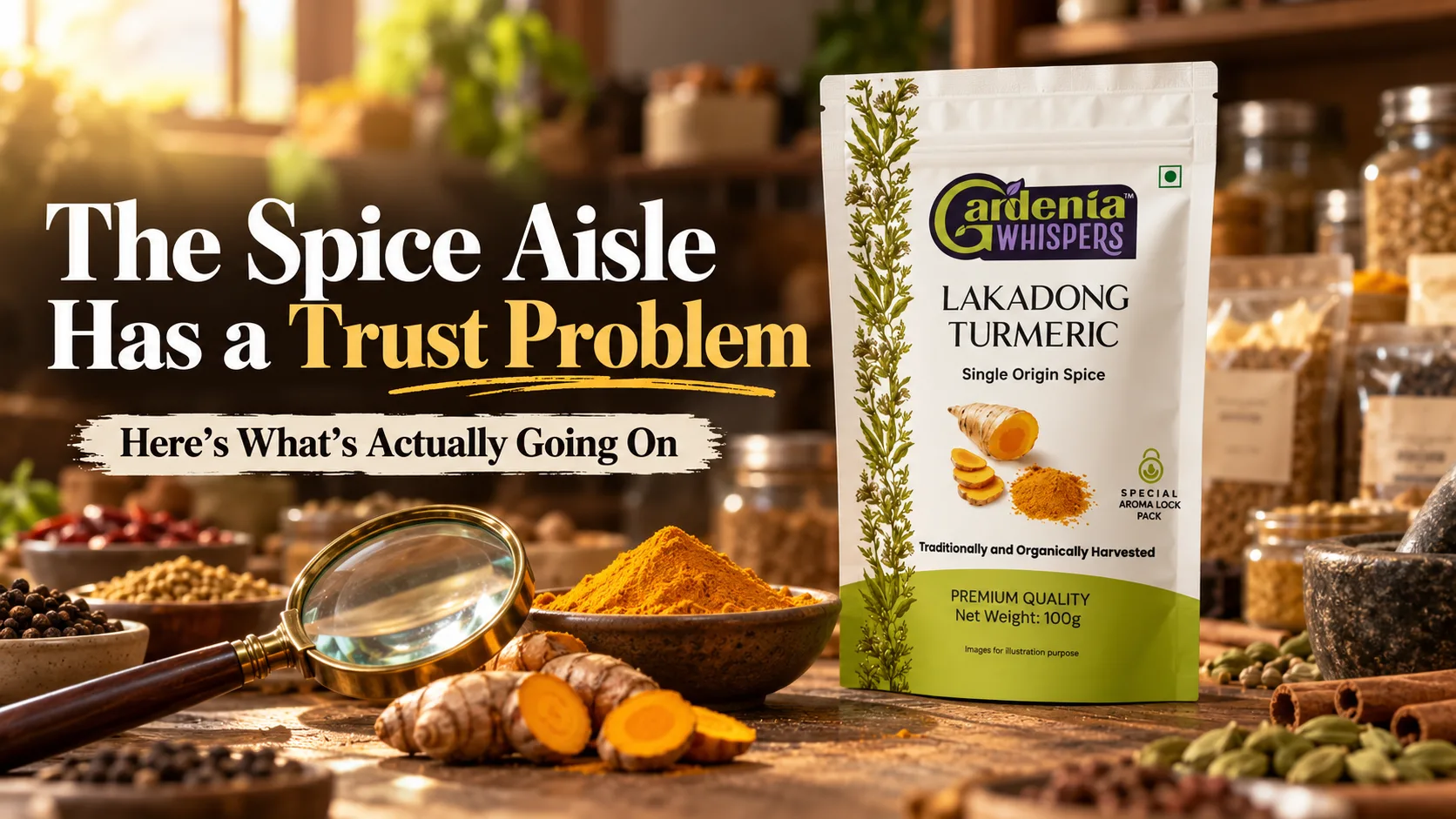
Most conversations about spice quality tend to zero in on a single ingredient at a time, but the reality is broader and a little more uncomfortable than that. Testing bodies and food safety reports have flagged adulteration across a range of commonly used spices not just one, but several with fillers, starch, and artificial colorants showing up in samples meant to be pure, single ingredients.
It's a trust problem that extends well beyond any one jar in the kitchen cabinet.
Why This Keeps Happening
Spices are particularly vulnerable to this kind of tampering for a fairly simple reason: once something is ground into a fine powder, it becomes much easier to disguise additions. A whole seed or root is hard to fake. A fine powder, especially one with a strong natural color or flavor already, is a much easier target for cutting corners, since small amounts of filler or dye can blend in without being obvious to the average buyer.
Combine that with long, often opaque supply chains, where a spice can pass through several hands before reaching a final package, and it becomes easier to understand how quality control gaps slip through.
What This Means for Everyday Shopping
For most people, this translates into a few practical lessons worth applying across the board, not just to one specific spice:
- Buy from sources that name their actual growing region, not vague "sourced from India" style labeling
- Be cautious of unusually bright or vivid coloring, which can indicate added dye rather than natural pigment
- Smell-test when possible; genuine spices tend to have a distinct, specific aroma that diluted versions often lack
- Avoid buying in bulk from unfamiliar sources purely because it's cheaper
Where Trustworthy Sourcing Actually Shows Up
This is where a brand's approach to sourcing becomes genuinely relevant, rather than just a marketing line. Gardenia Whispers builds its catalogue around naming specific growing regions rather than vague, generic sourcing claims their Whole Spices collection, for instance, gives buyers a harder-to-fake option by keeping spices in their raw, unprocessed form.
Whole vs Powdered: A Quick Practical Note
Whole spices remain the safer bet when traceability matters most, since tampering is far more visible in raw form. That said, daily cooking often calls for convenience, which is where a well sourced powdered option becomes useful the Powdered Spices range, including their Lakadong Turmeric Powder, is built around that same sourcing transparency, just in a more practical, ready-to-use format.
A Trust Issue Worth Taking Seriously
None of this means every spice on every shelf is compromised — plenty of sellers genuinely do the work of sourcing responsibly. But the scale of the adulteration problem across multiple common spices means it's worth treating sourcing as a genuine consideration, not an afterthought, the next time you're restocking your kitchen.