
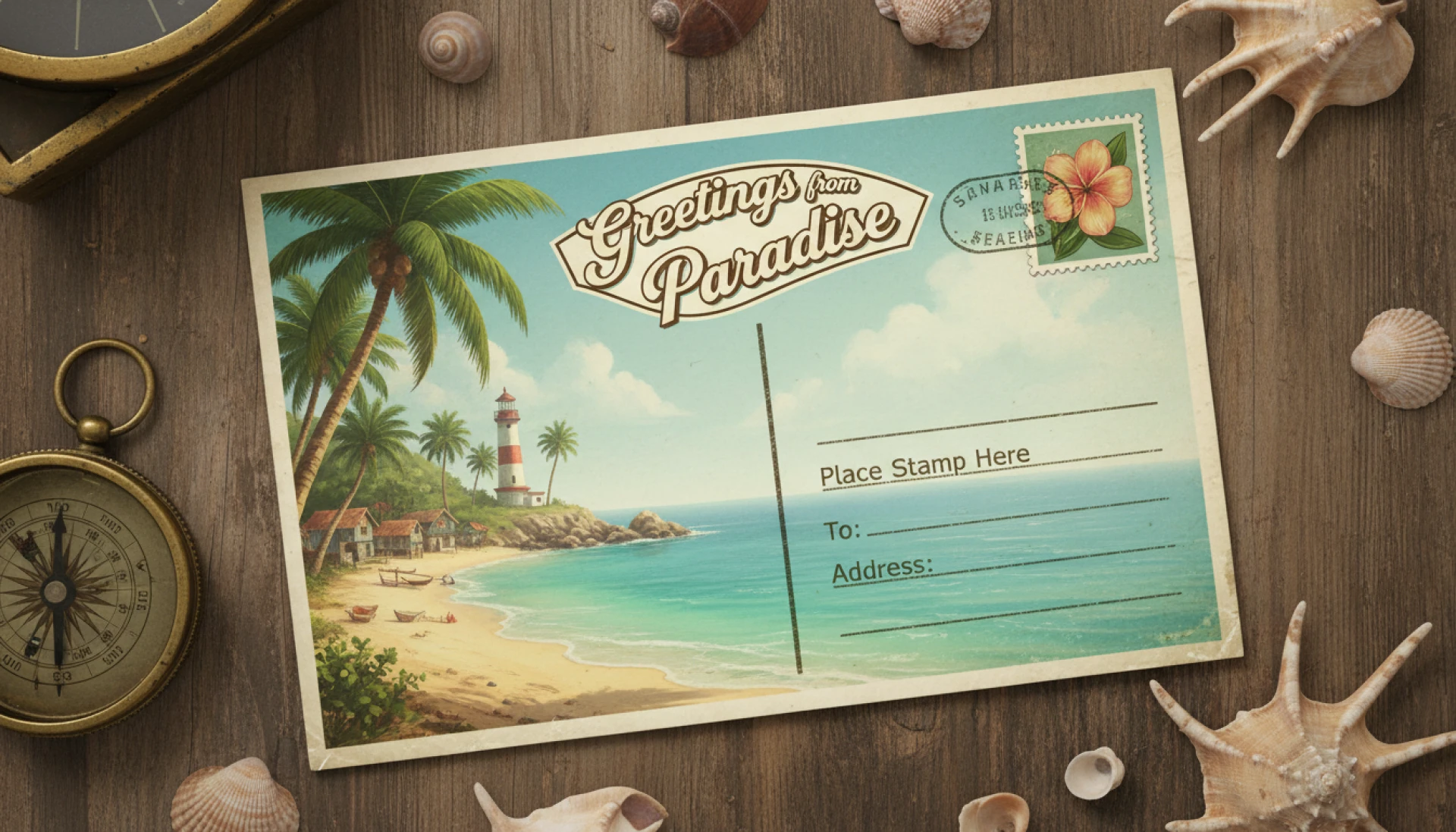
Postcard printing has evolved far beyond a basic marketing format.
In modern UK marketing environments, postcards are now treated as behavioural tools rather than static print pieces.
That shift matters because customer attention is no longer stable. It is fragmented, context-driven, and heavily influenced by physical and cognitive triggers.
So when brands ask why some postcards get noticed and others are ignored, the answer is rarely visual alone.
It sits in a mix of psychology, perception science, material behaviour, and attention economics.
Attention is a limited resource, not a guaranteed outcome
Customer attention in postcard printing works under a simple constraint: limitation.
A person cannot consciously process everything they see.
So the brain applies filtering mechanisms within milliseconds.
This filtering is based on:
- familiarity
- contrast
- perceived relevance
- physical context
- cognitive load at the moment of viewing
A postcard is competing not just with other marketing material, but with daily life itself — notifications, movement, conversations, and environmental noise.
This is why attention is earned in layers, not captured in a single moment.
The 3-stage attention model in postcard behaviour
Most effective postcard print campaigns unintentionally follow a predictable attention sequence.
Stage 1: Peripheral detection
The postcard is noticed without being read. Shape, colour, and placement dominate.
Stage 2: Cognitive pause
The brain decides whether the object is worth further inspection. This happens in fractions of a second.
Stage 3: Message decoding
Only after passing the first two filters does reading begin.
If a postcard fails at Stage 1 or Stage 2, the message never matters.
This is why attention science is more important than copywriting in early engagement.
Visual hierarchy as a neurological shortcut
In postcard printing UK campaigns, visual hierarchy is often treated as a design principle.
But in reality, it is a neurological efficiency tool.
The human brain prefers predictable structure. It reduces effort.
So when a postcard presents information in a structured order, the brain processes it faster and with less resistance.
Effective hierarchy typically follows:
- dominant focal point (headline or offer)
- secondary support (context or explanation)
- tertiary detail (contact or legal info)
When hierarchy is unclear, the brain spends more energy decoding than engaging.
That energy cost often results in disengagement.
Why contrast is more powerful than colour choice
Many assume colour selection drives attention.
But in practice, contrast drives attention more reliably than colour itself.
Contrast includes:
- light vs dark balance
- spacing density
- typography weight differences
- image vs text separation
- edge and margin clarity
A postcard with strong contrast can outperform a more colourful design if the visual separation is clearer.
The brain is drawn to distinction, not decoration.
This is why high-performing postcard printing often looks simpler, not more complex.
The role of cognitive load in print engagement
Cognitive load refers to how much mental effort is required to process information.
In postcard marketing, high cognitive load reduces engagement speed.
This happens when a postcard includes:
- too many messages at once
- dense paragraphs
- unclear visual order
- competing calls-to-action
- unnecessary design elements
The brain responds by delaying processing or ignoring the piece entirely.
Low cognitive load postcards feel “easy to understand” even before reading begins.
That feeling directly increases attention retention.
Physical touch as a subconscious trust signal
Unlike digital ads, postcards are physically handled.
This introduces tactile perception into the attention process.
The brain unconsciously evaluates:
- weight consistency
- surface texture
- rigidity
- print sharpness
- perceived quality of material
These factors influence trust before content is processed.
This is often referred to in print psychology as embodied credibility — where physical quality shapes message credibility.
A well-produced postcard is more likely to be read simply because it feels intentional.
Attention decay and the importance of repeated exposure
Attention is not static after first contact.
It decays or strengthens depending on repetition.
A postcard left on a desk, pinned on a board, or placed near daily-use objects continues to influence perception over time.
This creates a reinforcement loop:
- initial notice
- passive re-exposure
- familiarity development
- trust strengthening
- eventual action consideration
This is why postcard campaigns often outperform single-view digital impressions in long-term recall.
The physical environment becomes part of the campaign.
Micro-delays that determine engagement success
One of the least discussed aspects of postcard attention science is timing delay.
This refers to the brief moment between seeing and processing.
If a postcard causes even a slight delay in comprehension, engagement drops.
Delays are usually caused by:
- unclear headline structure
- cluttered layout
- poor spacing
- ambiguous message intent
The faster a postcard can be understood, the more likely it is to be acted upon.
Speed of comprehension is directly linked to attention success.
A comparison of attention response patterns
Postcard characteristic
Cognitive response
Attention outcome
Clear hierarchy + contrast
Fast recognition
High engagement
Dense layout + multiple messages
Processing delay
Low retention
Strong tactile quality
Trust signal activation
Higher reading likelihood
Weak physical build
Low credibility perception
Early discard
Repeated exposure
Familiarity building
Increased conversion probability
These responses are consistent across real-world postcard printing behaviour studies and campaign observations.
Why “attention grabbing” is often misunderstood
Many brands believe attention must be forced.
In reality, attention is more often guided than grabbed.
Forced attention (bright colours, excessive claims, clutter) may create momentary notice but weak retention.
Guided attention (clear structure, controlled focus, physical quality) creates longer engagement.
This is why subtle postcards often outperform aggressively designed ones in sustained campaigns.
Attention that feels natural is more likely to convert into action.
The role of environment in attention activation
A postcard does not exist in isolation.
It exists in environments:
- office desks
- kitchen counters
- retail spaces
- notice boards
- packaging inserts
Each environment affects attention differently.
A postcard placed in a low-distraction environment has a higher probability of repeated engagement.
This environmental dependency is often ignored in digital-first thinking.
But in print, environment is part of the medium itself.
Where most postcard print strategies misjudge attention
The most common mistake is assuming attention is a single moment.
In reality, attention is a sequence of micro-decisions.
Each decision either continues engagement or stops it.
- Do I notice this?
- Do I understand it quickly?
- Do I trust it physically?
- Do I keep it?
- Do I act on it later?
If any step fails, the chain breaks.
This is why effective postcard printing requires more than design skill — it requires behavioural understanding.
Final perspective: attention is engineered, not assumed
The science behind postcard printing shows a consistent truth: attention is structured, not accidental.
It is shaped by hierarchy, contrast, physical quality, repetition, and environmental placement.
When these factors align, postcards stop behaving like passive print and start functioning as active attention systems.
That is where real marketing performance begins — not in visibility, but in sustained cognitive engagement.
At I YOU PRINT, this principle is treated as a foundational layer of print planning, where attention is designed into the physical product itself rather than added as an afterthought.