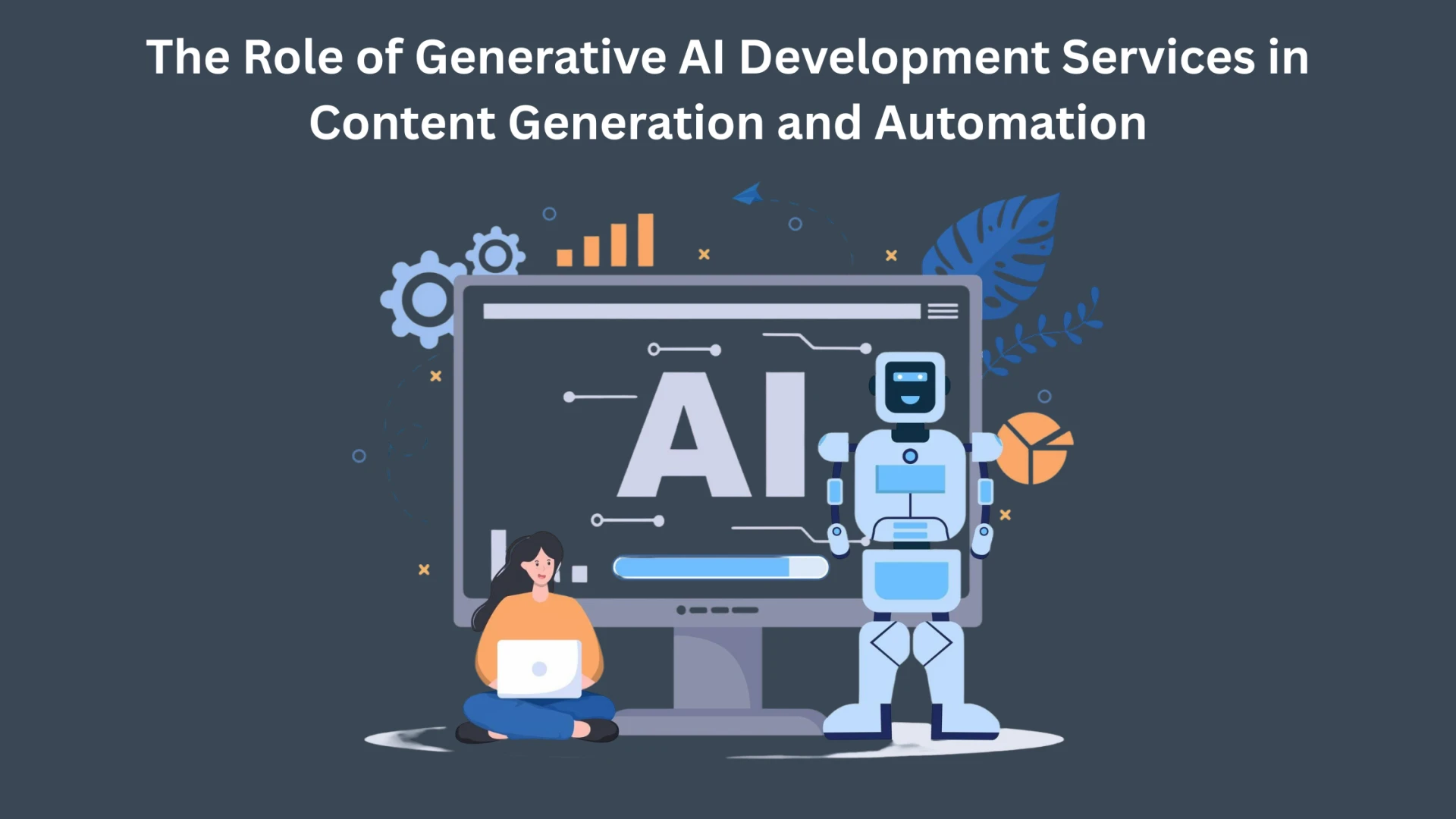
In the digital age, businesses and creators constantly want new solutions to meet the growing demand for high-quality content. Enter the generative AI- a transformational technique that has emerged as a leading player in automatic content creation processes. Generative AI development services are revolutionizing industries, which can enable rapid workflow, cost savings and unique creativity. This article examines the versatile role of these services in content generation and automation, exploring their ability, applications and implications.
Understanding Generative AI
Generative AI means AI systems that create new stuff like writing, images, songs, and videos. It's different from old-school AI that just follows set rules. Instead, generative AI uses fancy math tricks, deep learning setups like GANs, and special building blocks (think GPT and Dall-E) to make things.
These systems learn patterns from giant datasets and apply this knowledge to create an output, the original, human-like output. The capacity of liberal AI is huge, there are industries spread across industries such as entertainment, marketing, education and healthcare.
Core Functions of Generative AI Development Services
AI development services that are generative consist of a package with a range of tools, technologies, and skills in designing, training, and putting in place artificial intelligence systems that can create outputs with a touch of creativity themselves. These services typically focus on:
1. Content Creation: Automating the production of articles, blogs, social media posts, and other written content.
2. Visual and Graphic Design: Generating images, infographics, and designs tailored to specific themes or brand aesthetics.
3. Audio and Video Production: Crafting music compositions, voiceovers, and video sequences.
4. Data Augmentation: Enhancing datasets with synthetic data to improve AI model training.
5. Customization and Personalization: Tailoring outputs to individual preferences or specific audience segments.
Applications in Content Generation
1. Marketing and Advertising
Generative AI development services have become indispensable in creating marketing materials at scale. AI can:
- Generate engaging copy for advertisements and campaigns.
- Produce personalized email content based on customer data.
- Design visually appealing social media graphics and video snippets.
For instance, AI-driven tools can analyze a brand’s tone and style, ensuring that all generated content aligns with its identity.
2. Publishing and Journalism
In the publishing world, generative AI streamlines the creation of:
- News summaries and reports.
- Long-form articles and editorials.
- Translations and content localization.
These capabilities help publishers keep up with the fast-paced news cycle and expand their reach to global audiences.
3. E-Learning and Education
Educational institutions and e-learning platforms leverage generative AI to create:
- Interactive course materials and quizzes.
- Adaptive learning content tailored to individual student needs.
- Transcripts and summaries of lectures or webinars.
This fosters personalized learning experiences, making education more accessible and efficient.
4. Entertainment and Media
Generative AI plays a pivotal role in entertainment, enabling:
- Scriptwriting for films, TV shows, and video games.
- Virtual character creation and animations.
- Music composition and sound design.
By automating repetitive tasks, creators can focus on refining and enhancing their projects.
Automation Through Generative AI
Beyond content generation, generative AI excels in automating workflows. Key areas include:
1. Customer Support
AI-powered chatbots and virtual assistants provide:
- Instant responses to customer queries.
- Context-aware interactions, mimicking human empathy.
- Multilingual support to cater to diverse audiences.
This reduces response times and enhances customer satisfaction.
2. Business Operations
Generative AI optimizes processes by:
- Automating report generation and data visualization.
- Producing training materials for onboarding employees.
- Generating insights from complex datasets for strategic decision-making.
3. Creative Collaboration
AI tools act as collaborators, offering:
- Suggestions for design iterations or content revisions.
- Inspiration for writers or artists experiencing creative blocks.
- Prototype generation for product design or branding.
This symbiotic relationship between humans and AI fosters innovation.
Challenges and Ethical Considerations
While generative AI development services offer immense potential, they also pose challenges:
1. Quality Control
AI-generated content may lack contextual understanding or subtle nuances, requiring human oversight to ensure accuracy and relevance.
2. Bias and Fairness
AI systems trained on biased datasets can perpetuate stereotypes or produce skewed outputs. Addressing these biases requires diverse and inclusive training data.
3. Intellectual Property
The ownership of AI-generated content is a gray area. Clear regulations and guidelines are necessary to define copyright and usage rights.
4. Job Displacement
Automation may lead to job displacement in roles focused on manual content creation. Upskilling and reskilling initiatives are essential to mitigate these effects.
The Future of Generative AI in Content and Automation
The trajectory of generative AI suggests continued evolution and integration across sectors. Emerging trends include:
- Multimodal AI Systems: Combining text, image, and audio generation for richer, more versatile outputs.
- Real-Time Personalization: Delivering dynamic content tailored to user preferences in real time.
- Ethical AI Development: Prioritizing transparency, fairness, and accountability in AI systems.
Generative AI development services will play a critical role in shaping these advancements, driving innovation while addressing societal and ethical concerns.
Conclusion
Generative AI development services have transformed content generation and automation, offering unprecedented opportunities for efficiency and creativity. With knowledge of this technology’s uses and the problems it brings, people and businesses can use it successfully without harming anyone. Continued developments in generative AI will certainly result in it playing a greater part in creating content and automation, making things more dynamic and original.