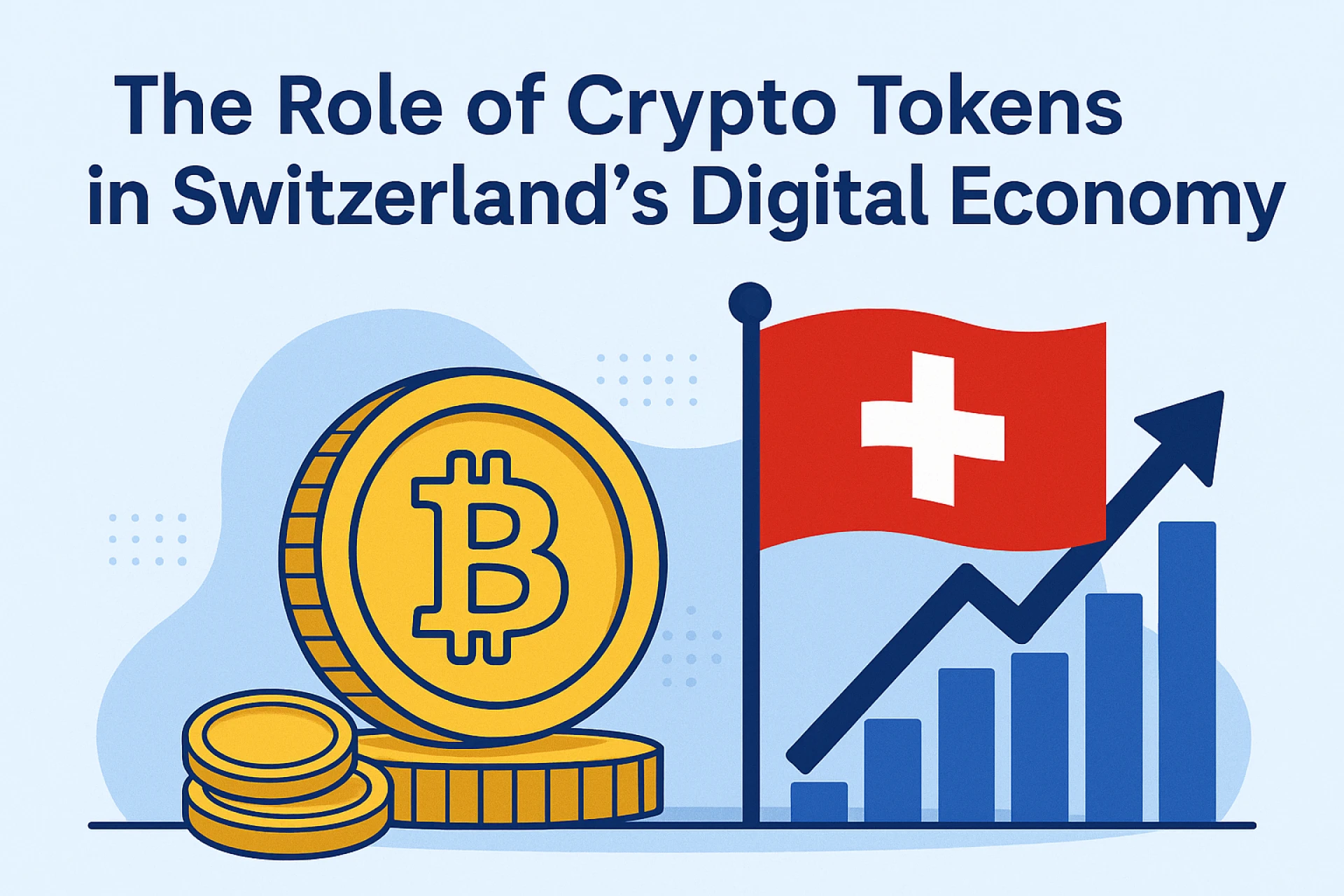
Switzerland has rapidly established itself as a global hub for digital innovation, particularly in blockchain and decentralized finance (DeFi). At the heart of this evolution lies the crypto token a programmable digital asset that plays a crucial role in redefining how value is exchanged, recorded, and governed in the digital economy. This article explores how crypto tokens are driving technological growth, regulatory clarity, and economic participation in Switzerland.
Understanding Crypto Tokens in the Swiss Context
A crypto token represents a unit of value issued on a blockchain, embodying rights, access, or utility within a specific ecosystem. Unlike cryptocurrencies such as Bitcoin or Ether that primarily function as mediums of exchange or stores of value, crypto tokens often serve specialized functions: governance stakes in protocols, utility access to services, or collateral in financial instruments. In Switzerland, these digital assets are not merely speculative instruments—they form foundational components of decentralized applications (dApps), tokenized financial products, and identity systems.
Switzerland’s regulatory framework, led by the Swiss Financial Market Supervisory Authority (FINMA), classifies tokens into payment, utility, and asset categories, providing market participants with clarity on compliance requirements. This legal transparency has attracted startups and institutional players alike, fostering innovation without compromising investor protection.
Tokenization and Economic Efficiency
One of the transformative impacts of crypto tokens in Switzerland’s digital economy is financial tokenization. Tokenization refers to representing real-world assets—such as equities, bonds, real estate rights, or commodities—on a blockchain. When traditional financial assets are tokenized, they inherit the efficiencies of distributed ledger technology (DLT): transparency, immutability, and 24/7 settlement capabilities.
Through tokenization, Switzerland’s capital markets are becoming more liquid and inclusive. Investors can now access fractional ownership of high-value assets via crypto tokens, reducing barriers to entry and democratizing finance. Furthermore, automated smart contracts embedded within tokens enforce pre-defined rules without intermediaries, streamlining settlement and reducing counterparty risk.
DeFi and Swiss Blockchain Ecosystems
Decentralized finance (DeFi) leverages blockchain protocols to offer financial services such as lending, borrowing, and trading without traditional intermediaries. In Switzerland, DeFi platforms often utilize crypto tokens as governance stakes or yield-generating assets. For example, holders of governance tokens vote on protocol upgrades and risk parameters, aligning user incentives with network security.
Swiss DeFi ecosystems benefit from robust infrastructure, including interoperable blockchains, advanced cryptographic standards, and regulatory sandboxes. These components enhance scalability and secure integration with legacy financial systems. As a result, Swiss DeFi initiatives are increasingly attracting international liquidity and talent, reinforcing the country’s digital economy.
Enhancing Digital Identity and Trust
Beyond financial applications, crypto tokens play a pivotal role in digital identity frameworks. Swiss innovators are exploring tokenized identity credentials that grant users privacy-preserving access to services, streamline Know Your Customer (KYC) procedures, and reduce fraud. In these systems, tokens act as verifiable digital identifiers, enabling seamless authentication across decentralized networks.
Token-based digital identity solutions foster trust between entities, whether they are individuals, enterprises, or automated agents. They also empower users with self-sovereign control over personal data, aligning with Switzerland’s strong privacy culture and legal protections.
Innovation Clusters and Talent Attraction
Switzerland’s crypto landscape is propelled by innovation clusters such as Zug’s “Crypto Valley,” which houses a dense network of blockchain startups, research institutions, and service providers. These hubs accelerate experimentation with token economics, Layer-2 scaling solutions, and cross-chain interoperability. The result is a virtuous cycle of talent attraction, venture capital inflows, and intellectual capital accumulation.
Academia and industry collaborations further strengthen Switzerland’s digital economy, producing research on token valuation models, consensus algorithms, and decentralized governance. This knowledge base ensures that Swiss stakeholders remain competitive in the evolving global blockchain arena.
Conclusion: The Path Ahead
In conclusion, the crypto token is more than a digital asset in Switzerland—it is a catalyst for economic transformation. From unlocking new forms of capital through tokenization to underpinning decentralized financial ecosystems and digital identity solutions, crypto tokens are integral to Switzerland’s vision of a resilient and inclusive digital economy. As regulatory clarity continues to attract innovators, the services of a trusted crypto token development company will be essential for organizations aiming to deploy secure, compliant, and scalable token solutions that contribute to this emerging digital frontier.