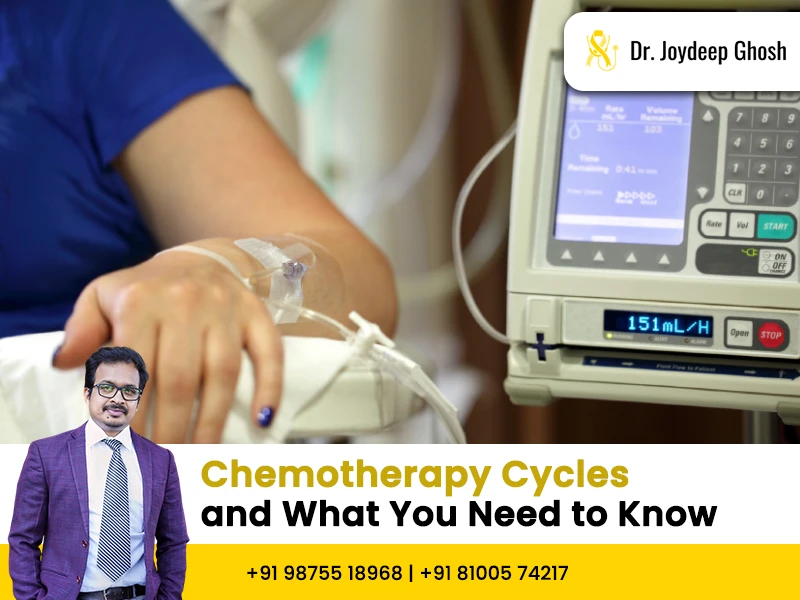
Chemotherapy is one of the most commonly used cancer treatments, designed to stop or slow the growth of cancer cells. But when someone hears the word “chemotherapy,” it often brings a wave of fear and uncertainty — especially about how long treatment lasts and what the process actually involves.
If you or a loved one is starting this journey, understanding chemotherapy cycles can help ease anxiety and improve preparedness. In this article, we break down the basics of chemotherapy cycles, how they work, what to expect during each phase, and why consulting an experienced chemotherapy doctor in Kolkata like Dr. Joydeep Ghosh is essential for personalized and effective care.
What Is a Chemotherapy Cycle?
Chemotherapy is typically given in cycles, which means the treatment is administered for a period followed by a rest period. This rest period allows your body — especially your healthy cells — to recover from the effects of the drugs.
For example, a common cycle could be one week of chemotherapy followed by two or three weeks of rest. These cycles may continue for several months depending on:
- The type and stage of cancer
- The specific chemotherapy drugs being used
- How your body responds to treatment
Why Are Chemotherapy Cycles Important?
Rather than giving chemotherapy continuously, cycles allow oncologists to:
- Deliver the maximum effective dose of drugs
- Minimize side effects and toxicity
- Give healthy tissues time to regenerate
- Increase the overall effectiveness of the treatment
Missing a cycle or delaying a session can impact treatment success, which is why it's important to stick closely to the schedule planned by your doctor.
Types of Chemotherapy Schedules
The number and frequency of chemotherapy cycles vary by patient and cancer type. Some common patterns include:
- Weekly Cycles: Chemo is given once a week with minimal breaks. Useful for cancers requiring low but frequent doses.
- Biweekly Cycles: Administered every two weeks. Often combined with supportive medications to reduce side effects.
- Every 3 or 4 Weeks: A more traditional schedule where higher doses are given less frequently, with longer rest periods.
A trusted chemotherapy doctor in Kolkata like Dr. Joydeep Ghosh will assess your individual case to customize the schedule for optimal outcomes.
What to Expect During a Cycle
Each chemotherapy cycle includes the following phases:
- Administration Phase: This is when the chemo drugs are infused via IV, injected, or taken orally.
- Side Effect Window: Fatigue, nausea, hair loss, and immune suppression usually show up during this time.
- Recovery Phase: Your body begins to rebuild white blood cells, red blood cells, and platelets.
Every person responds differently, so staying in touch with your oncologist is critical.
How to Cope With Side Effects
The most common side effects during chemotherapy include:
- Nausea and vomiting
- Fatigue and weakness
- Hair loss
- Loss of appetite
- Lowered immunity
But with the right supportive care, these can be managed. Nutrition counseling, medications, and emotional support are often part of the comprehensive treatment plan offered by top cancer specialists.
Why Choose Dr. Joydeep Ghosh?
When undergoing something as complex as chemotherapy, expertise matters. Dr. Joydeep Ghosh, a chemotherapy doctor in Kolkata, brings years of experience in medical oncology and personalized cancer care. His evidence-based approach ensures that each patient receives the right drug, at the right dose, at the right time — maximizing results while minimizing side effects.
Ready to Take the Next Step?
If you or someone you love is facing cancer treatment, don’t walk this path alone. Schedule an appointment with one of the most trusted names in oncology.