Data growth is relentless. For decades, enterprises relied on traditional, hardware-centric Network Attached Storage (NAS) to manage their expanding digital footprint. These "black box" appliances were reliable, but they came with a steep price tag: proprietary hardware, rigid scalability limits, and vendor lock-in.
The landscape is changing. As organizations seek more agility and cost-efficiency, there is a distinct shift toward software-defined storage (SDS). specifically the rise of software-defined NAS running on commodity hardware. This approach decouples the storage management software from the underlying physical infrastructure, fundamentally changing how businesses deploy and manage their data.
By leveraging standard, off-the-shelf servers, companies are finding they can achieve the performance of high-end legacy systems without the premium cost.
The Decoupling of Hardware and Software
To understand the significance of this shift, we must first look at how traditional NAS systems operate. Historically, when you bought a NAS appliance from a major vendor, you purchased a tightly integrated package. The software was written specifically for that hardware, and the hardware was designed exclusively for that software. If you needed more capacity, you often had to buy another expensive appliance from the same vendor.
Software-defined NAS changes the equation. It treats the storage controller as an application that can run on any standard x86 server or virtual machine. The intelligence of the system lives entirely in the software layer.
This architecture allows IT teams to source hardware from any manufacturer—Dell, HP, Supermicro, or others—and layer their chosen NAS software on top. The result is a storage environment that is flexible, adaptable, and free from the constraints of proprietary engineering.
The Advantages of Using Standard Hardware for Software-Defined NAS
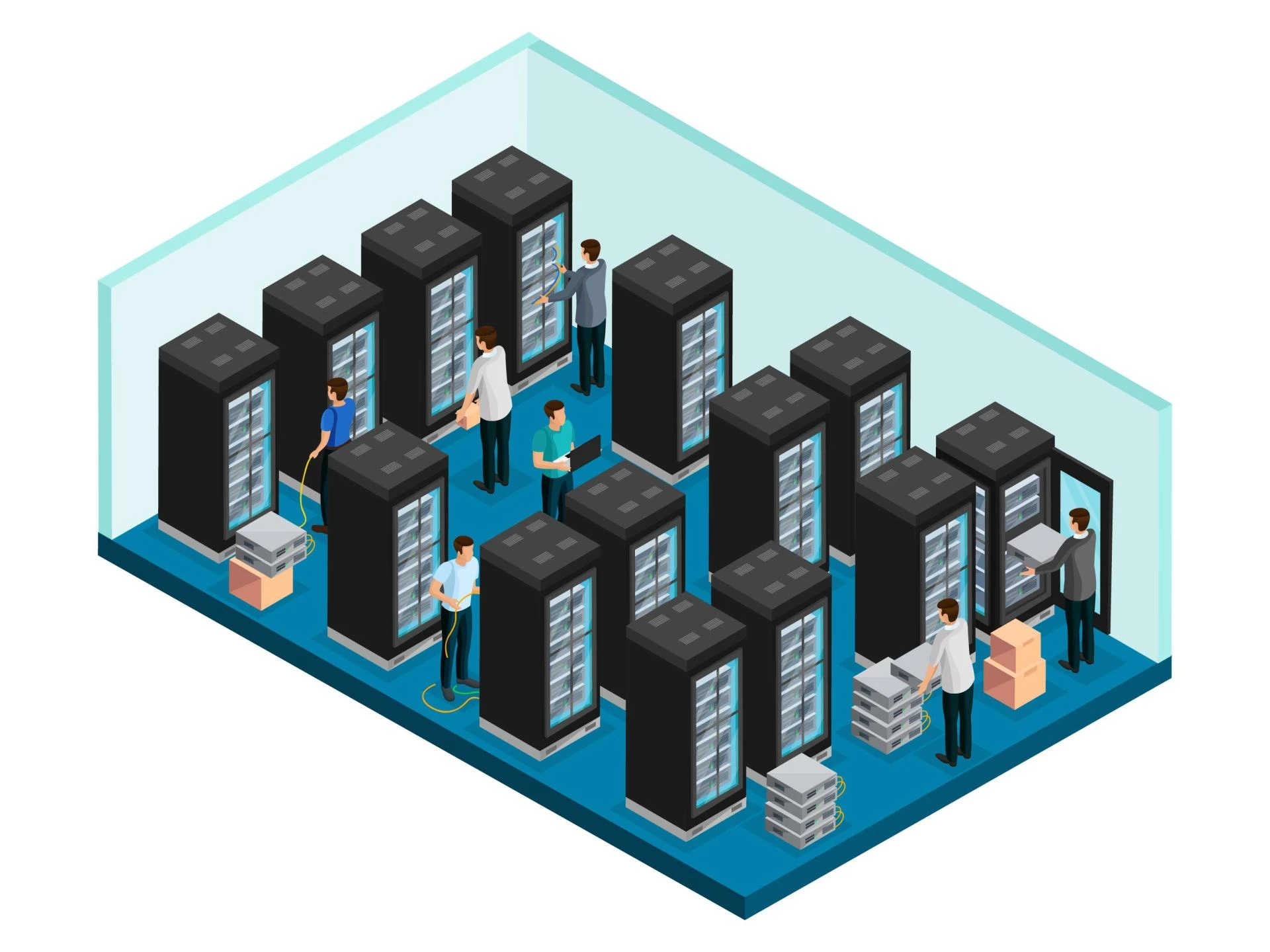
The term "commodity hardware" (often referred to as Commercial Off-The-Shelf or COTS) used to imply lower quality. In the enterprise storage world, that is no longer the case. Standard x86 servers have become incredibly powerful, boasting multicore processors and high-speed RAM that rival specialized storage controllers, making them ideal for modern NAS systems deployments.
When organizations pair these powerful, standardized servers with advanced NAS storage solutions, they unlock several advantages:
1. Breaking Vendor Lock-In
With traditional appliances, you are beholden to the vendor’s roadmap. If they discontinue a product line or hike support prices, your options are limited. Commodity hardware gives you the freedom to switch hardware vendors without changing your storage software, or vice versa. This competitive environment drives down costs and encourages innovation.
2. Cost Efficiency
Proprietary storage hardware carries a significant markup. By utilizing standard servers and drives, organizations can significantly reduce their Capital Expenditure (CapEx). Furthermore, maintenance and support for commodity hardware are generally less expensive than specialized support contracts for proprietary storage arrays.
3. Rapid Technology Adoption
Hardware cycles for proprietary appliances are long. Vendors might wait years to integrate the latest processing chips or drive technologies into their "boxes." With a software-defined approach on commodity hardware, you can adopt the latest server technology the moment it hits the market, ensuring your NAS systems remain on the cutting edge of performance.
Key Benefits of Software-Defined NAS
Beyond the hardware savings, the software itself brings a suite of benefits that modernize data management.
Infinite Scalability
Legacy NAS often suffered from the "silo" effect. Once a box was full, you added another, creating a fragmented namespace. Software-defined NAS storage solutions typically utilize a scale-out architecture. As you add more commodity servers (nodes) to the cluster, the storage capacity and performance increase linearly. The system presents a single, massive pool of storage to the user, regardless of how many physical servers are running in the background.
Programmability and Automation
Modern infrastructure is increasingly code-based. Software-defined NAS is API-driven, making it ideal for DevOps environments and automated workflows. IT administrators can programmatically provision storage, set policies, and manage snapshots without manual intervention. This agility is essential for cloud-native applications and containerized environments like Kubernetes.
Unified Storage Capabilities
Many software-defined solutions are not limited to file storage. They often support block and object storage protocols within the same platform. This unification simplifies the data center stack, allowing a single cluster of commodity servers to handle diverse workloads, from databases to unstructured data archives.
Challenges and Considerations
While the benefits are compelling, the transition to software-defined NAS on commodity hardware is not without its hurdles.
Integration Complexity: Unlike a pre-configured appliance that works out of the box, a software-defined solution requires setup. IT teams must ensure that the chosen software is compatible with the specific hardware components (network cards, drives, memory).
Support Responsibility: When a traditional appliance fails, there is one number to call. In a software-defined environment, there can be finger-pointing. Is it a software bug? A drive failure? A firmware issue? Organizations must be prepared to triage these issues or choose software vendors that offer validated hardware reference architectures to minimize compatibility risks.
The Road Ahead
The trajectory of the storage industry is clear. Just as virtualization revolutionized computing and networking, software is now revolutionizing storage. The rise of software-defined NAS storage solutions represents a maturation of the market, where value is defined by intelligence and flexibility rather than metal and silicon.
For enterprises drowning in data but limited by budget, the combination of advanced storage software and cost-effective commodity hardware offers a path forward. It provides the elasticity of the cloud with the control and performance of on-premises infrastructure, creating a robust foundation for the data-driven