Every kitchen has a hierarchy of attention. The island is admired. The countertop gets photographed. The cabinetry, more often than not, gets treated as background — functional, forgettable, simply there to do its job. And yet, walk into any home that genuinely feels considered, and you'll usually find that the piece holding the room together isn't the appliance everyone talks about. It's the crockery unit standing quietly against the wall, doing far more for the space than it's ever given credit for.
There's a reason heirloom china gets passed down through generations but rarely gets displayed properly. Most homes simply don't have furniture built to hold it with any dignity. A well-designed kitchen crockery cabinet changes that. It turns storage into presentation, and presentation, in a home, is never just about looks.
The Difference Between Storage and Sanctuary
An ordinary cupboard hides things. A genuinely well-made crockery unit reveals them, selectively and beautifully.
This is the fundamental shift that separates mass-produced kitchen storage from furniture built with real intention. Off-the-shelf units are designed around efficiency—maximum shelf space, minimum cost, and doors that open and close without complaint. There's nothing wrong with that approach for a utility room. But a kitchen, particularly in homes where cooking and entertaining are treated as something close to ritual, asks for more.
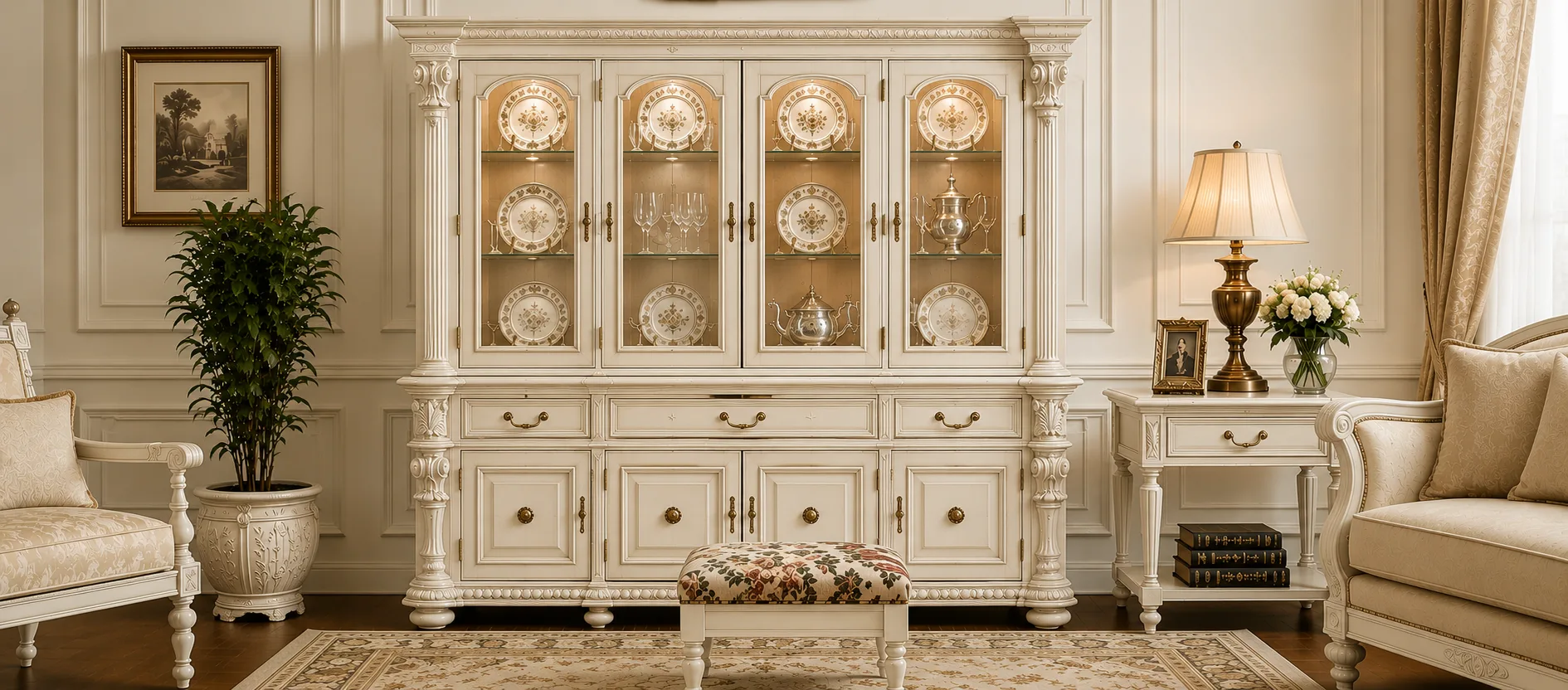
A premium crockery unit is designed the way a jeweler designs a display case—with consideration for what's inside it, not just what contains it. Glass-fronted sections lit from within so that hand-painted plates and crystal stemware catch the light properly. Shelf heights that vary deliberately, because a stack of dinner plates and a row of wine glasses have entirely different proportional needs. Drawers lined in felt or velvet, because cutlery deserves better than rattling around in a plastic tray.
Where Craftsmanship Actually Lives
It's easy to assume that craftsmanship shows up in the obvious places—a carved cornice, an ornate handle, a decorative motif on the door panel. Sometimes it does. But the more telling signs of quality are almost always quieter than that.
Open a well-built kitchen crockery cabinet and check the joinery. Dovetail joints instead of staples and glue. Soft-close hinges that never let a door slam shut on good china. Adjustable shelving that accounts for the fact that your collection will change over the years—taller vases now, perhaps a set of antique serving bowls later. Solid wood backing rather than thin pressboard that swells the moment kitchen humidity creeps in.
The wood itself tells its own story. Teak, sheesham, and mango wood are favored not just for their grain but also for how they age—deepening in tone and developing character rather than wear. A crockery unit finished in hand-applied lacquer, with veneer work laid by someone who understands grain direction and matching, ends up looking less like a manufactured object and more like a piece that was always meant to belong in that exact spot.
A Quiet Influence on the Whole Room
Few people realize how much a crockery unit shapes the emotional register of a kitchen or dining space. A heavy, dark-wood cabinet with intricate carving pulls a room toward old-world formality — the kind of space where dinners feel like occasions. A unit with clean lines, brass inlay, and glass shelving leans the same space toward something more contemporary and light-filled, suited to casual gatherings and easy mornings.
This is the part that often gets missed in kitchen design conversations, which tend to fixate on counters and backsplashes. The crockery unit, because of its height, visual weight, and placement, frequently becomes the architectural anchor of the room—the piece to which every other choice quietly responds.
Customization: Building Around a Life, Not a Floor Plan
No two kitchens hold the same things. One household's collection leans toward delicate porcelain and needs gentle, even lighting. Another centers on rustic stoneware that wants open, accessible shelving rather than glass doors. This is precisely where custom-built crockery units outperform anything bought off a showroom floor.
Bespoke design allows for shelf spacing built around actual inventory, drawer configurations suited to specific cutlery sets, and finishes chosen to either complement or quietly contrast with existing cabinetry. It's a small luxury in the truest sense—furniture shaped around how you actually live, rather than furniture you have to live around.
Built to Outlast the Trend
Kitchen trends shift quickly—handle styles, color palettes, and even cabinet door profiles seem to rotate every few years. A well-made crockery unit, by contrast, is built to sidestep that cycle altogether. Solid construction and considered proportions don't go out of fashion the way finishes do. They simply settle into a home and stay relevant, gathering history rather than becoming dated.
A Final Thought
A kitchen tells you a lot about the people who live in it — not through what's cooked, but through what's cared for. A thoughtfully chosen crockery unit does something subtle but lasting: it turns everyday objects into something worth noticing, and it gives a kitchen a sense of permanence that countertops and appliances simply can't offer on their own.
That's the real value of good furniture design. It doesn't just hold your things. It holds your story.