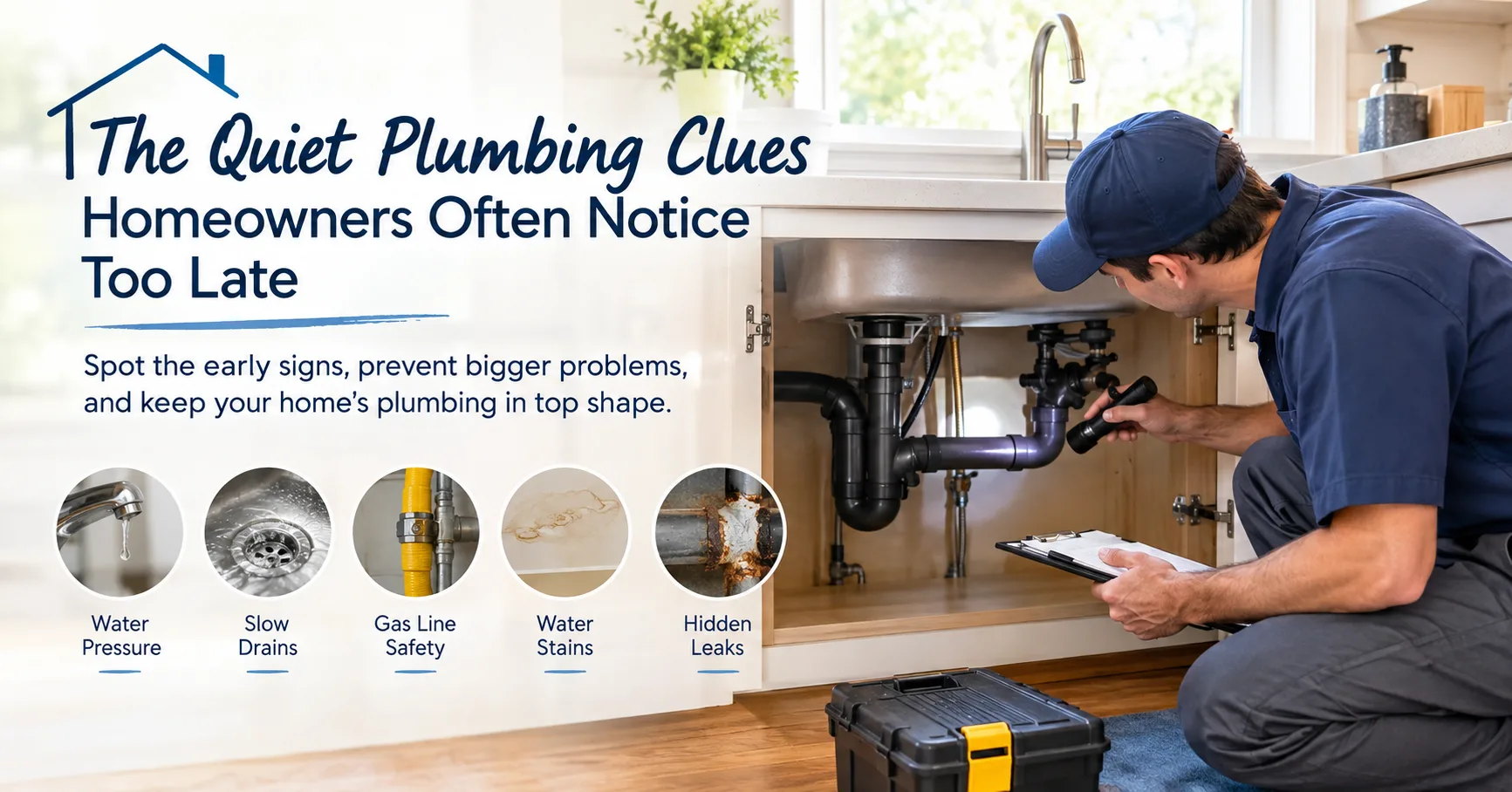
A home’s plumbing system usually works quietly in the background, making it easy to overlook until something goes wrong. A dripping faucet may seem harmless, while a slow drain can appear to be nothing more than an inconvenience. Yet small changes in water pressure, drainage, or pipe performance can sometimes point to problems developing behind walls, beneath floors, or underground.
Understanding these warning signs can help homeowners respond before a minor plumbing issue turns into extensive property damage. This is also where reliable residential plumbing services can be useful for identifying problems that are difficult to diagnose without professional equipment.
Pay Attention to Changes in Water Pressure
Water pressure that suddenly becomes unusually weak or inconsistent deserves attention. A partially blocked pipe, hidden leak, corroded plumbing, or problem with the home's water supply can affect pressure.
The important point is to consider whether the change is isolated or affects the entire house. If only one faucet has low pressure, the fixture itself may be responsible. If several fixtures experience the same problem, the issue could be farther along the plumbing system.
Regularly noticing how your fixtures perform can provide an early indication that something has changed.
Slow Drains Are More Than an Annoyance
A slow kitchen sink or shower drain is often treated with a quick chemical solution. While this may temporarily improve drainage, recurring slowdowns can indicate buildup or a developing obstruction deeper inside the pipe.
Homeowners should especially take notice when multiple drains begin slowing down around the same time. This may suggest a problem affecting a larger section of the drainage system rather than an individual fixture.
Mechanical cleaning or camera inspection can sometimes reveal what is actually happening inside the pipe, particularly when ordinary plunging no longer solves the problem.
Gas Lines Require a Different Level of Attention
Plumbing systems can also intersect with household gas infrastructure, particularly in homes using gas appliances. Gas-related concerns should never be treated like an ordinary clogged drain or leaking faucet.
Homeowners should be aware of unusual odors, damaged piping, appliance connection concerns, or suspected leaks. Professional inspection is appropriate when there is a concern about the condition of a gas line. For additional information about why gas-line problems deserve careful attention, homeowners can review professional gas line services.
If a strong gas odor is detected, occupants should move to a safe location and follow the instructions of the local gas utility or emergency authorities rather than attempting to locate or repair the leak themselves.
Water Stains Can Reveal Hidden Problems
A brown or yellow stain on a ceiling or wall may be more than a cosmetic issue. It can indicate moisture entering from a leaking pipe, fixture, roof area, or another source.
The location of the stain does not always correspond directly to the location of the leak. Water can travel along framing and other building materials before becoming visible.
This is why simply painting over a stain may not solve the underlying problem. Identifying the source of the moisture is generally more important than treating the visible mark.
Know the Difference Between Maintenance and Repair
Some plumbing problems can be reduced through basic maintenance. Avoiding grease buildup in kitchen drains, cleaning fixture aerators, checking exposed pipes, and watching for leaks can all help homeowners spot changes early.
However, maintenance has limits. Repeated backups, persistent leaks, sewer odors, unexplained moisture, or deteriorating pipes may require a more detailed evaluation.
For homeowners who need assistance investigating drainage, pipe, or leak concerns, local plumbing specialists can provide another resource for understanding what may be happening within the system. Professional plumbing providers may use specialized equipment to locate problems without immediately resorting to unnecessary demolition.
Underground and Gas-Line Problems Can Be Easy to Miss
Some of the most difficult plumbing-related problems occur in areas homeowners cannot easily see. Underground pipes, concealed connections, and gas lines may deteriorate or become damaged without producing obvious signs at first.
This makes professional assessment particularly important when there are unexplained changes in water service, recurring leaks, unusual odors, or damage around utility lines.
Information about licensed gas-line repair also highlights why inspection and proper repair procedures matter when household gas infrastructure is involved. Homeowners can learn more from licensed gas line repair.
Small Warning Signs Deserve Attention
The biggest plumbing problems rarely announce themselves with a dramatic failure at the beginning. More often, they develop through small clues: a drain that takes longer to empty, a faucet that behaves differently, a recurring stain, or water pressure that gradually changes.
Keeping track of these signs gives homeowners useful information when determining whether an issue is temporary or persistent. It also helps professionals diagnose problems more efficiently when an inspection becomes necessary.
A well-maintained plumbing system is not simply about preventing inconvenience. It can also help protect walls, flooring, fixtures, and other parts of a home from the effects of prolonged leaks and drainage problems. Paying attention to subtle changes is one of the simplest ways homeowners can stay ahead of potentially expensive plumbing issues.