
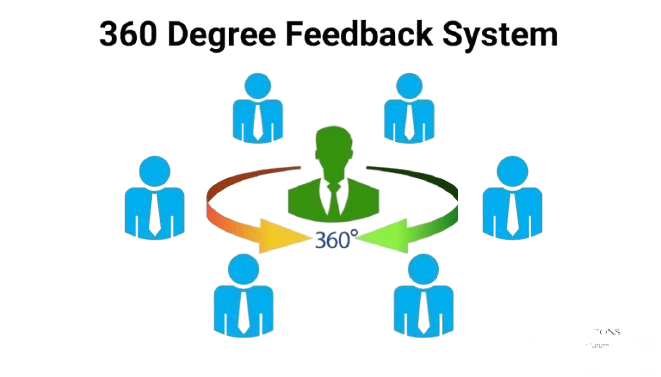
In today’s fast-paced, collaborative work environment, relying solely on a single manager's perspective for employee evaluation simply doesn't capture the full picture. Enter 360-degree feedback, a revolutionary approach that gathers input from multiple sources—peers, direct reports, supervisors, and even customers—to provide a holistic, well-rounded view of an individual's performance and developmental needs.
Often referred to as multi-rater feedback, this system moves beyond traditional top-down appraisals. By soliciting diverse perspectives, 360-degree feedback uncovers valuable "blind spots"—those discrepancies between how an employee sees their own performance and how others experience it. This comprehensive data is a powerful catalyst for self-awareness, personal growth, and, ultimately, improved organizational performance.
The fundamental shift here is from purely evaluative feedback, which focuses on past performance and compensation, to primarily developmental feedback, which empowers employees with actionable insights for future growth. When implemented correctly, it fosters a culture of transparency, continuous learning, and mutual accountability, essential ingredients for modern workplace success.
Best Practices for 360-Degree Feedback Implementation
While the concept of multi-rater feedback is compelling, a flawed execution can lead to confusion, defensiveness, and mistrust. Successful deployment requires a thoughtful, strategic approach. Here are the best practices for 360-degree feedback implementation:
- Define a Clear Purpose and Communicate Transparently: Before launching, clearly articulate why you are using 360-degree feedback. Is it purely for leadership development? To identify training needs? Crucially, communicate that the feedback is for developmental purposes only and will not directly impact salary or promotion decisions. This clarity is vital to encourage honest, constructive responses and build trust.
- Ensure Anonymity and Confidentiality: Raters must feel safe to provide candid input. Implement a system that guarantees the anonymity of individual responses, especially from peers and direct reports. Data should be aggregated and shared with the employee by a trained facilitator or manager, focusing on themes and trends rather than singling out specific feedback providers.
- Train Participants on Giving and Receiving Feedback: Both raters and recipients need preparation. Train raters on focusing their feedback on observable behaviors and specific examples, not personality traits. Train recipients on how to receive feedback with an open, non-defensive mindset, focusing on understanding and learning.
- Use Behavior-Based Competencies: The questionnaire should align with your company's core values and the competencies required for success in the specific role. Questions should be specific and measurable, focusing on behaviors (e.g., "Effectively communicates project updates") rather than vague traits.
- Follow Up with Action Planning: The feedback itself is only the starting point. The process must conclude with a dedicated discussion between the employee and their manager (or coach) to interpret the results and create a specific, measurable Individual Development Plan (IDP). Without clear action steps and follow-through, the initiative will lose its impact.
Accelerating Performance: Onboarding Readiness Program for Sales Teams
The power of 360-degree feedback extends into specialized applications, particularly for high-impact roles like sales. A well-designed Onboarding readiness program for sales teams can be significantly enhanced by incorporating multi-rater feedback.
Sales roles require a unique blend of technical knowledge, product expertise, and critical soft skills like communication, resilience, and relationship building. Traditional onboarding often focuses heavily on product training, overlooking the behavioral competencies that determine a top-performing rep.
Integrating a readiness assessment using a 360-degree model can provide new sales hires with a clear, early benchmark. For example, within the first 60-90 days, feedback from the sales manager, a peer mentor, and even a few initial internal stakeholders (like Sales Operations or Marketing) can highlight:
- Communication Style: How effectively the new hire collaborates internally.
- Process Adherence: How well they are adopting the company’s specific sales methodology.
- Proactiveness and Learning Agility: Their capacity to seek out information and apply coaching.
This early, targeted feedback is invaluable. It shifts the focus from merely "completing training modules" to "demonstrating job-critical readiness." It allows managers to customize coaching efforts immediately, addressing skill gaps before they negatively impact quota attainment, drastically reducing the time it takes for a new hire to become fully productive and increasing overall sales velocity.
In conclusion, 360-degree feedback is more than a trendy HR tool; it's a strategic investment in human capital. When thoughtfully implemented using established best practices and integrated into crucial areas like an onboarding readiness program for sales teams, it becomes a powerful engine for self-awareness, continuous improvement, and sustainable business growth.
Frequently Asked Questions (FAQs)
Q1: Is 360-degree feedback an effective tool for performance appraisals? A: While the data can be informative, the consensus among HR experts is that 360-degree feedback is most effective when used purely for employee development and growth, not for compensation or direct performance evaluation decisions. Using it for appraisals can jeopardize anonymity and lead to dishonest, inflated, or punitive feedback.
Q2: How often should we conduct a 360-degree feedback cycle? A: The frequency should align with the program's purpose. For leadership development, an annual or biennial cycle is common. However, for a high-growth environment or a specific intervention like a sales readiness program, a more frequent cycle (e.g., quarterly) focused on just a few key competencies can be more effective.
Q3: Who should be included as raters in a 360-degree review? A: Raters should be individuals who have direct and regular interaction with the employee's work and behaviors. This typically includes the manager, 3-8 peers, and all direct reports. In some cases, internal clients or external customers who regularly interact with the employee may also be included, depending on the role.
Q4: How can we ensure the feedback given is constructive, not overly negative or political? A: Rigorous rater training is the most critical step. Emphasize focusing on observable behaviors, using specific examples, and framing feedback with "I" statements (e.g., "I observed...") to maintain objectivity. A trained facilitator should review reports to flag and contextualize any overly emotional or inappropriate comments before sharing them with the recipient.