
Nutrition labels tell you what is inside the bag. They list protein, fat, fiber, and a long column of vitamins and minerals. What they do not tell you is how the feed behaves when it hits the feeder. That is where physics takes over, and where most poultry operations quietly lose money.
Chickens are not built to eat dust. Their beaks are designed for pecking and grasping, not for lapping up fine particles. When a bird encounters a mash ration, it does what any forager would do. It searches for the largest, most substantial pieces. The fines get left behind, flicked aside, or trampled into the litter. Those fines often carry the most expensive ingredients in the formula—the vitamin premix, the amino acids, the trace minerals. You paid for them. Your birds did not eat them.
Pellets change the physics of the meal. Each piece is uniform in size, weight, and density. There is nothing to sort, nothing to reject. The bird swallows the entire ration, nutrients and all. The pelleting process also uses heat and pressure to gelatinize starches and denature proteins, which makes the feed easier to digest. Studies across multiple species show that pelleted feed improves feed conversion by 5 to 10 percent compared to mash. For a poultry operation, that is not a marginal gain. It is the difference between profit and loss.
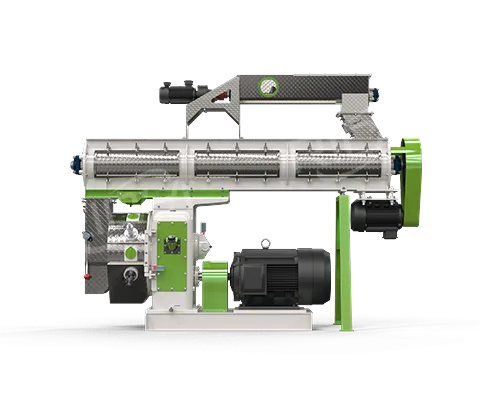
But not all pellets are created equal. A poorly made pellet crumbles before it reaches the feeder. It creates fines, which defeats the purpose. The hardness, density, and durability of the pellet depend on the equipment that produces it. That is why serious producers invest in a chicken feed production machine that can hold precise control over moisture, temperature, and die pressure. These variables determine whether the pellet holds together or falls apart in the bag.
At the heart of that machine is the pelletizer. This is the component that actually forms the pellets. It determines the compression ratio, the surface finish, and the internal structure of every piece. A well-designed pelletizer allows operators to adjust die speed, roller clearance, and conditioning time as ingredients change. That flexibility is what keeps quality consistent across different batches and seasons. Without it, you get clumps, cracks, and rejected loads.
The equipment must also survive the daily grind. Poultry feed is abrasive. It contains limestone, phosphates, and mineral premixes that wear down dies and rollers. A cheap machine may run for a few weeks before performance drops. A well-built one uses hardened dies, heavy-duty bearings, and accessible maintenance points. It costs more upfront, but it lasts longer, runs cooler, and produces consistent pellets with less downtime.
The financial case is straightforward once you run the numbers. Commercial feed carries a premium that includes processing, packaging, transportation, and the mill’s profit. When you produce your own, you eliminate those layers. You gain the flexibility to adjust protein and energy levels as your birds’ needs change. You can switch ingredients when prices shift. You can store pellets for months without spoilage. Many producers report payback periods of less than two years, especially when they already have access to raw ingredients.
View more:https://pelletizerextruder.com/poultry-feed-pellet-making-machine/
Before you commit to any equipment, visit a farm that already runs a pelleting line. Watch it operate for a full shift. Ask the operator what breaks, what wears out, and what they wish they had known. Ask about energy consumption per ton, die life, and spare parts availability. To compare specifications, see real-world performance data, and understand what a properly configured line can deliver for your operation, find here. Your feed will only be as good as the shape it takes. Make sure the physics work in your favor.