In today’s fast-moving digital world, businesses rely heavily on technology to stay competitive, efficient, and relevant. From managing daily operations to serving customers online, digital tools have become a core part of how companies function. While off-the-shelf software may work for basic needs, it often falls short as businesses grow and face more complex challenges. This is where custom web applications become especially important.
Custom web applications are designed to meet specific business needs rather than forcing businesses to adapt to generic software. They help improve efficiency, support growth, and create better experiences for both employees and customers. For businesses looking to build long-term digital strength, custom web app development is no longer optional it is a strategic necessity.
Understanding Custom Web App Development
Custom web app development is the process of creating web-based applications that are tailored to a company’s unique goals, workflows, and users. Unlike ready-made software, which is designed for a wide audience, custom applications are built from the ground up with a specific business in mind.
These applications can range from internal management systems and customer portals to booking platforms, dashboards, and enterprise-level tools. Because they are custom-built, businesses have full control over functionality, design, performance, and future enhancements. This level of control allows companies to create solutions that truly support how they work.
Why Businesses Are Moving Away from Generic Software
Many businesses start with pre-built software because it is quick to deploy and often less expensive upfront. However, as operations grow, limitations become more noticeable. Generic software usually includes unnecessary features while missing critical ones. This leads to inefficiencies, workarounds, and frustration among teams.
Custom web applications solve this problem by focusing only on what the business actually needs. They eliminate clutter, simplify workflows, and align technology with real-world operations. Over time, this results in better performance and a higher return on investment.
Better Alignment with Business Goals
Every business has its own structure, processes, and objectives. Custom web applications are designed to reflect these differences. Instead of adjusting business operations to fit the software, the software is built to support existing workflows.
This alignment helps businesses operate more smoothly. Tasks become easier to manage, processes are more consistent, and decision-making improves due to better data visibility. When technology supports business goals directly, teams can work more efficiently and confidently.
Improved Productivity and Operational Efficiency
One of the biggest advantages of custom web applications is improved productivity. When employees use tools designed specifically for their roles, they spend less time learning the system and more time doing meaningful work.
Custom features such as automated workflows, role-based access, and personalized dashboards reduce manual effort and errors. Repetitive tasks can be automated, approvals can be streamlined, and data can be accessed quickly. This leads to faster operations and better use of internal resources.
Scalability to Support Business Growth
Growth is a positive goal, but it often comes with new challenges. As businesses expand, they need software that can handle increased users, data, and functionality. Many off-the-shelf solutions struggle to scale without significant limitations or added costs.
Custom web applications are built with scalability in mind. New features, integrations, or users can be added as the business grows. This flexibility ensures that the application continues to support operations without requiring a complete system replacement in the future.
Enhanced Security and Data Control
Data security is a major concern for businesses of all sizes. Generic platforms often operate in shared environments, which can increase security risks. Custom web applications provide greater control over how data is stored, accessed, and protected.
Businesses can implement security measures that match the sensitivity of their data, such as role-based permissions, encryption, and secure authentication methods. This reduces the risk of data breaches and helps companies meet compliance and privacy requirements more effectively.
Better Customer Experience and Engagement
Customer expectations are higher than ever. Users expect fast, simple, and personalized digital experiences. Custom web applications allow businesses to design user interfaces and features specifically for their customers.
Whether it is a self-service portal, online ordering system, or support dashboard, custom applications improve usability and satisfaction. When customers can easily interact with a business online, trust and engagement increase. This often leads to stronger relationships and higher retention rates.
Competitive Advantage in the Digital Market
Businesses that invest in custom digital solutions often gain a competitive edge. Unique functionality, faster performance, and tailored features set them apart from competitors using standard tools. Custom web applications also allow businesses to adapt quickly to market changes.
When new opportunities or challenges arise, custom systems can be updated or expanded without waiting for third-party software providers. This agility supports innovation and helps businesses stay ahead in competitive industries.
Cost Efficiency Over the Long Term
While custom web app development may require a higher initial investment, it often proves more cost-effective over time. Businesses avoid recurring license fees, unnecessary features, and costly upgrades associated with generic software.
Custom applications are built to last and evolve. Maintenance and updates are focused only on what the business needs, reducing waste and improving value. Over the long term, this approach delivers better financial outcomes.
Integration with Existing Systems
Most businesses rely on multiple tools and platforms to manage operations. Custom web applications can be designed to integrate seamlessly with existing systems such as CRM tools, accounting software, or third-party services.
These integrations improve data flow and reduce duplication. Employees can access information from one central system instead of switching between multiple platforms. This improves accuracy and saves time across departments.
Choosing the Right Development Partner
The success of a custom web application depends heavily on the team behind it. Working with experienced professionals ensures that the application is reliable, secure, and built using best practices. Clear communication, proper planning, and ongoing support are essential throughout the development process.
Many businesses choose web application development in USA because of strong technical expertise, quality standards, and effective collaboration. This approach helps ensure long-term success and reliable outcomes for complex projects.
Supporting Long-Term Digital Strategy
Custom web applications are not just tools; they are part of a broader digital strategy. They support long-term goals such as automation, digital transformation, and innovation. By investing in tailored solutions, businesses build a strong foundation for future growth.
As technology continues to evolve, custom applications can be updated to support new trends, devices, and user expectations. This adaptability helps businesses remain relevant in an ever-changing digital landscape.
Final Thoughts
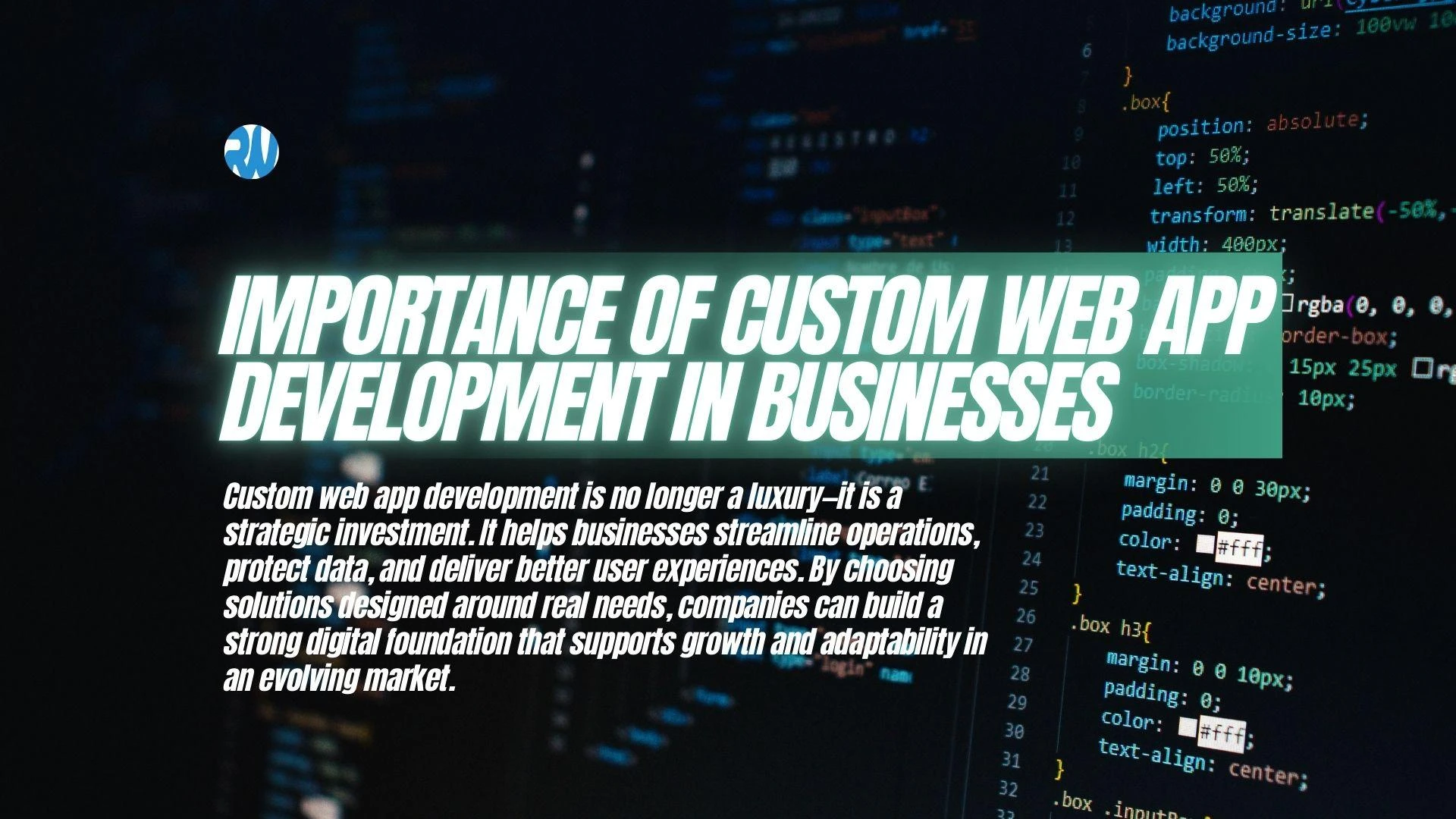
Custom web app development is no longer a luxury reserved for large enterprises. It is a practical and strategic investment for businesses of all sizes. By creating solutions tailored to real needs, companies can improve efficiency, strengthen security, and deliver better user experiences.
In a competitive digital environment, businesses that choose custom web applications position themselves for sustainable growth and long-term success. With the right planning and development approach, custom web apps become powerful tools that support innovation, adaptability, and lasting value.