
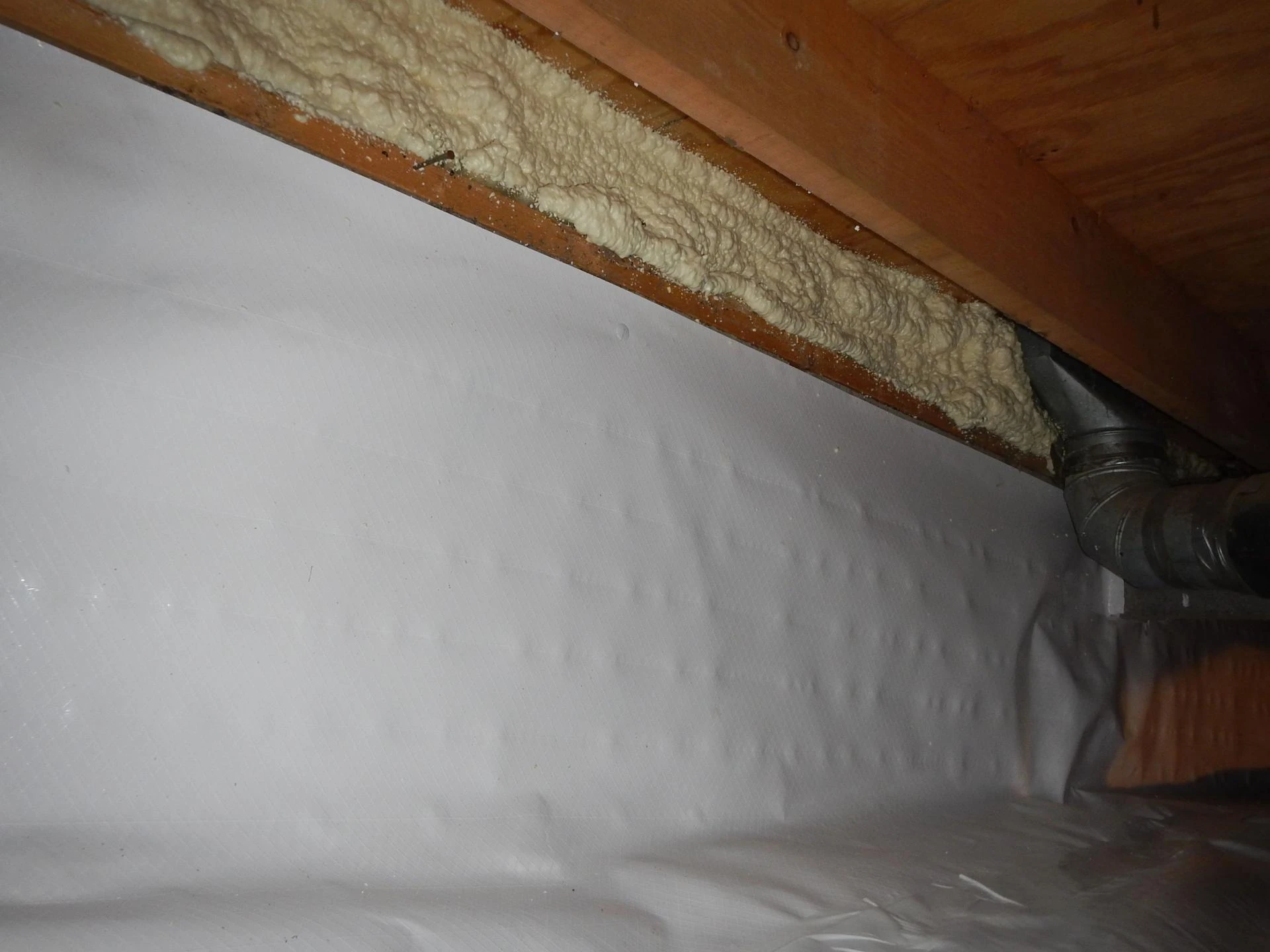
Crawl space spray foam insulation dramatically improves home comfort by creating a sealed thermal barrier between the living space and the damp, unconditioned ground below. By eliminating air leakage at the foundation level, this upgrade prevents cold drafts from seeping into the home during Fresno’s chilly winter nights. It stops earthy odors from rising into living areas. Building science experts agree that treating the crawl space is often the missing link to achieving a thermally stable, healthy indoor environment.
Homeowners often overlook the area beneath their feet, yet up to 50 percent of the air on the first floor originates from the crawl space. In the Central Valley, where soil moisture and temperature fluctuations are common, a vented or poorly insulated crawl space can introduce uncontrolled humidity and airborne pollutants into the home.Crawl Space Spray Foam Insulation effectively encapsulates this area, blocking moisture intrusion and air leakage to ensure the indoor environment remains clean, dry, and consistently aligned with the thermostat setting.
Controlling the Stack Effect
The primary physical mechanism influencing comfort in a multi-story home is the stack effect. This phenomenon occurs when warm air rises and escapes through the attic, creating a vacuum at the bottom of the house. This negative pressure pulls in cold, damp air through crawl space vents and cracks in the foundation. This constant airflow creates a drafty sensation along the floor, forcing heating systems to work harder to compensate.
Applying spray foam to the rim joists and subfloor, or encapsulating the foundation walls, effectively seals the bottom of the building envelope. This stops the vacuum effect at its source. Once the air movement is halted, the temperature difference between the floor and the rest of the room decreases significantly. Residents no longer need to wear heavy socks indoors to tolerate cold tile or hardwood floors.
Reducing Humidity and Tule Fog Intrusion
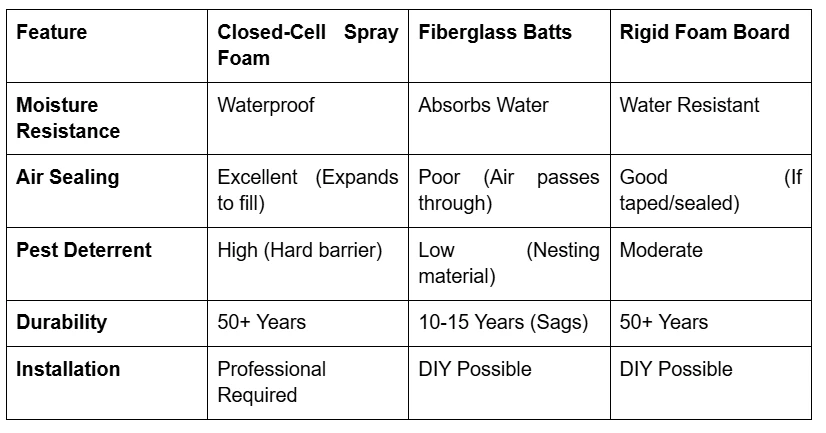
Fresno winters are notorious for dense tule fog and high humidity. In a traditional vented crawl space, this moisture-laden air enters freely and condenses on wooden structural members and insulation. Fiberglass batts act like a sponge in these conditions, absorbing water and losing their insulating ability. This retained moisture creates a clammy indoor environment that even a heater cannot fully resolve.
- Vapor Retarder: Closed-cell spray foam creates a Class II vapor retarder that rejects bulk water and soil moisture.
- Structural Protection: Keeps wood framing dry, preventing warping and rot caused by seasonal dampness.
- Consistent Humidity: Helps maintain indoor relative humidity between 30 and 50 percent for optimal comfort.
Improving Indoor Air Quality
Comfort extends beyond temperature; it also includes the quality of the air occupants breathe. A vented crawl space allows soil gases, mold spores, and agricultural dust to enter the home. As the stack effect pulls air upwards, these contaminants circulate through the living areas. This can aggravate allergies and create persistent musty odors that are difficult to eliminate with cleaning alone.
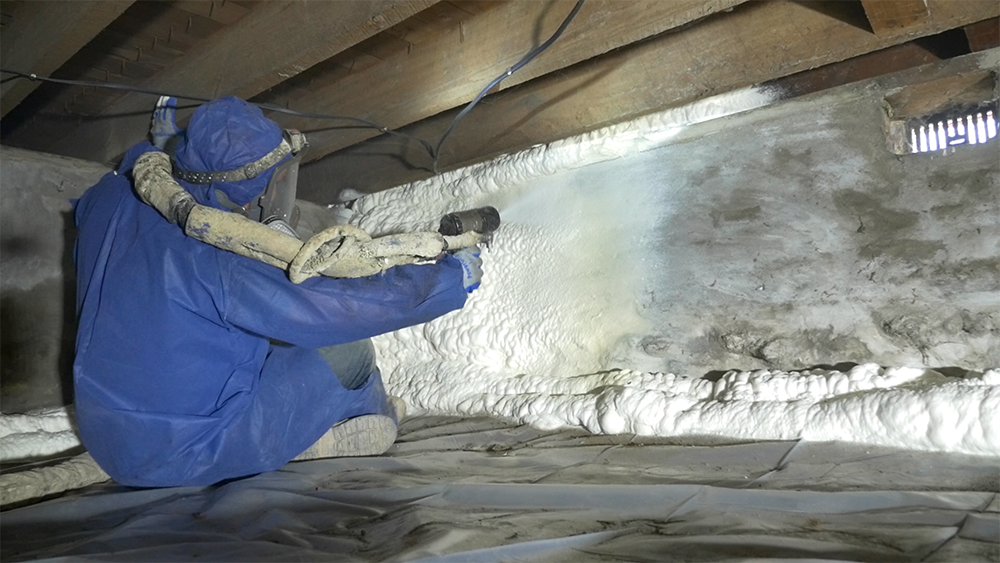
By sealing the crawl space with spray foam, property owners physically separate their living environment from the earth below. The foam expands to fill gaps around plumbing penetrations and electrical wiring, blocking the pathways that allow pollutants to bypass the subfloor. This results in cleaner, fresher air and a noticeable reduction in dust accumulation on surfaces.
Bonus Tip: Pipe Protection
Insulating the crawl space perimeter brings plumbing pipes inside the thermal envelope. This prevents pipes from freezing during occasional cold snaps in the valley and keeps hot water lines from losing heat as they travel to the bathroom or kitchen.
Things to Consider Before Making a Decision
Choosing the correct application method is critical for crawl spaces. There are two main approaches: insulating the subfloor (vented) or encapsulating the foundation walls (unvented). Encapsulation is generally considered superior for moisture control but requires a more comprehensive installation process.
Property owners must also select the correct foam density. Closed-cell foam is the industry standard for crawl spaces because of its water resistance and rigidity. Open-cell foam should typically be avoided in below-grade applications as it can absorb moisture.
Comparison of Crawl Space Insulation Options

Questions People Ask About Crawl Space Insulation
Will spray foam cause termites in the crawl space?
Spray foam itself does not attract termites, but it can hide their mud tubes if applied directly over the inspection gap. Professional installers leave a "termite inspection strip" at the top of the foundation wall to ensure pest control professionals can still monitor for activity.
Does encapsulating the crawl space create a smell?
During application, there is a chemical odor that dissipates quickly once the foam cures (usually within 24 to 48 hours). Afterward, the encapsulation actually prevents earthy, musty soil odors from entering the home.
Is it better to insulate the subfloor or the crawl space walls?
Insulating the walls (encapsulation) is generally more effective because it conditions the space, protecting pipes and ducts located there. Insulating the subfloor separates the house from the crawl space but leaves the plumbing and ducts exposed to the cold.
Can I use spray foam if my crawl space gets wet?
If there is standing water, drainage issues must be resolved before installing insulation. However, closed-cell foam is water-resistant and will not be damaged by minor dampness or humidity once the bulk water issue is fixed.
How much energy savings can I expect?
Treating the crawl space can reduce energy bills by 15% to 20%. The savings come from reduced heating loads in winter and lower humidity loads on the air conditioner in summer.
Conclusion
Addressing the crawl space with high-performance spray foam insulation fundamentally changes how a home feels and functions. By closing off the entry points for cold air and moisture, property owners eliminate the root causes of thermal instability and poor air quality. The result is a home that stays warmer in the winter, cooler in the summer, and healthier year-round.
For residents of Fresno, this upgrade offers a defense against the region's specific climate challenges, from tule fog to dry heat. It transforms a neglected part of the structure into an asset that contributes to the longevity and efficiency of the entire property. Investing in crawl space encapsulation is a decisive step toward permanent home comfort.
Secure Your Foundation for Comfort
For homeowners in the Central Valley ready to eliminate cold floors and musty odors,Supreme Spray Foam – Fresno offers specialized crawl space encapsulation services. Their team understands the local soil and climate conditions, ensuring that every installation provides maximum protection and durability.
To schedule a crawl space assessment or learn more about insulation options, contact the team at (559) 545-0800 or send an inquiry to [email protected].
Reviewer: Emma Robinson contributed her knowledge from 8 years of working in the spray foam industry. Her review helped shape this content, grounded in what contractors and homeowners actually value.