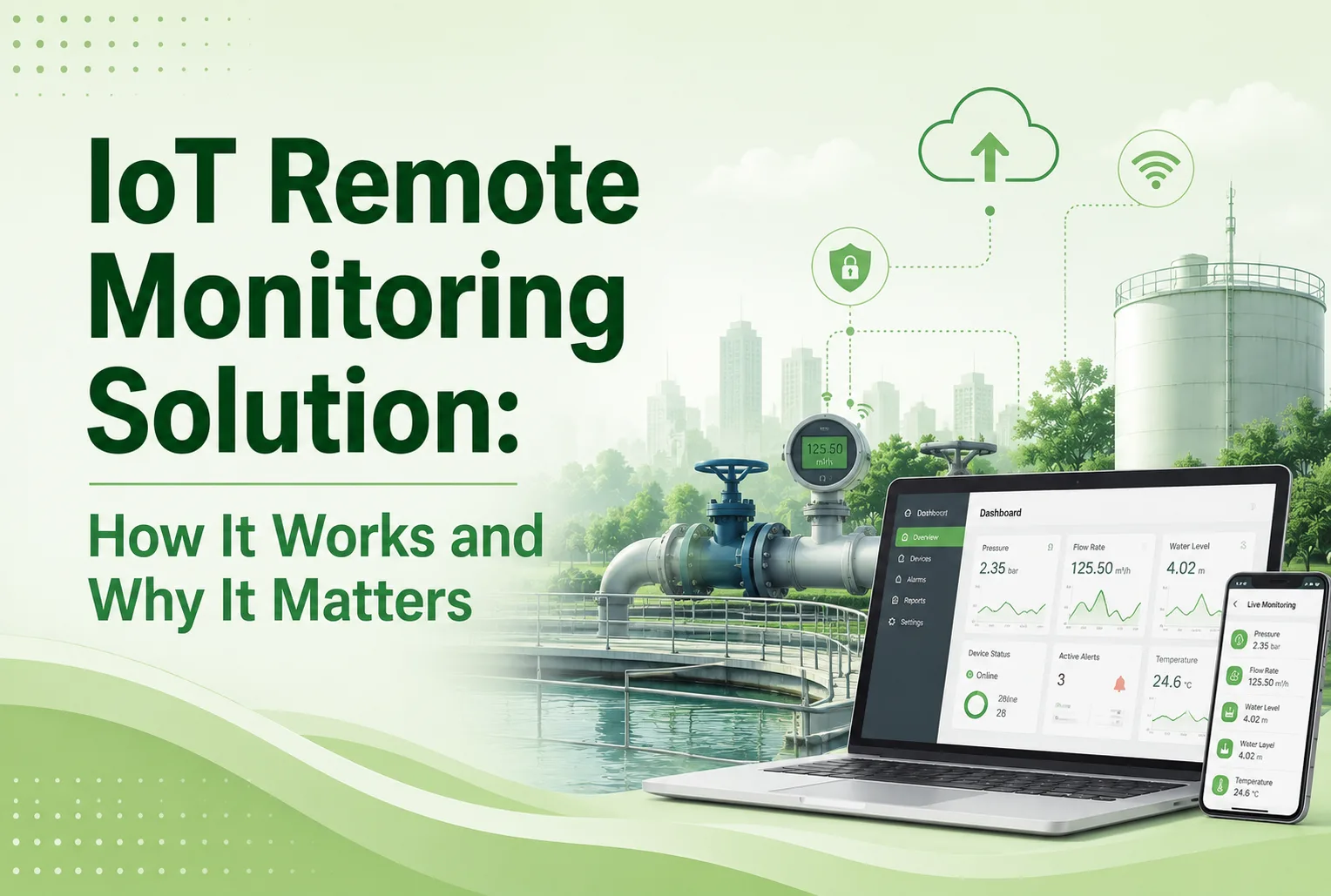
Businesses across the world are becoming more connected than ever before. Smart devices, sensors, and cloud technologies are helping organizations improve efficiency, reduce operational costs, and make faster decisions. One of the biggest drivers behind this digital transformation is IoT Remote Monitoring Solutions. These solutions allow businesses to monitor equipment, assets, and environments in real time without being physically present. As technology continues to evolve, remote monitoring is becoming smarter, faster, and more reliable, opening new opportunities across multiple industries.
The Rise of Connected Technologies
The Internet of Things has transformed the way businesses collect and use data. Devices connected through sensors continuously generate valuable information that helps organizations understand how their operations are performing.
Instead of relying on manual inspections or scheduled maintenance, companies can now monitor equipment remotely and receive updates instantly. This shift not only improves productivity but also minimizes unexpected failures and costly downtime.
As industries continue to embrace digital transformation, remote monitoring has become an essential part of daily operations.
Why Remote Monitoring Is Becoming More Important
Modern businesses operate in highly competitive environments where every minute of downtime can result in financial losses. Remote monitoring provides continuous visibility into operations, allowing organizations to identify issues before they become major problems.
Some of the key reasons businesses are adopting remote monitoring include:
- Real-time access to operational data
- Reduced maintenance costs
- Faster problem detection
- Improved equipment performance
- Better resource management
- Enhanced customer satisfaction
- Increased workplace safety
These benefits make remote monitoring an important investment for organizations of every size.
Applications Across Different Industries
Manufacturing
Manufacturing facilities depend on machines that operate around the clock. Unexpected equipment failures can interrupt production and increase operational expenses.
Remote monitoring enables manufacturers to track machine performance, monitor energy consumption, identify abnormal behavior, and schedule maintenance before breakdowns occur.
As factories continue adopting automation, monitoring systems will play an even larger role in maintaining production efficiency.
Healthcare
Healthcare organizations require accurate and continuous monitoring of medical equipment, storage facilities, and patient environments.
Connected monitoring systems help hospitals supervise critical equipment, monitor environmental conditions, and ensure devices remain operational at all times.
This improves patient safety while reducing equipment failures.
Agriculture
Modern farming is becoming increasingly data-driven.
Farmers use connected sensors to monitor soil moisture, weather conditions, irrigation systems, crop health, and livestock.
Remote monitoring helps optimize water usage, improve crop yields, and reduce operational costs while supporting sustainable farming practices.
Logistics and Transportation
Fleet operators need complete visibility over vehicles, shipments, and valuable assets.
Remote monitoring provides real-time tracking, fuel monitoring, route optimization, vehicle diagnostics, and cargo condition monitoring.
These capabilities improve delivery efficiency while enhancing customer satisfaction.
Energy and Utilities
Power plants, renewable energy installations, and utility providers manage equipment spread across large geographical areas.
Remote monitoring allows operators to supervise transformers, solar panels, wind turbines, pipelines, and substations from centralized control centers.
Early fault detection helps reduce service interruptions and maintenance costs.
Retail
Retail businesses are using connected technologies to monitor refrigeration systems, inventory storage, lighting, security systems, and customer traffic.
Continuous monitoring helps reduce product loss while improving operational efficiency and customer experience.
Smart Buildings
Commercial buildings rely on numerous systems, including HVAC, elevators, lighting, access control, and energy management.
Remote monitoring allows facility managers to optimize building performance while reducing energy consumption and maintenance expenses.
Emerging Technologies Shaping the Future
The future of remote monitoring is closely connected with several rapidly advancing technologies.
Artificial Intelligence
Artificial Intelligence enables monitoring platforms to analyze large amounts of operational data automatically.
Instead of simply displaying information, intelligent systems can identify unusual patterns, predict equipment failures, and recommend maintenance actions.
This reduces manual effort while improving decision-making.
Edge Computing
Edge computing processes data closer to connected devices instead of sending everything to the cloud.
This reduces response time, minimizes bandwidth usage, and supports faster decision-making, especially in environments where immediate action is required.
5G Connectivity
High-speed communication networks provide faster data transmission with lower latency.
As 5G expands globally, remote monitoring systems will become more responsive, supporting larger numbers of connected devices with greater reliability.
Cloud Computing
Cloud platforms provide centralized storage, analytics, and management for connected devices.
Businesses can monitor operations across multiple locations using a single dashboard while securely storing historical data for reporting and analysis.
Predictive Analytics
Instead of reacting after equipment fails, predictive analytics identifies warning signs before problems occur.
Historical trends combined with real-time data help organizations schedule maintenance at the right time, reducing downtime and extending equipment life.
Key Benefits for Businesses
Organizations investing iot monitoring gain several long-term advantages.
Improved Operational Efficiency
Continuous monitoring eliminates unnecessary inspections and enables faster response to operational issues.
Lower Maintenance Costs
Early fault detection reduces emergency repairs and minimizes equipment replacement expenses.
Better Decision-Making
Real-time operational data helps managers make informed decisions based on actual system performance.
Increased Equipment Lifespan
Proper monitoring ensures equipment operates within safe limits, reducing unnecessary wear and extending service life.
Stronger Security
Modern monitoring platforms can identify unusual device activity, unauthorized access attempts, and communication failures, helping organizations strengthen cybersecurity.
Greater Scalability
As businesses grow, monitoring systems can expand to support additional devices, locations, and users without major infrastructure changes.
Challenges That Businesses Must Address
Although remote monitoring provides significant advantages, organizations should prepare for certain challenges.
Cybersecurity Risks
Connected devices can become targets for cyberattacks if they are not properly secured.
Regular software updates, strong authentication, and encrypted communication are essential.
Device Compatibility
Businesses often deploy equipment from multiple manufacturers.
Ensuring seamless communication between different devices and platforms requires careful planning.
Data Management
Large deployments generate enormous amounts of operational data.
Organizations need efficient storage, analytics, and reporting systems to transform this data into meaningful insights.
Network Reliability
Monitoring depends on stable communication networks.
Poor connectivity may delay alerts or interrupt data collection, making reliable infrastructure critical.
Best Practices for Future Success
Organizations can maximize the value of remote monitoring by following several best practices.
- Plan monitoring requirements before deployment.
- Choose scalable platforms that support future growth.
- Monitor devices continuously instead of periodically.
- Keep firmware and software updated.
- Implement strong security policies.
- Use predictive maintenance whenever possible.
- Analyze performance reports regularly.
- Train employees to respond quickly to alerts.
- Review monitoring strategies as technology evolves.
These practices help organizations improve efficiency while reducing operational risks.
The Road Ahead
The future of remote monitoring will continue to evolve as connected technologies become more intelligent.
Artificial intelligence, machine learning, edge computing, cloud platforms, and high-speed communication networks will work together to create monitoring systems capable of making automated decisions with minimal human intervention.
Businesses will move beyond simply collecting data to generating actionable insights that improve productivity, sustainability, and customer satisfaction.
Organizations that invest in modern monitoring technologies today will be better prepared to compete in tomorrow's digital economy.
Why Choose Karikala?
Implementing an advanced remote monitoring strategy requires both the right technology and the right expertise. Karikala provides innovative IoT solutions that help businesses monitor devices, assets, and operations efficiently throughout their lifecycle.
From secure device connectivity and cloud integration to real-time monitoring, predictive maintenance, and scalable management platforms, Karikala delivers customized solutions that meet the unique needs of industries such as manufacturing, healthcare, logistics, agriculture, energy, retail, and smart infrastructure.
Whether your business is starting its digital transformation or expanding an existing connected ecosystem, Karikala offers reliable solutions designed to improve operational efficiency, reduce downtime, and support long-term growth.
Final Thoughts
Remote monitoring is no longer a future concept—it is becoming a fundamental part of modern business operations. As connected technologies continue to advance, organizations that embrace intelligent monitoring will gain greater visibility, improve operational efficiency, reduce maintenance costs, and make better business decisions.
Investing in modern remote monitoring today creates a stronger foundation for future innovation and sustainable growth.