For many freelancers, the inbox is both the front door and the filing cabinet. It holds enquiries, briefs, revision notes, and invoices, alongside messages that should never have arrived. When one address does every job, serious clients soon sit beside cold pitches, newsletters, and follow-ups from leads that went quiet months ago. The result is missed work, slower replies, and the feeling that something important is buried under something unimportant.
The fix is simple: stop giving every new contact the same address. Give each client or project its own disposable address, and reserve your real inbox for paying work only. Then, when a message arrives at a client's dedicated address, you know its context before you open it. When a project ends, you can close that channel without touching anything else, and your main inbox stays calm and focused.
Your real inbox is your business
Think of your real email address like your phone number. You would not print it on every flyer, hand it to every stranger, or post it in every public forum. Yet many freelancers do the online equivalent whenever a form asks for an address. Once shared widely, it is almost impossible to take back: it gets passed along, added to lists, and scraped in ways you cannot control.
A better rule is to treat your real address as private by default. Share it only with trusted clients after a project is agreed, or with regular collaborators. For earlier steps — an initial enquiry, a trial task, a platform registration, or a discovery call — use a temporary address made for that purpose. You still receive everything you need, without handing over the keys to your main mailbox.
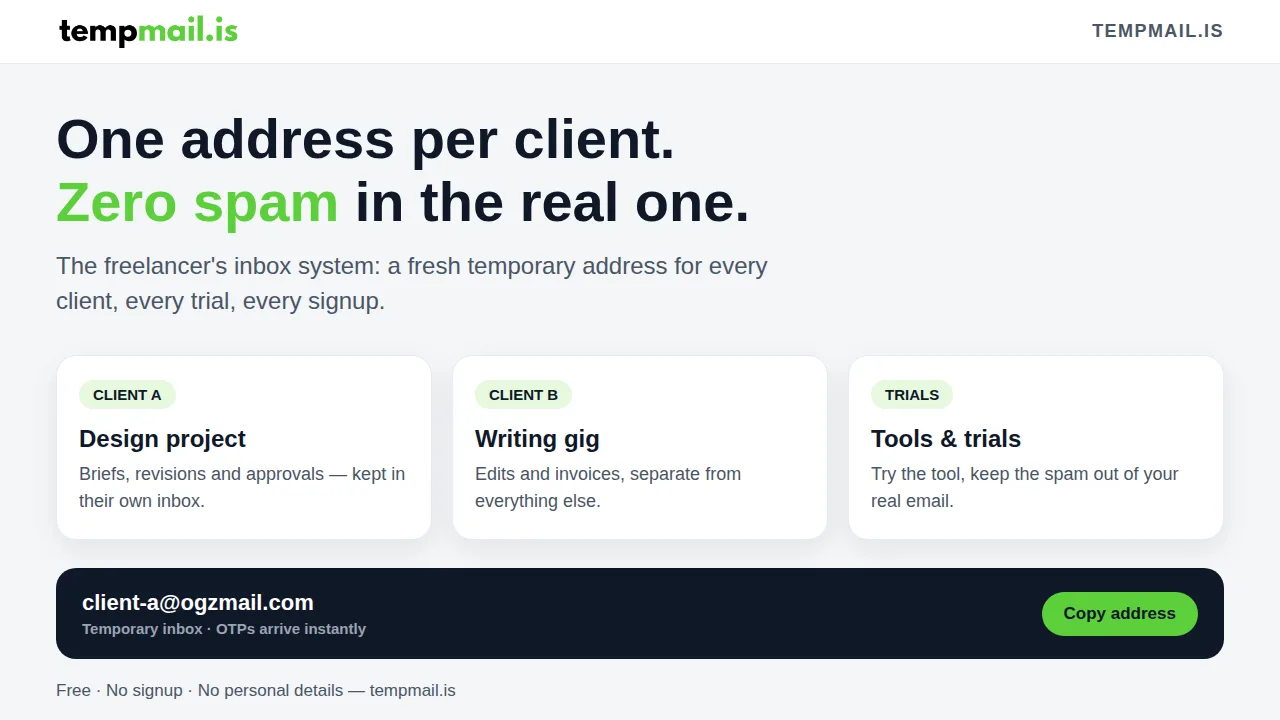
One address per client, one clear thread
The real power of this approach is organisation, not just spam control. A brief from a design client no longer sits beside a question from a writing client, and a message about an old quote does not interrupt a live project. You can search, filter, and prioritise with far less effort, because each channel already tells you what the message is about.
This also makes follow-up easier. If a client returns after six months, you can reopen the same channel and find the history in one place. If a project changes direction, create a fresh address for the new phase instead of confusing it with the old one. Freelancers juggling several clients often find that this small habit saves more time than any new productivity app.
Receive OTPs and briefs instantly
A common worry is that a temporary address will be slow or unsuitable for serious work. In practice, a good temporary inbox receives messages instantly, just like any other mailbox. That matters when a client sends a one-time code, a link to a shared drive, or a last-minute brief with a tight deadline. You do not want to discover a verification code in a spam folder days later.
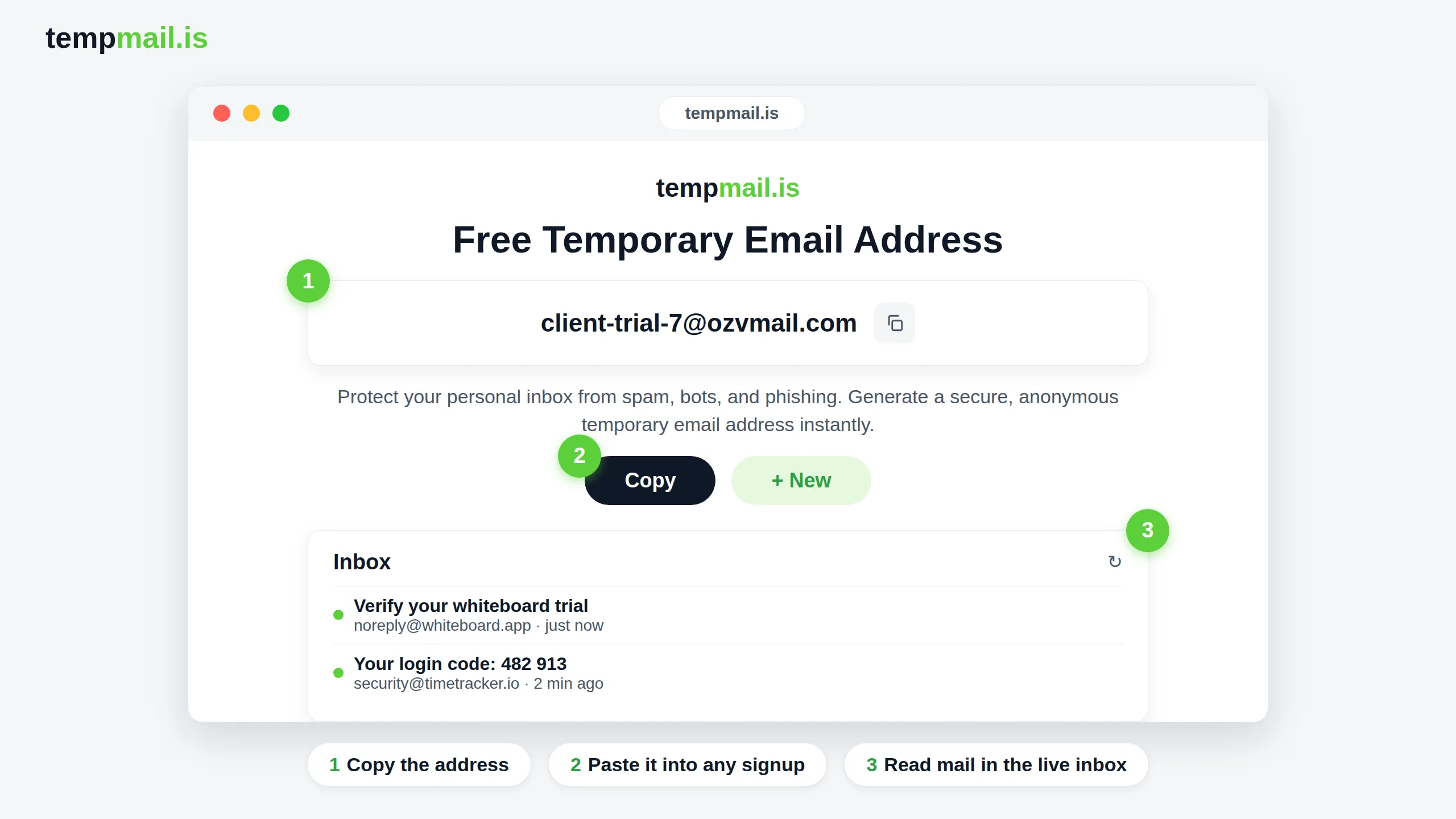
For short-term needs, a disposable address is ideal. Register for a freelance platform, confirm your account, receive the code, and get started, all without exposing your real address to yet another database. If that platform later sends marketing emails you never asked for, they go to the disposable address, not to the inbox where your clients are waiting. You can learn more at https://tempmail.is
Walk away from dead leads without unsubscribing forever
Every freelancer knows the lead that looked promising and then disappeared. First come polite follow-ups, then newsletters, partner offers, and automated sequences that keep arriving long after the opportunity has died. Unsubscribing sometimes works, but it can take several attempts, and some senders simply ignore the request.
With a disposable address, the exit is clean. When a lead goes cold, or a project ends with no further contact expected, simply stop using that address. There is no long unsubscribe chain, no awkward message, and no need to block a sender who might one day become a real client. The channel closes quietly, and your real inbox never carries the leftover noise.
A simple setup that scales
You do not need complicated software. Start by keeping a short private note for each address: the client name, the project, and the date you created it. When a new enquiry arrives, create a fresh address before you reply, and use it for all messages about that job. Check project addresses once or twice a day, and reply from the same channel so the client sees a consistent thread.
When a project closes, archive the important messages, save files and contracts to your usual storage, and retire the address. Do not use your real address just because a form is in a hurry, and do not use a client address for personal shopping or social media. The more consistent the rule, the more useful it becomes.
What not to do
A disposable address is a tool for organisation and privacy, not a way to hide from responsibility. Do not use it to disappear in the middle of a project or to mislead a client about who you are. Answer promptly, keep records, and close projects properly. Also, do not use a temporary address for anything you must recover years later, such as tax records or a primary business account; those belong in a secure, permanent mailbox.
A calmer way to work
Freelancing already brings enough uncertainty: variable income, shifting deadlines, and clients in different time zones. Your inbox should not add to that stress. One address per client gives you a practical boundary between opportunity and overload. Start with your next enquiry, keep your real inbox for paying work only, and notice how much quieter your working day becomes.