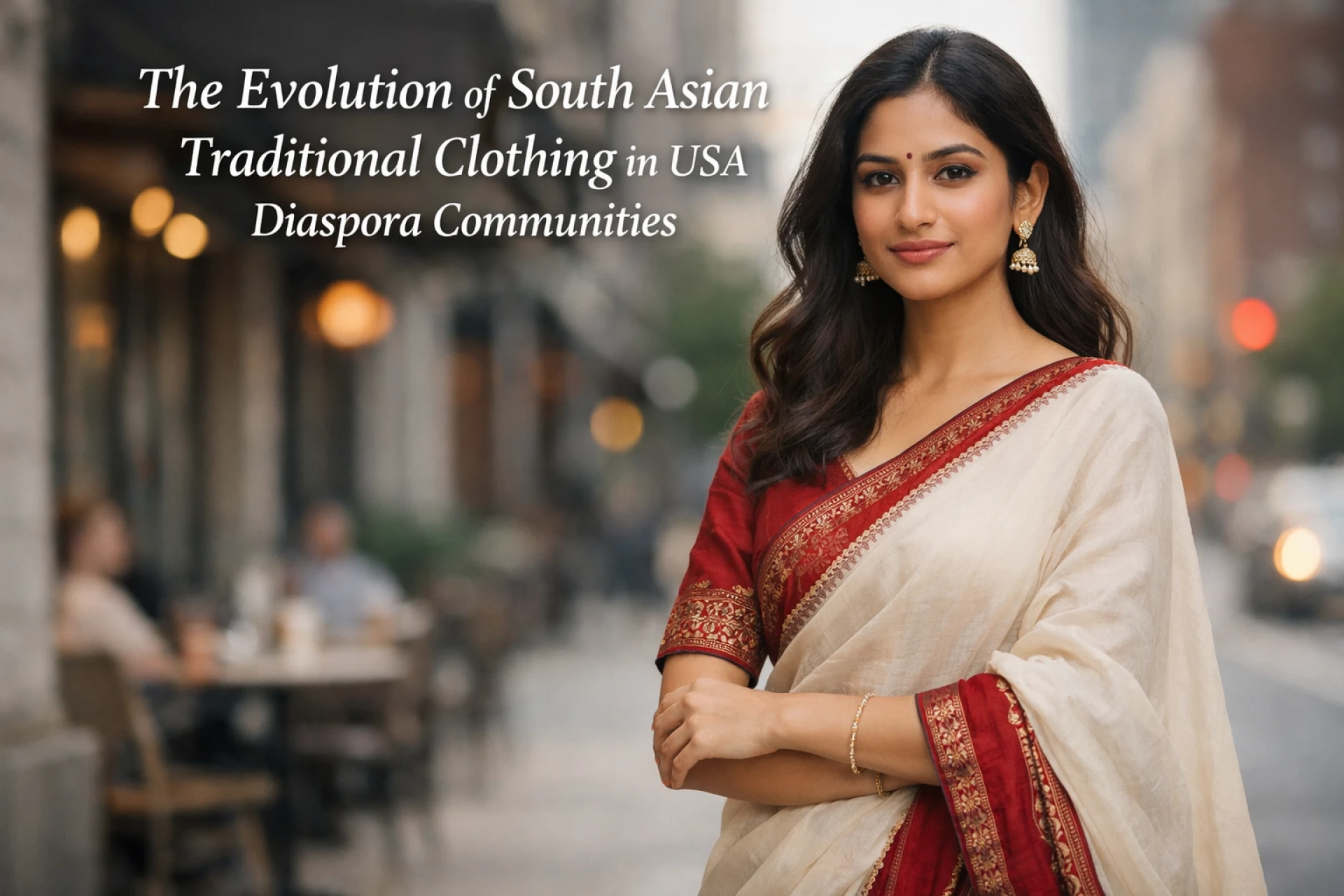
The South Asian enclaves in America have been maintaining the traditional dress for a long period of time. Apparently, clothing is an evident representation of family values and heritage. In most cases, clothing served to preserve identity during the stay of the migrants in new environments. Cultural memory and modern lifestyle requirements are reflected today in the traditional clothing in USA.
Early Migration and Cultural Preservation
The massive migration of South Asians began following the 1965 Immigration and Nationality Act. Families came with saris, salwar suits, lehengas, kurtas, and sherwanis. These clothes were used on special occasions, primarily during prayers, weddings and religious occasions. At this stage, traditional clothing in USA stayed within private and cultural spaces.
Elders encouraged children to wear ethnic outfits at gatherings. This practice helped pass down customs and shared values. Clothing became a visual reminder of origin and belonging. It offered comfort in a new social environment.
Role of Community Events and Religious Spaces
Temples, mosques, and gurdwaras played a strong role in shaping dress habits. Weekly gatherings reinforced modest and cultural attire. The heritage wear gained publicity in festivals like Diwali, Eid and Vaisakhi.
Cultural associations also supported this continuity. Dance programs, language schools, and youth groups encouraged traditional attire. Over time, younger members became more comfortable wearing ethnic outfits. You can now seek guidance on styling and meaning through resources like a guide to traditional clothing in the USA, which helps explain regional styles and proper use.
Media Influence and Style Adaptation
Film and streaming media reshaped fashion preferences within diaspora communities. A 2025 Nielsen US report showed South Asian content viewership rose by 38%. Popular series and films increased exposure to ethnic dress styles. This visibility changed how traditional clothing is perceived in USA
Younger generations began blending styles. Lightweight kurtas paired with jeans became common. Breathable fabrics replaced heavier layers for daily wear. These changes made cultural clothing practical and accessible.
Market Growth and Consumer Behavior
The US ethnic apparel market continues to expand steadily. Statista estimated the market value exceeded USD 3.2 billion in 2025. UK Mintel data shows similar growth among South Asian buyers abroad. Online shopping widened access to traditional clothing in the USA across regions.
Consumers now expect clear sizing, fabric details, and care guidance. Comfort and fit rank high in purchase decisions. Many buyers research before choosing outfits. This shift supports informed and confident buying habits.
Conclusion
South Asian heritage wear in America continues to adapt. Clothing now fits work, travel, and social life. Designers are interested in comfort, climate and functionality. The traditional clothing in USA is projected to experience consistent growth up to 2026.
Its role remains meaningful. Cultural attire connects generations while fitting modern routines. This balance keeps heritage fashion relevant and respected.
FAQs
1. Why does South Asian traditional clothing remain important in the US?
It helps preserve identity, culture, and family traditions.
2. Do younger generations still wear traditional outfits?
Yes. They prefer lighter fabrics and modern cuts.
3. Has media influenced ethnic fashion demand?
Yes. Streaming content increased interest after 2024.
4. Is the US market for ethnic wear growing?
Yes. 2025 data shows consistent growth.
5. Will fusion styles replace classic designs?
No. Fusion adds options while classics remain essential.