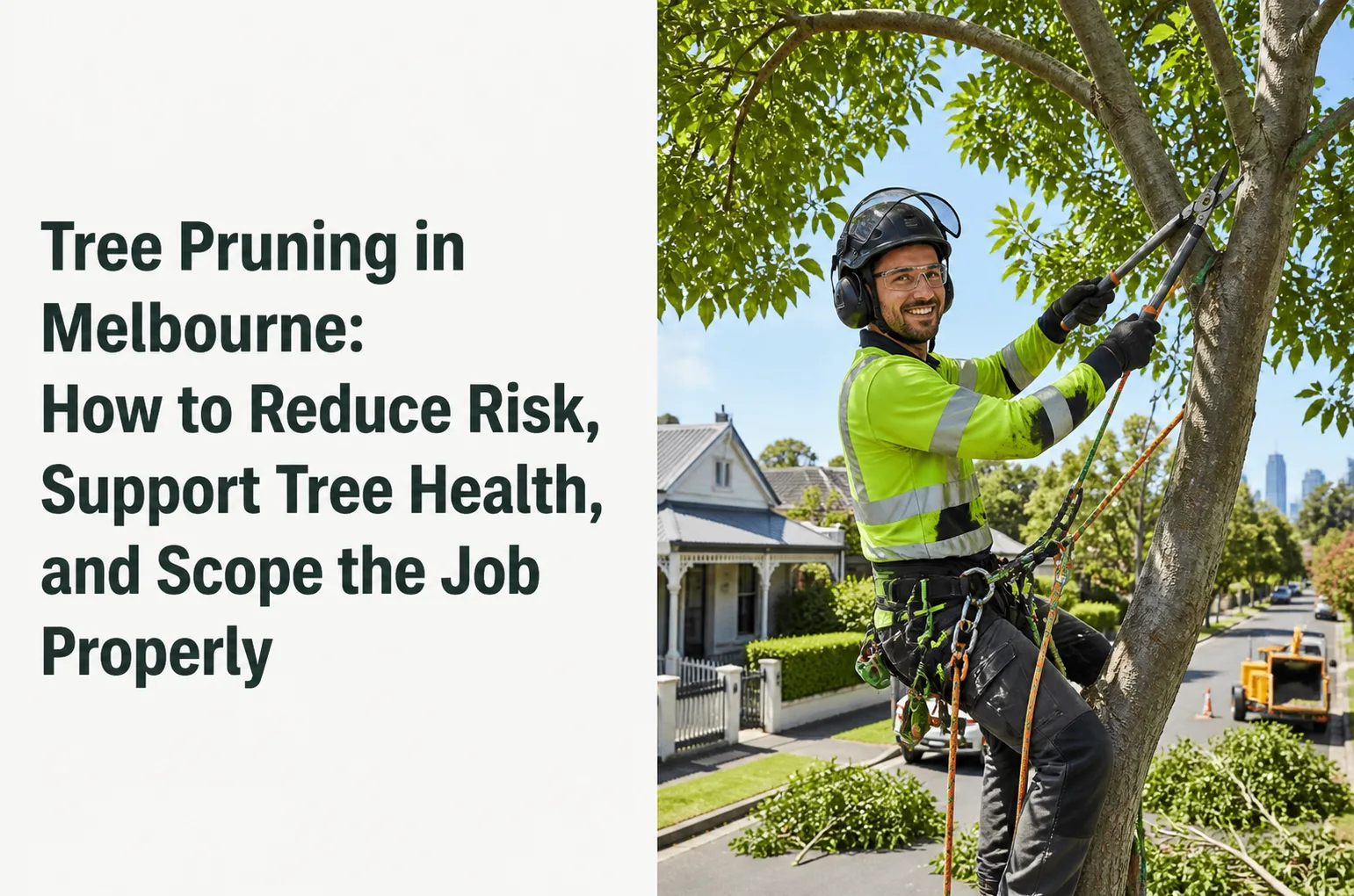
Tree pruning is one of the few garden tasks where a “tidy up” can accidentally create a bigger risk.
When people ask for reliable tree pruner support, they’re usually trying to reduce risk without wrecking the tree’s structure.
In Melbourne’s mix of tight blocks, shared driveways, and overhanging canopies, the best outcomes come from clear priorities: safety first, tree health second, aesthetics last.
What pruning is actually trying to achieve
Pruning is selective work that changes how weight, wind-load, light, and regrowth behave.
Sometimes the goal is clearance (rooflines, paths, driveways); sometimes it’s risk reduction (deadwood, cracked limbs, poor unions); sometimes it’s long-term structure (correcting competing leaders or reducing end-weight on specific branches).
Good pruning should make the next few years easier, not the next few months uglier.
A well-scoped job also acknowledges what pruning can’t solve: if the underlying issue is site stress (root disturbance, drought, soil compaction, or repeated damage), cutting alone may not deliver the “set and forget” result people hope for.
Common mistakes that create weak regrowth and repeat work
The most common mistake is asking for “make it smaller” and leaving everything else vague.
If the brief is “make it smaller”, the outcome is usually either too aggressive or not targeted enough.
Heavy lopping/topping creates large wounds and often drives fast, weak shoots that need repeat trimming, especially where wind exposure is high.
Another trap is skipping prioritisation on multi-tree properties: when time is spread thinly across five trees, the high-risk limb you actually needed dealt with can be left for “next time.”
Rushed timing is also expensive, booking at the last minute ahead of storms or renovations tends to reduce careful decision-making about access, drop zones, and cleanup.
And if access and disposal aren’t planned (gates, parking, neighbour proximity, where material will go), the job can become more disruptive than it needs to be.
Decision factors before you book
Start with risk indicators you can see: deadwood, cracked limbs, rubbing branches, heavy overhangs, and unions that look strained or poorly formed.
Then consider what matters most on your site: protecting a roof, improving clearance over a driveway, reducing branch drop over a footpath, or keeping shade for summer.
Access is a safety factor, not just a convenience.
Tight side access, steep blocks, busy streets, and shared driveways all affect how safely material can be lowered and how much protection is needed for gardens, fences, and vehicles.
Also think about constraints: proximity to neighbouring property, lines/structures, and any local requirements that might affect what can be pruned and when (rules vary by location and situation).
Finally, be realistic about “one visit” outcomes, sometimes the safest approach is staged work that avoids removing too much canopy at once.
What to ask before booking so quotes are comparable
Ask for the outcome in plain English, not just “prune tree.”
Good answers sound like: remove deadwood; reduce end-weight on nominated limbs; lift canopy for clearance; thin to reduce sail; correct structure at specific unions.
Confirm limits: how much canopy is likely to be removed, what won’t be touched, and what you should expect the tree to look like immediately after (and after regrowth).
Clarify site protection and logistics: what gets covered, what access is required, where material will be staged, and how waste is removed.
Ask how the crew will handle “unknowns” discovered on the day (hidden decay, nests, unexpected access constraints), so variations don’t become arguments.
If it helps to sanity-check scope and access before you book, The Yard pruning guide is a practical reference for organising the questions that keep pruning jobs predictable.
A simple 7–14 day plan to get the job scoped properly
Day 1–2: Walk the site and write a one-sentence goal per tree (risk reduction, clearance, structure, light), then rank them by urgency.
Photos taken from the same three angles are the fastest way to get an accurate scope.
Day 3–4: Map constraints, gates, parking, neighbour proximity, shared access, and likely drop zones, so you’re not discovering them on the day.
Day 5–6: List non-negotiables (protect specific beds, keep a path open, avoid certain areas) and nice-to-haves (tidier shape, more light).
Day 7–10: Request a written scope that states outcomes, limits, cleanup, and waste handling so quotes are truly like-for-like.
Day 10–14: Confirm timing and access arrangements, and plan for the property to be usable during the work (pets, cars, tenant access, noise windows).
Operator Experience Moment
The toughest jobs aren’t the tallest trees, they’re the vague briefs. When the goal is only “cut it back,” crews are forced to guess priorities and the result can feel harsher than expected. The cleanest outcomes come from specific targets: what’s being removed, why, and what the tree should look like afterward.
Specific scope turns a risky job into a controlled one.
Local SMB mini-walkthrough in Melbourne, VIC
A property manager in the inner south-east needs clearance over a shared driveway and fewer branch-drop complaints from tenants.
They prioritise one high-risk limb and one clearance line instead of a broad “reduce the canopy” request.
They confirm a safe drop zone and waste path so material isn’t dragged through common areas all afternoon.
They schedule work between inspections to minimise disruption and keep access predictable for the crew.
They request a written summary of what was done so the next visit is planned, not reactive.
They set a light follow-up check after the next growth cycle instead of waiting for an emergency call.
Practical opinions
If the job goal is unclear, the cuts will be too.
Smaller, targeted pruning often beats one aggressive “once and done” visit.
Access and waste planning are part of the work, not an afterthought.
Key Takeaways
- Good pruning is selective: it targets risk, clearance, and structure rather than “making it smaller”
- Most repeat problems come from over-cutting and vague scope
- Comparable quotes require written outcomes, limits, access assumptions, and waste handling
- A short 7–14 day prep plan prevents rushed decisions and reduces disruption on the day
Common questions we hear from businesses in Melbourne, VIC
Q1: How do we know if pruning is enough, or if there’s a bigger issue?
Usually the decision comes down to visible risk signs (deadwood, cracks, poor unions) and whether the same problems keep returning after “tidy ups.” Next step: photograph the tree from three consistent angles and request a scope that targets specific risks rather than general reduction. In Melbourne’s denser suburbs, proximity to neighbours and shared driveways often makes targeted work safer than broad canopy cuts.
Q2: Is “lopping” the same as pruning?
It depends on how the term is being used, but in most cases lopping implies heavier cuts that can drive weak regrowth and repeat maintenance. Next step: ask what cuts will be made and what each cut is intended to achieve (clearance, weight reduction, structural correction). In most Melbourne gardens, outcome-based scoping produces a more natural result and fewer surprises.
Q3: What should be included in a quote so there are fewer surprises?
In most cases, you want the trees and outcomes listed, access assumptions stated, waste removal and tidy-up defined, and a clear process for variations if hidden issues appear. Next step: send one written scope to each provider and ask them to respond against it so you can compare like-for-like. In Melbourne, parking and narrow access can materially affect setup time, so documenting constraints early reduces day-of changes.
Q4: When is the best time of year to prune in Melbourne?
Usually it depends on the species, the goal (risk reduction vs structure vs clearance), and whether the tree is already stressed, so there isn’t one universal “best month.” Next step: define the purpose first, then ask for timing guidance that suits that tree and your site conditions. In Melbourne, sudden heat and weather swings can increase stress, so avoiding unnecessary heavy cuts in tougher periods is often the safer approach.