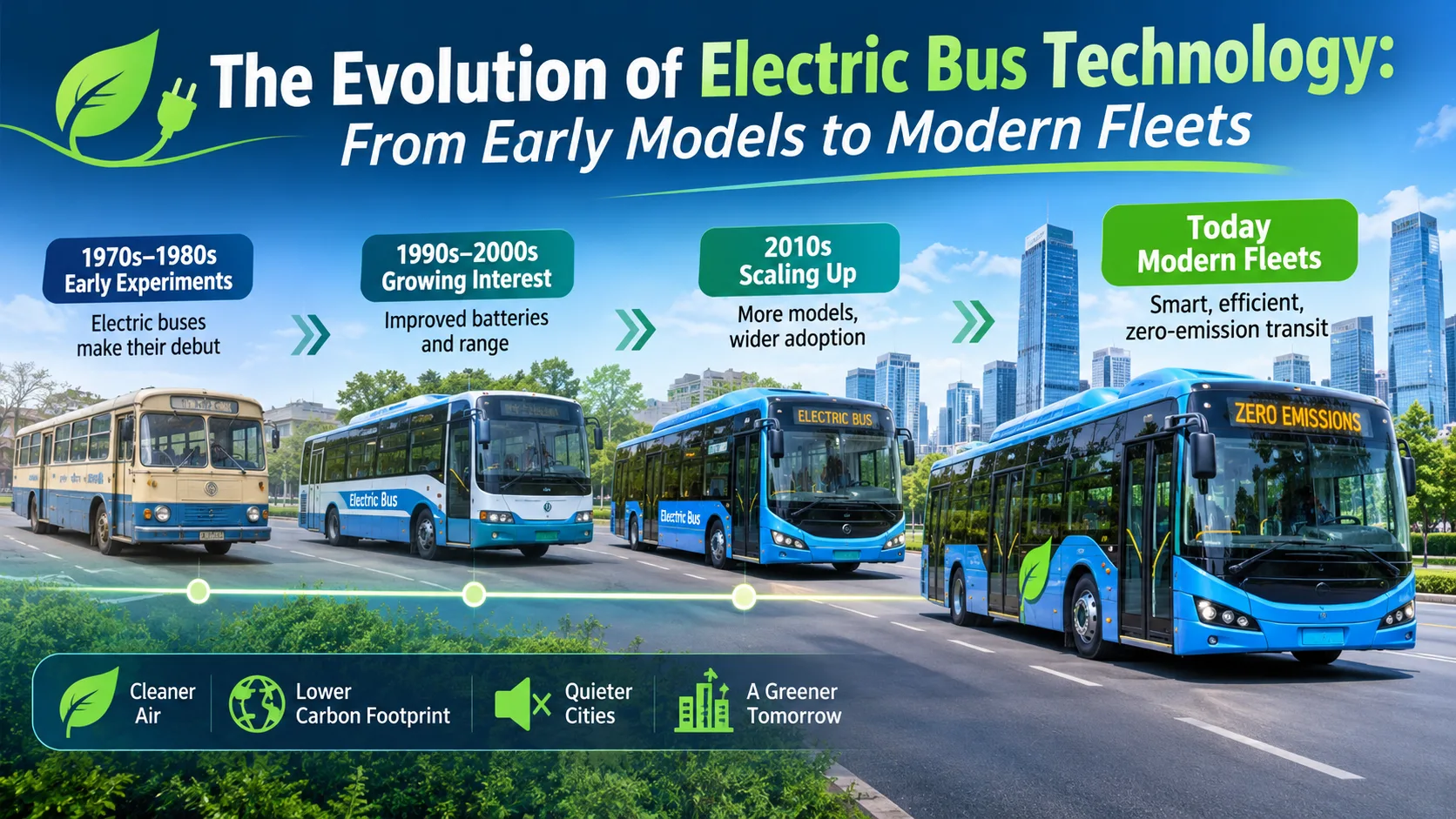
The electric bus has travelled a long way from a curious experiment to the backbone of modern public transport planning. Cities around the world, including those in India, are rethinking how people move, and the electric bus sits at the centre of that conversation. Cleaner air, quieter streets and lower running costs are driving adoption faster than many analysts predicted a decade ago. This shift did not happen overnight, though. It is the result of more than a century of experimentation, steady advances in batteries and motors, and growing pressure to decarbonise urban mobility. Let's trace the journey from early models to today's modern fleets.
The Early Days: Electric Mobility Before Its Time
Electric propulsion is older than many people realise. In the late nineteenth and early twentieth centuries, electric vehicles competed directly with steam and petrol engines, and battery-powered omnibuses ran in several major cities. Trolleybuses, which draw power from overhead wires, later proved that electric drive could carry heavy passenger loads reliably. However, early battery technology was the weak link. Lead-acid batteries were heavy, offered limited range and took hours to recharge. As cheap fuel spread and combustion engines improved, the diesel bus took over, and the electric bus faded into a niche for decades.
The Revival: Lithium-Ion Changes Everything
The turning point came with lithium-ion batteries. Originally developed for consumer electronics, they offered far higher energy density, longer life and faster charging than older chemistries. During the 2000s and 2010s, manufacturers began adapting them for commercial vehicles. Early modern prototypes were often limited to short city routes and needed large battery packs that added weight and cost. Even so, pilot projects across Asia, Europe and North America showed something important: an electric bus could complete a full day of city service with a much lower energy cost per kilometre and zero tailpipe emissions. Governments responded with subsidies, emission norms and procurement targets, giving manufacturers the confidence to invest at scale.
Key Technology Advances Behind the Modern Electric Bus
Several innovations shaped the modern electric bus.
Smarter batteries. Lithium iron phosphate chemistry became popular for its thermal stability, long cycle life and strong safety record. Today's packs include battery management systems that monitor temperature, voltage and cell health in real time, protecting against overheating and extending service life.
Efficient motors and regeneration. Permanent magnet motors deliver smooth, instant torque, while regenerative braking recovers energy every time the bus slows down, which is especially valuable in stop-and-go traffic.
Flexible charging. Charging has moved from slow overnight plug-ins to a mix of depot charging, fast chargers and opportunity charging at terminals. Fast chargers top up batteries quickly, while standard overnight charging remains ideal for fleets with predictable schedules.
Connected software. Telematics now track energy use, driver behaviour and maintenance needs, helping operators plan routes and schedule charging more efficiently.
Lighter, stronger design. Better materials and optimised body structures reduce weight, allowing more passengers or longer range from the same battery capacity.
From Compact Shuttles to Full-Size Fleets
The electric bus is no longer a single product. Modern ranges now span vehicles from about five metres for campuses and school transport to 18-metre articulated buses built for bus rapid transit corridors. Standard 12-metre city buses with three doors serve everyday urban routes, while 13.7-metre high-capacity models carry more commuters during peak hours. Double-decker versions help dense cities add capacity without needing more road space. Beyond city limits, intercity and tour coaches are available in luxury configurations with single or dual windshield designs, and commuter variants cater to staff and suburban transport. This variety shows how far the technology has matured: operators can now match an electric bus to nearly any passenger-capacity requirement.
Safety, Certification and Reliability
Trust is essential when public money and passenger lives are involved. Reputable manufacturers now test every electric bus against international standards, with approvals from Chinese, Australian, American and European regulators becoming a common benchmark of quality. Advanced battery protection systems, robust structures and rigorous testing help these vehicles operate reliably across different climates and terrains, from hot, humid plains to hilly intercity routes.
The Economics: Lower Cost Per Kilometre
An electric bus has a higher upfront price than a diesel equivalent, but the running costs tell a different story. Electricity costs less than diesel per kilometre, and electric drivetrains have far fewer moving parts, which means lower maintenance and fewer breakdowns. Over a typical service life, these savings can offset the initial investment and deliver a lower total cost of ownership. For fleet operators, corporates and transport authorities, that predictability makes long-term budgeting easier, especially when reliable sales, service and after-sales support are available locally.
Cleaner Air, Quieter Cities
Perhaps the biggest benefit of the electric bus is what you do not see or hear. With zero exhaust emissions, it improves air quality along busy corridors, and its low-noise operation makes streets calmer for residents, pedestrians and passengers. For Indian cities battling pollution, replacing ageing diesel buses with electric alternatives is one of the most visible steps toward cleaner public transport.
Challenges That Remain
Progress has not removed every hurdle. Charging infrastructure must keep pace with fleet growth, grid capacity needs careful planning, and upfront financing remains a barrier for smaller operators. Battery recycling and second-life use also need stronger systems. The good news is that policy support, falling battery prices and growing operator experience are steadily addressing these gaps.
What Lies Ahead
Expect longer-range batteries, faster charging, wireless and automated charging options, and smarter fleet software powered by data. Solid-state batteries and vehicle-to-grid concepts may eventually turn each electric bus into a mobile energy asset as well as a passenger carrier.
Conclusion
From early battery-powered omnibuses to today's diverse, certified and cost-efficient fleets, the electric bus has come of age. As technology improves and cities prioritise sustainability, it will play a central role in shaping cleaner, quieter and smarter public transport for everyone.