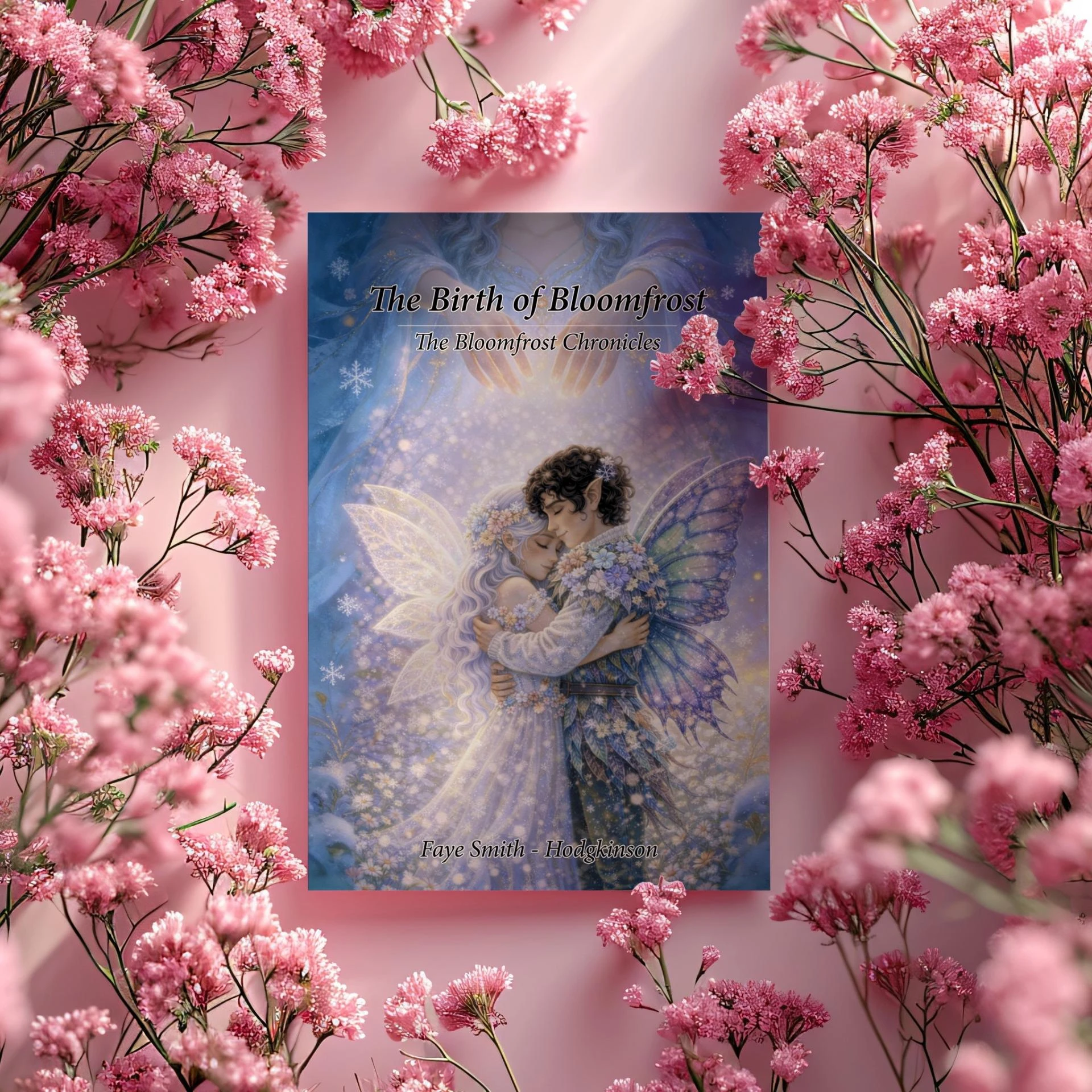

In The Bloomfrost Chronicles, author Faye Smith-Hodgkinson uses the language of seasons not merely as setting, but as emotional expression. Winter, spring, summer, and autumn are not just times of year—they are reflections of fear, growth, restraint, passion, and change.
From the opening of The Birth of Bloomfrost, the world is defined by boundaries. Seasons are not meant to touch. Each has a purpose, a rhythm, and a responsibility. This order is not portrayed as cruel, but as protective. Winter preserves. Spring awakens. Balance sustains life.
When Lumi and Aerin meet, it is not an act of rebellion—it is an accident of proximity, timing, and openness. Their love challenges the idea that separation always equals safety. The resulting season, Bloomfrost, is not chaotic. It is careful. Snow falls softly enough for blossoms to rise. Cold and warmth coexist without erasing one another.
This coexistence is the emotional heart of Bloomfrost. It suggests that opposing states—grief and joy, fear and courage, rest and growth—do not have to cancel each other out. They can exist together, if handled with care.
In The Season of Courage, this idea is tested. The world grows uneasy. The seasons begin to fear what Bloomfrost represents. Winter worries it will be forgotten. Spring fears it will never fully arrive. These fears are deeply human. They echo the anxiety that change brings to established identities.
Rather than personifying fear as a villain, Faye Smith-Hodgkinson allows it to spread quietly. Snow grows sharper. Growth becomes rushed. Balance frays. This subtle unraveling mirrors how emotional imbalance often occurs—not through sudden disaster, but through accumulated uncertainty.
The brilliance of the second book lies in its refusal to resolve fear through force. Lumi and Aerin are not sent to conquer the seasons. They are sent to walk them. Separately at first, then together. Winter teaches endurance. Spring teaches patience. Summer softens. Autumn learns that endings can still be kind.
Each season becomes an emotional lesson.
When fear finally takes form, it asks a question that cuts to the core of the story: “What if love fails?” This question reframes courage entirely. Courage is no longer about certainty or victory—it is about commitment despite uncertainty.
Lumi and Aerin do not argue with fear. They stand before it. They remain visible. They hold hands. Their response—choosing to try again—redefines strength as persistence rooted in compassion.
By the end of The Season of Courage, Bloomfrost no longer exists as a miracle dependent on two characters. It becomes a shared understanding. The world learns that change does not require domination. It requires listening.
Through seasonal symbolism, Faye Smith-Hodgkinson crafts a fairy tale that feels deeply modern. It speaks to children learning emotional awareness and to adults navigating complexity, responsibility, and love in uncertain times.
Bloomfrost teaches that balance is not static. It must be tended. And courage, at its truest, is the willingness to remain gentle even when fear demands otherwise.