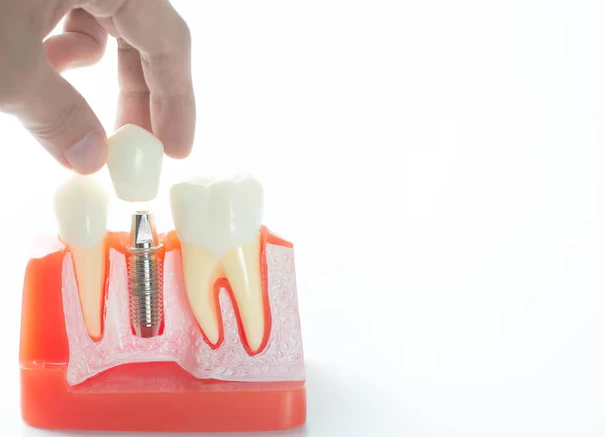
A single tooth implant Oviedo FL serves to replace a lost tooth by inserting a titanium post, known as the implant, into the jawbone. Following a process called osseointegration, where the implant bonds with the bone, a crown is then affixed to the post, effectively restoring both the appearance and functionality of the tooth. This procedure entails the surgical placement of the implant, a subsequent healing phase, and the eventual attachment of an abutment, which acts as a connector, before finally securing the crown.
Advantages of Single Tooth Implant
Dental implants offer numerous benefits compared to alternative tooth replacement methods. They not only mimic the look and function of a natural tooth but also allow for the replacement of a single tooth without compromising the health of adjacent teeth. In contrast, a tooth-supported fixed bridge, a common solution for a missing tooth, necessitates the alteration of neighboring teeth by grinding them down to provide support for the cemented bridge.
Moreover, single tooth implant Oviedo FL contribute to better preservation of the jawbone by replacing the tooth root. In the case of a bridge, the bone surrounding the missing tooth may begin to resorb or deteriorate over time. Dental implants, however, integrate seamlessly with the jawbone, promoting its health and stability, thereby preventing bone loss.
In the long run, a single tooth implant Oviedo FL tends to be more aesthetically pleasing and simpler to care for compared to a bridge. One issue with bridges is that the gums may recede, which can expose the metal base or collar, creating an unsightly appearance. Additionally, bone resorption beneath the bridge can detract from the overall smile. Furthermore, the cement that secures the bridge can deteriorate over time, potentially leading to bacterial decay in the supporting teeth.
Placement of Implant
The initial phase of single tooth implant Oviedo FL procedure involves inserting a device resembling a screw or cylinder into the jawbone. This implant is then allowed to integrate with the bone over a period of two to six months, establishing a stable foundation for the future artificial tooth. During this healing phase, patients can utilize a temporary tooth replacement to cover the implant site.
Typically, a subsequent step is required to expose the implant and attach a healing cap. This cap serves as a temporary extension that prepares the site for the final tooth placement. After this step, the gums will need a few weeks to heal before the permanent tooth can be affixed.
A crown, which serves as a replacement tooth, will ultimately be crafted for you and secured to a small metal post known as an abutment. In a brief period, you will regain confidence in your smile as well as your capacity to chew and speak effectively. Dental implants are designed to look and feel remarkably natural, to the extent that you might not even remember having lost a tooth.