Most conversations about branded workwear in Dubai start with logos, colour matching, and embroidery placement. Fabric barely comes up until something goes wrong — a team of outdoor staff arriving for a client handover drenched in sweat, or uniforms that look presentable in October but practically unwearable by July. Then fabric becomes the only conversation.
I've been working with companies on branded company uniforms Dubai for over a decade, supplying everyone from hotel groups on Sheikh Zayed Road to construction crews in industrial areas. The single most expensive mistake I see repeatedly isn't poor logo placement or late delivery. It's fabric selected without any real understanding of what the Dubai climate actually does to a garment over a working day.
What Dubai's Climate Actually Demands from a Fabric
People know it's hot. What they underestimate is the combination — heat, humidity (particularly from June to September along the coast), and the jarring temperature contrast between outdoor and indoor environments. A staff member walking from a chilled lobby at 20°C into 43°C afternoon heat puts enormous stress on both the garment and the person wearing it.
The fabric needs to handle moisture movement, maintain structure under heat, and recover its appearance after a long shift. That's a demanding brief.
The Outdoor-Indoor ProblemThis is genuinely underappreciated. Retail staff, hotel doormen, property agents — they move between air-conditioned interiors and outdoor heat dozens of times a day. A fabric that breathes beautifully outside can feel cold and clingy once soaked inside a chilled building. This is why single-layer polyester blends with no moisture management properties fail these roles almost immediately.
Fabrics That Actually Work
Cotton-Polyester Blends (65/35 or 60/40)This is still the workhorse for most indoor and semi-indoor roles. A 65% polyester, 35% cotton blend gives you shape retention from the polyester and some breathability from the cotton. It holds printed or embroidered logos well, launders easily, and doesn't wrinkle badly after a shift.
For reception staff, retail teams, and anyone primarily working indoors with occasional outdoor exposure, this is often the most practical and cost-effective choice. The mistake businesses make here is going full 100% cotton thinking it's more comfortable. Pure cotton absorbs moisture and holds it — in Dubai's summer, that means a staff member's shirt is visibly wet within an hour of outdoor exposure. It also loses shape faster, which matters when you're spending on branded embroidery.
Performance Polyester (Moisture-Wicking Fabrics)For roles with sustained outdoor exposure — security staff, delivery teams, outdoor hospitality, FM workers — moisture-wicking polyester is worth the premium. These fabrics pull sweat away from the skin and allow evaporation. Modern versions are far softer than the stiff sports-wear feel people associate with early performance fabrics.
The weight matters enormously here. A 140–160gsm moisture-wicking fabric will feel genuinely light in summer. Anything above 180gsm for a polo shirt in a fully outdoor role is probably too heavy for June through September.
One honest observation: a lot of procurement teams choose performance fabrics based on what they've seen in activewear catalogues, then wonder why the finished uniforms still feel oppressive. Fabric construction — the weave type, the yarn treatment — matters as much as the fibre content percentage. Ask suppliers for actual sweat-management test data, not just marketing language.
Linen BlendsLinen has had a quiet resurgence in hospitality and real estate uniforms, particularly for customer-facing roles where appearance is premium. A linen-cotton or linen-polyester blend breathes exceptionally well. The natural texture reads as intentional, which works well for upscale property or luxury retail environments.
The drawback is honest: linen wrinkles. Some brands lean into this as a design characteristic; others find it creates presentation issues by mid-afternoon. It also doesn't hold sharp embroidery as crisply as tighter-weave fabrics. Know what you're buying it for.
Technical Stretch FabricsIncreasingly popular for security, events, and field service roles. These usually combine polyester with elastane (3–8%) to allow freedom of movement. They tend to have a structured, professional appearance while accommodating physical activity. The stretch also means a better fit across varied body types, which reduces complaints from staff and improves how the branded workwear looks collectively.
Common Mistakes Companies Make
Buying on GSM alone. Weight is one factor, not the deciding one. A 200gsm pique polo in the right moisture-wicking construction will outperform a 160gsm basic jersey in summer conditions. Stop comparing weight in isolation.
Ordering samples in winter. Companies doing uniform refreshes in October or November get their fabric samples, wear them for a day in pleasant weather, and approve. The same fabric in August is a completely different experience. If you're sourcing new uniforms, get the samples worn in actual summer conditions before committing to volume.
Ignoring washing performance. Branded company uniforms in Dubai typically get washed very frequently — sometimes daily for food service or hospitality roles. A fabric that looks sharp after five washes and pilled after fifteen is not a good investment at any price point. Ask specifically about wash-cycle durability.
Choosing fabric without consulting staff. This sounds obvious. It's almost never done. The people wearing uniforms eight hours a day in summer have extremely useful opinions. The one time I've seen a company do proper staff consultation before a fabric decision, they avoided a costly bulk order mistake because the outdoor team flagged that the selected fabric generated static electricity — a known issue with certain polyester constructions.
A Note on Colour and Fabric Interaction
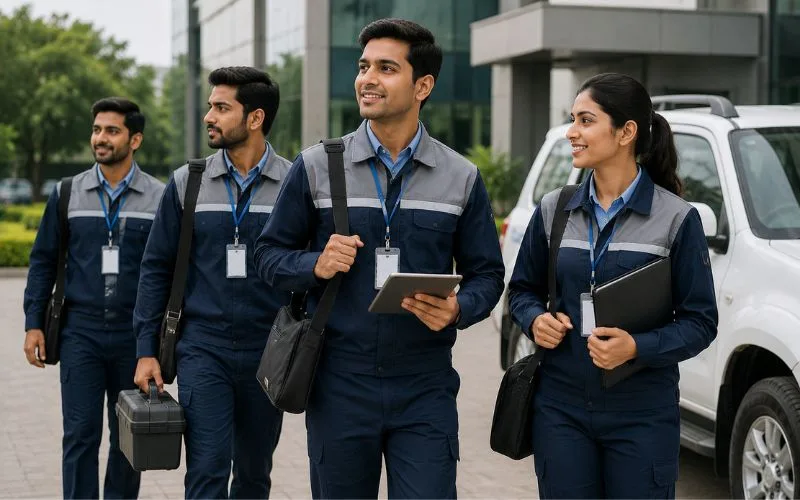
Dark colours absorb more heat — this is physics, not preference. For outdoor roles in a dark navy or black uniform, fabric choice becomes even more critical because the garment itself is adding to the thermal load on the wearer. If your brand colour is dark and you have outdoor-heavy roles, the fabric spec needs to work harder. Lighter base colours with darker branded panels are a practical compromise some companies adopt successfully.
Practical Takeaway
Before you finalise any fabric decision for branded workwear in Dubai, map the actual working conditions: time outdoors versus indoors, physical activity level, frequency of washing, and whether appearance maintenance throughout a full shift is a business requirement. A back-of-house role in a chilled kitchen has completely different needs from a valet team working the car park in August.
The fabric spec should follow the working condition analysis — not the other way around.
FAQs
Q: What's the best fabric for outdoor staff uniforms in Dubai summer?Lightweight moisture-wicking polyester in the 140–160gsm range is the most practical choice for sustained outdoor exposure. Look for fabrics with documented sweat-transport properties, not just marketing claims about breathability.
Q: Can we use 100% cotton for staff uniforms in Dubai?It's not recommended for outdoor roles. Cotton absorbs and holds moisture, which means visible sweat patches and discomfort. A cotton-poly blend is a better balance for most indoor or semi-indoor positions.
Q: How do we maintain uniform appearance through long shifts in the heat?Fabric choice is the foundation, but cut and construction also matter. Structured blends with polyester content hold their shape better than natural-fibre-heavy fabrics under heat stress. Providing staff with a mid-shift refresh option (spare shirt for long shifts) is a practical operational solution some hospitality businesses use.
Q: Does fabric colour affect how hot staff feel in uniforms?Yes, measurably. Dark colours absorb solar radiation more than light colours. For outdoor roles in peak summer, lighter coloured fabrics with dark branded elements are noticeably more comfortable than all-dark uniforms, assuming similar fabric specs.
Q: How many washes should a quality branded workwear fabric withstand before degrading?For commercial laundry conditions, a quality uniform fabric should maintain its appearance and structure for a minimum of 50–80 wash cycles. Ask your supplier for pilling resistance ratings and colourfastness data. For high-frequency-wash roles, this spec matters as much as the initial feel of the fabric.