You roll into camp after dark, the fridge losing its chill, your phone nearly dead and the van battery drained. An inverter generator turns that arrival around, delivering steady, hushed 240V electricity far from any mains outlet.
You do not have to buy the largest model. Buy the one that matches what you will plug in.
Choose badly and you will burn extra fuel and spend money for nothing. Choose well and electricity fades into the background.
How Does an Inverter Generator Actually Work — And Why Should You Care?
A conventional unit runs flat-out, but an inverter generator works differently. It creates alternating current, changes it into direct current, then rebuilds it as smooth alternating current, so laptops, chargers and fridges stay protected.
Its motor speeds up and slows down with demand:
- Sound stays low, usually 48-62 dB(A) at seven metres, more like people talking than a mower
- Fuel stretches further at part load, which is how most camping works
- The enclosed casing is simpler to carry and stow
The catch is you pay more for each watt, and these units dislike overload.
What Features Actually Matter When You Are Choosing One?
Forget about the big peak number on the carton. Rated output is the power it can sustain. Peak output is only a brief burst. A caravan air-conditioner can demand two to three times its normal draw when it starts, so a 2.4kW machine may cope with a fridge yet stall on air-con.
Match rated output to everything you will run together. Look for at least one 15A Australian outlet plus USB and USB-C.
Compare noise at seven metres at quarter and full load. Recoil is straightforward, remote starting feels like a luxury on a cold morning. Weight matters: 21kg can be managed solo, while 45kg and above becomes a two-person lift.
Table: Wildtrak Inverter Generator Comparison — Which Size Fits Your Trip?
| Model | Rated / Max Power | Best For | Starting |
| GT2400i-A Pro | 2.2kW / 2.4kW | Weekend camping, fridge, lights, charging | Recoil |
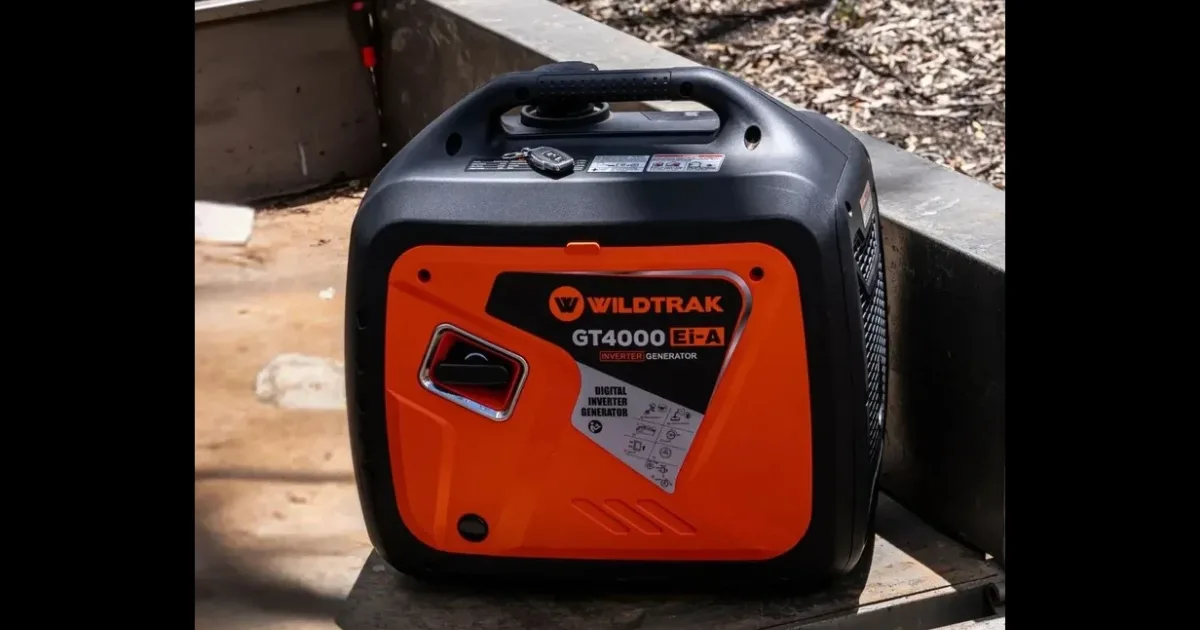
| GT4000 Ei-A Pro | 3.8kW / 4.0kW | Caravan, fridge + kettle, occasional air-con | Remote / push-button / recoil |
| GT5500 Ei-A Pro | 5.0kW / 5.5kW | Big van, air-con + appliances, worksite | Remote / push-button / recoil |
How Do You Pick the Right One for Camping, Caravanning and Off-Grid Life?
Begin with a list of loads rather than a product page:
- Fridge, lights, phones, kettle — record running watts
- Motors and compressors — allow for starting surge
- Add 10-20% on top — that is your target
As a guide, a 45L fridge might use 60W and a kettle 1800W. For a weekend under canvas, a 2.2kW unit is usually enough.
A caravan with fridge and kettle points toward 3.8kW. A large van with air-con in 38-degree heat points toward 5.0kW. Queensland Parks and Wildlife advises generators are banned in most parks, and where permitted, noise and hours are restricted.
In WA, the Department of Biodiversity, Conservation and Attractions advises hours differ, often 8am to 9pm. Product Safety Australia warns against ever operating a petrol generator inside.
Can You Pair an Inverter Generator With a Solar Blanket and Battery Power?
For a longer stay, yes. A hybrid setup runs like this:
- Solar blanket by day — quiet base supply for fridge and lights
- Generator for a short burst — bulk charging, kettle or air-con, then off
- Battery at night — silent power, no engine running
Never charge lithium straight from a generator unless a charger and battery are built for that. A 12V lithium battery for camping can be a strong part of the setup, but only when charged the right way. A solar blanket alone will not keep air-con going all night without a very large battery bank.
How to Keep an Inverter Generator Safe and Running?
Set it up outside, on level ground, clear of tents and caravan doors. Point the exhaust downwind. Never operate it inside a garage, tent or caravan. Carbon monoxide has no colour or smell and can kill quickly.
Servicing feels dull until it rescues a trip:
- Change oil to the manual schedule, more often in dust and heat
- Clean the air filter after dusty outback travel
- Drain or stabilise fuel if it sits over a month, stale fuel is the top no-start cause
- Run it under load for 15 minutes every few weeks
- Inspect plugs and cords before a long trip
When it refuses to start, look at fuel, oil and choke first.
Frequently Asked Questions
Can an Inverter Generator Run a Caravan Fridge and Air Conditioner Together?
It depends on the combined power demand of both appliances and their start-up requirements. Add the running wattage of the fridge and air conditioner, then factor in the extra power needed during start-up. If the total exceeds the generator's rated capacity, use the appliances separately or choose a larger generator.
How Long Can an Inverter Generator Operate on a Full Tank?
Generator runtime varies according to fuel capacity, power consumption and eco mode settings. Some smaller models can run for approximately 6–10 hours at 25–50% load. Higher loads generally result in faster fuel consumption. Refer to the manufacturer's manual for the expected runtime of your specific model.
Are Inverter Generators Permitted in Caravan Parks?
This depends on the rules of the caravan park. Some locations allow generator use during specific hours, while others restrict noise levels and where generators can be placed. Certain parks do not allow them at all. Check the park's regulations before your visit and never operate a generator inside an enclosed annex.
The Bottom Line
Selecting an inverter generator isn't simply about choosing the highest power output. The priority is finding a model that delivers sufficient power when your appliances need it. Size it from an honest load list, follow park rules and CO safety.
That separates fixing problems from camping. Decide from your real loads rather than the carton, and the generator will serve you for years.
Contact us with your fridge, air-con and appliance list and van setup, and the Wildtrak team will help you match the right inverter generator.