
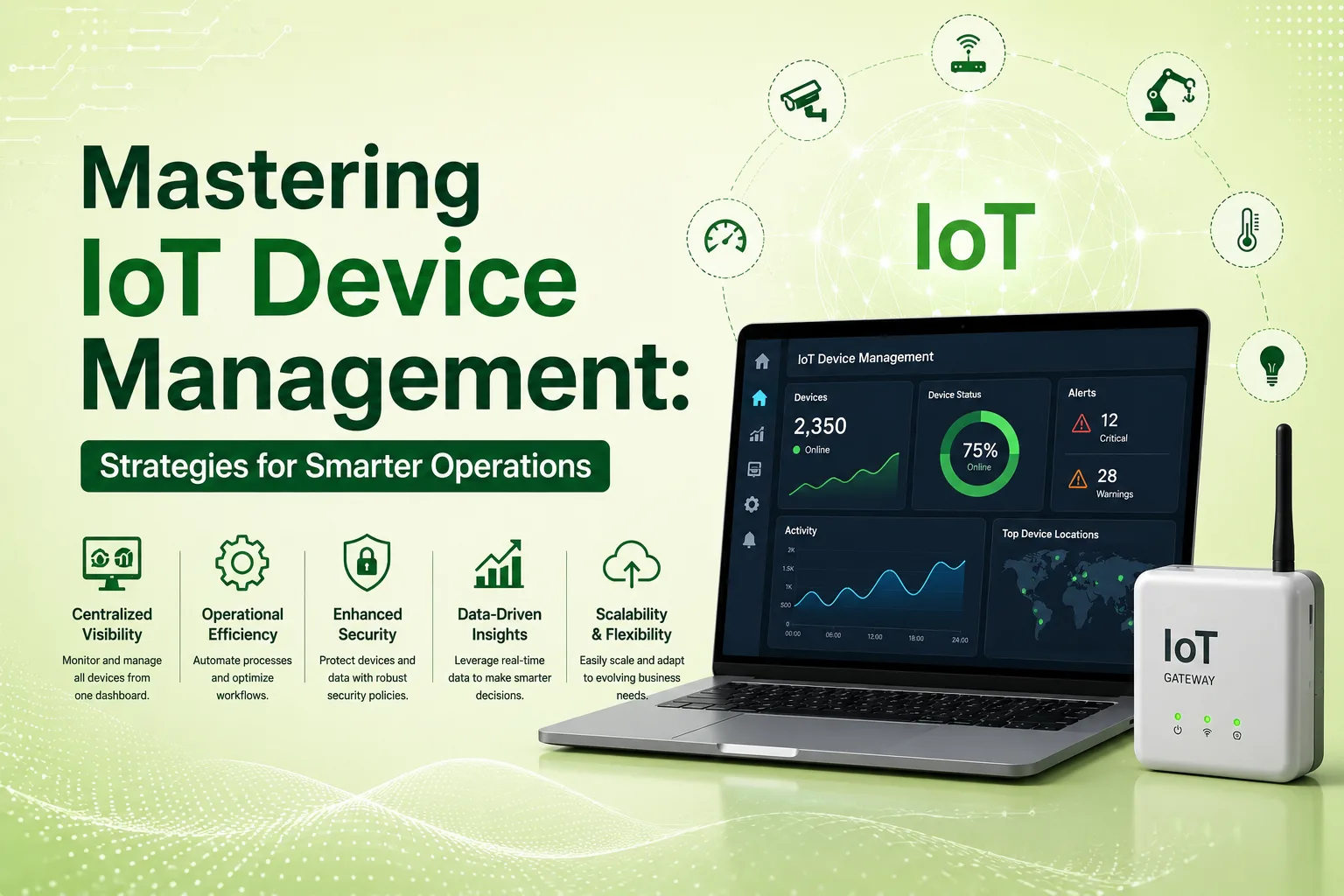
Connected technology is transforming the way businesses operate. As organizations continue to deploy smart devices across operations, managing those devices effectively becomes essential for performance, reliability, and long-term growth. The Complete Guide to Effective IoT Device Management helps businesses understand how to maintain control, improve efficiency, and maximize the value of connected environments.
IoT device management is more than simply connecting devices to a network. It involves monitoring, controlling, updating, securing, and maintaining devices throughout their lifecycle. When managed correctly, connected systems become more efficient, scalable, and easier to operate.
What Is IoT Device Management?
IoT device management refers to the process of organizing, monitoring, configuring, and maintaining connected devices from a centralized platform.
Businesses often operate hundreds or thousands of devices across multiple locations. Device management ensures that these connected systems function properly while maintaining security and operational efficiency.
This process supports every stage of the device lifecycle, including:
- Device onboarding
- Configuration management
- Performance monitoring
- Software updates
- Security controls
- Maintenance and optimization
Effective management helps organizations reduce complexity and improve visibility.
Why IoT Device Management Matters
As connected ecosystems grow, manual device control becomes difficult and inefficient.
A structured device management strategy allows organizations to:
- Improve operational control
- Reduce downtime
- Increase system reliability
- Strengthen security
- Support business scalability
Without proper management, businesses may face connectivity issues, delayed updates, and operational inefficiencies.
Core Components of IoT Device Management
Successful device management depends on several important capabilities.
Device Registration and Onboarding
Every connected device must be identified and added to the system before operations begin.
A structured onboarding process helps businesses:
- Register devices quickly
- Assign permissions
- Establish communication settings
- Reduce setup complexity
Efficient onboarding creates a strong foundation for long-term management.
Device Configuration
Connected devices often require customized settings based on operational requirements.
Configuration management allows teams to:
- Adjust device parameters
- Apply system policies
- Manage communication preferences
- Standardize device behavior
Centralized configuration improves consistency across operations.
Real-Time Monitoring
Continuous monitoring provides visibility into device performance and operational status.
Businesses can track:
- Device health
- Connectivity status
- Usage patterns
- Performance indicators
- System availability
Real-time insights support faster decision-making.
Remote Management
Managing devices remotely improves operational flexibility.
Remote capabilities may include:
- Device restart
- Configuration updates
- Diagnostics
- Issue resolution
- Performance adjustments
iot remote monitoring solution reduces operational delays and minimizes maintenance costs.
Firmware and Software Updates
Keeping devices updated is essential for maintaining performance and security.
Update management supports:
- Feature improvements
- Bug fixes
- Security enhancements
- System optimization
Automated updates reduce manual effort and improve reliability.
Security in IoT Device Management
Security plays a critical role in connected environments.
Because devices continuously exchange data, businesses must establish strong protection measures.
Important security practices include:
Authentication Controls
Only authorized devices and users should access the system.
Data Encryption
Encryption protects information during transmission and storage.
Access Management
Role-based access improves operational control.
Continuous Monitoring
Monitoring unusual behavior supports faster risk detection.
Update Management
Regular updates reduce vulnerabilities and improve resilience.
Strong security practices help maintain trust and operational stability.
Benefits of Effective IoT Device Management
Organizations that implement strong device management processes often experience measurable improvements.
Improved Operational Efficiency
Centralized control reduces manual tasks and improves productivity.
Reduced Downtime
Monitoring and proactive maintenance help minimize disruptions.
Better Device Performance
Consistent updates and monitoring improve overall reliability.
Lower Operational Costs
Automation and remote management reduce maintenance expenses.
Greater Scalability
Businesses can expand connected environments more efficiently.
Industries Using IoT Device Management
Many industries are using device management to improve operations and increase efficiency.
Manufacturing
Factories monitor and optimize production systems.
Logistics and Transportation
Fleet operations improve visibility and coordination.
Energy and Utilities
Organizations monitor infrastructure and optimize usage.
Smart Buildings
Connected environments improve energy and facility management.
Healthcare Operations
Organizations maintain reliable connected equipment performance.
Best Practices for Successful Device Management
Businesses can improve results by following proven management approaches.
Standardize Device Policies
Create consistent operating procedures across all devices.
Automate Repetitive Tasks
Reduce manual intervention wherever possible.
Monitor Performance Continuously
Track operational metrics and device behavior.
Prioritize Security
Protect devices throughout their lifecycle.
Plan for Growth
Build infrastructure that supports future expansion.
Common Challenges and How to Overcome Them
While device management delivers strong benefits, businesses should prepare for common challenges.
Managing Large Device Volumes
Use centralized platforms to simplify administration.
Maintaining Security
Implement layered protection and regular updates.
Handling Data Growth
Develop scalable data management strategies.
Supporting Multiple Locations
Use remote access and centralized visibility tools.
Addressing these challenges helps improve long-term success.
The Future of IoT Device Management
As connected technologies continue to evolve, device management solutions will become smarter and more automated.
Future developments may include:
- AI-driven management
- Predictive maintenance
- Advanced automation
- Improved analytics
- Faster decision-making
Organizations that invest in modern management strategies today will be better prepared for future digital transformation.
Accelerate Connected Operations with Kariot Services
Building reliable connected ecosystems requires more than deploying devices. Businesses need a trusted partner to manage implementation, monitoring, scalability, and long-term performance.
Kariot services support organizations with advanced IoT solutions designed to simplify connected operations and improve business outcomes.
From deployment and device integration to monitoring and optimization, Kariot helps businesses create secure, efficient, and future-ready digital environments.
Whether your goal is stronger operational visibility, improved performance, or scalable growth, Kariot delivers solutions built for long-term success.
Final Thoughts
Managing connected environments effectively is becoming a business necessity rather than an option.
Organizations that adopt structured device management strategies gain better control, improve efficiency, and create stronger operational foundations.
Ready to build smarter connected operations?