
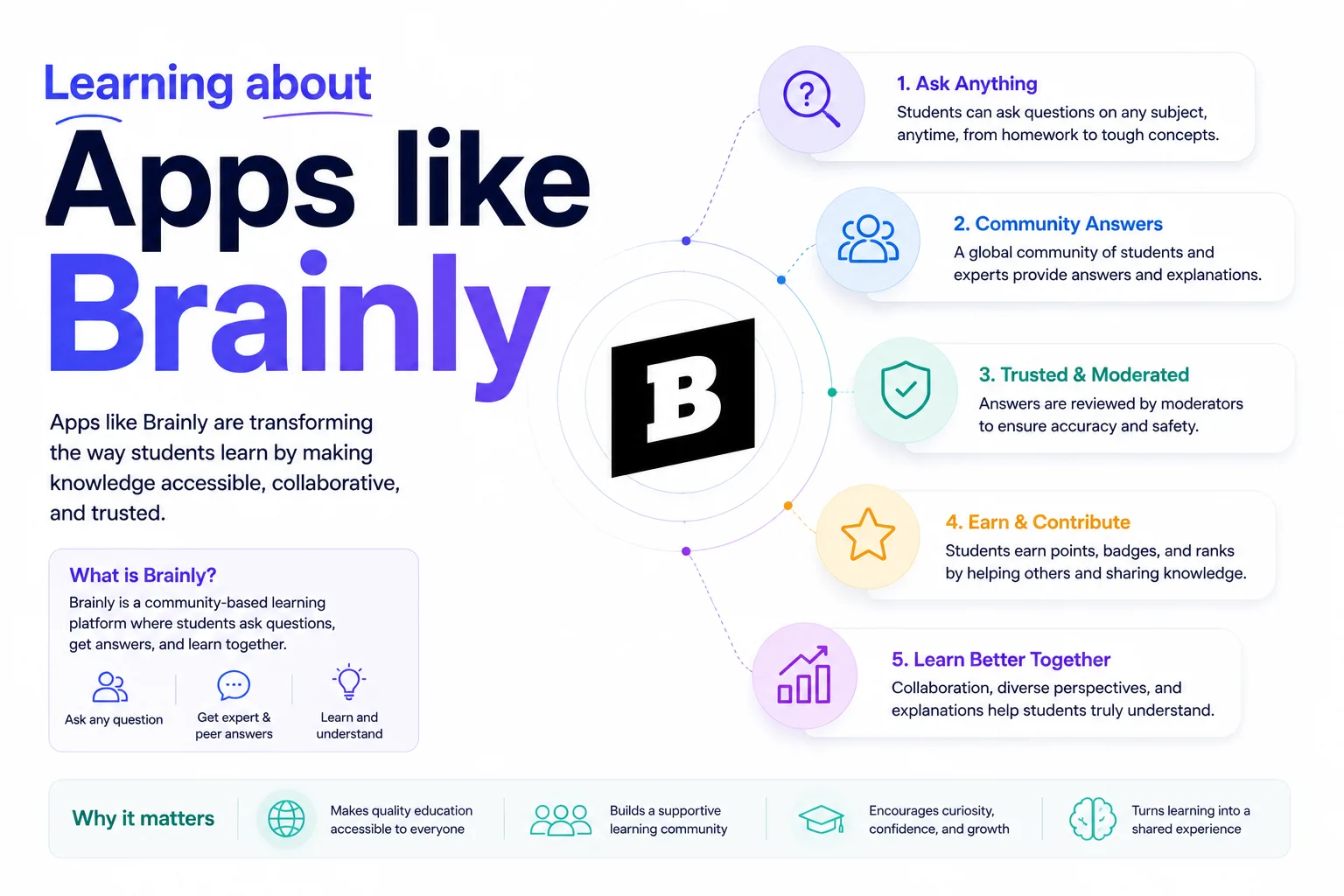
Educational technology has experienced enormous growth over the past decade. Millions of students now rely on digital platforms to access learning materials, solve homework problems, and connect with educational communities. While users often focus on the learning experience itself, another question sits behind the scenes: how do these platforms actually make money?
This question is particularly interesting when examining peer-learning communities. At first glance, platforms such as Brainly appear difficult to monetize. Most students expect educational support to be free, and communities thrive when participation remains accessible to as many learners as possible. Charging every user from day one could significantly reduce growth and limit the network effects that make peer-learning communities valuable.
An app like Brainly typically generates revenue through a combination of premium subscriptions, advertising, AI-powered learning tools, partnerships, and additional educational services. The challenge is creating a business model that supports long-term growth without restricting access to the community features that attract users in the first place. The most successful peer-learning platforms balance free participation with premium experiences that provide additional value to students and parents.
Understanding how these businesses operate is important for founders, investors, and EdTech companies looking to enter the collaborative learning market. Revenue strategy influences product design, user experience, growth priorities, and long-term sustainability. A strong monetization model is not simply about making money. It is about creating enough value that users willingly pay while preserving the educational mission that attracted them initially.
Why Monetization Is More Challenging in Education Than Other Industries
Many digital businesses can monetize quickly because users immediately understand the value they are receiving. Streaming platforms provide entertainment. Productivity software helps professionals work more efficiently. E-commerce platforms facilitate purchases.
Education operates differently.
Students are often not the paying customers. In many cases, parents, schools, universities, or institutions make purchasing decisions. This creates a more complicated relationship between product usage and revenue generation.
The challenge becomes even greater for peer-learning platforms because much of the content is generated by the community itself. Users are contributing answers, explanations, and discussions that help other learners. The platform must encourage participation while also creating opportunities for revenue.
If monetization becomes too aggressive, engagement can decline. If monetization is too limited, the platform may struggle to sustain operations and growth.
This balancing act explains why many EdTech startups fail despite building products that students genuinely enjoy using.
Why Free Access Is Usually the Foundation
One of the biggest lessons from successful peer-learning communities is that growth typically comes before monetization.
Students join because they can access help quickly. They contribute because they benefit from the community. The larger the community becomes, the more valuable the platform becomes for everyone involved.
This creates a classic network effect.
A student asking a biology question is more likely to receive a useful answer if millions of learners are participating. Likewise, students who enjoy helping others have more opportunities to contribute when the user base continues expanding.
For this reason, most platforms similar to Brainly adopt a freemium model.
The core experience remains free. Students can ask questions, browse discussions, and interact with the community without paying. This removes barriers to entry and accelerates user acquisition.
Only after establishing a large user base does the platform introduce premium experiences that generate revenue.
The free tier is not simply a marketing tool. It is the foundation upon which the entire ecosystem is built.
Premium Subscriptions: The Most Common Revenue Driver
While free access attracts users, subscriptions often provide the financial stability required for long-term growth.
The appeal of subscriptions is straightforward. Students who need additional support are willing to pay for enhanced experiences that help them learn more effectively.
These premium offerings may include faster responses, expert-verified answers, ad-free experiences, personalized study recommendations, or advanced learning tools.
The key difference between successful and unsuccessful subscription models lies in how value is presented.
Weak subscription models remove essential functionality and place it behind a paywall. Strong subscription models preserve the usefulness of the free experience while offering meaningful upgrades for users who want additional support.
This distinction is particularly important in education because trust plays a significant role in purchasing decisions. Students and parents need to believe that the platform is prioritizing learning outcomes rather than maximizing short-term revenue.
Platforms that maintain this trust often achieve stronger long-term retention and subscription conversion rates.
How Artificial Intelligence Is Creating New Revenue Opportunities
The rapid growth of artificial intelligence is reshaping EdTech monetization.
Historically, educational platforms generated revenue through content access. Today, many are generating revenue through personalized assistance.
Students increasingly expect instant explanations, adaptive learning recommendations, and intelligent tutoring experiences. AI makes these services possible at scale.
This creates a compelling premium offering.
Instead of simply paying for content, users pay for guidance tailored to their specific needs. The perceived value becomes significantly higher because the experience feels personalized.
For example, an AI tutor can identify recurring mistakes, recommend targeted resources, and explain concepts based on a student's current understanding level.
These capabilities transform educational platforms from information repositories into active learning companions.
As AI technology continues improving, personalized educational assistance may become one of the most important monetization opportunities available to peer-learning platforms.
The Role of Advertising in Educational Communities
Advertising remains a major revenue source across the digital economy, but its role in education requires careful consideration.
Excessive advertising can negatively impact learning experiences. Students who encounter constant interruptions may become frustrated and disengaged.
However, responsible advertising can help maintain free access for millions of learners.
This is why many educational platforms adopt a hybrid approach. Advertising supports free users, while premium subscribers receive an ad-free experience.
The effectiveness of this model depends on balance.
When advertisements become intrusive, users often seek alternatives. When implemented thoughtfully, advertising can subsidize educational access without significantly harming user satisfaction.
For growing platforms, advertising often serves as an important bridge between rapid user acquisition and mature subscription revenue.
Why Community Trust Is a Revenue Asset
Many founders think of monetization primarily as a financial challenge.
In reality, monetization is often a trust challenge.
Educational platforms operate in a space where credibility matters enormously. Students rely on information to improve academic performance. Parents trust platforms to support learning. Schools evaluate whether resources align with educational goals.
Every monetization decision influences that trust.
An organization developing an App like Brainly must consider not only how revenue will be generated but also how monetization affects user perception. The strongest educational brands understand that trust itself becomes a competitive advantage. When users believe a platform genuinely helps them succeed, they are far more likely to subscribe, recommend the service, and remain loyal over time.
Trust compounds in much the same way that network effects do. Small positive experiences accumulate, creating stronger relationships between users and the platform.
These relationships often become the foundation of sustainable revenue growth.
What the Future Looks Like for Peer-Learning Business Models
The next generation of peer-learning platforms will likely generate revenue through a broader mix of services than today's platforms.
Subscriptions will remain important, but new opportunities are emerging.
AI-powered tutoring, personalized learning pathways, assessment tools, certification programs, school partnerships, and enterprise education solutions are creating additional revenue streams.
The market itself is also evolving.
Students increasingly expect educational experiences that combine community interaction with intelligent assistance. This expectation creates opportunities for platforms capable of delivering both.
Companies that successfully integrate peer learning, personalization, and scalable business models will be well positioned to compete in the future EdTech landscape.
The goal is no longer simply building a large educational community.
The goal is building a sustainable ecosystem where students receive meaningful value and the business can continue investing in better learning experiences.
Conclusion
The success of an app like Brainly demonstrates that educational communities can become sustainable businesses when monetization aligns with user needs.
Rather than restricting access, the most effective business models expand value. Free experiences attract users and encourage participation. Premium services provide enhanced support for learners seeking additional help. Advertising, AI-powered tools, and educational partnerships create additional opportunities for growth.
As peer-learning platforms continue evolving, the companies that succeed will be those that balance accessibility, trust, community engagement, and revenue generation. In education, long-term success depends not only on acquiring users but on helping them achieve meaningful learning outcomes while creating a business capable of supporting that mission for years to come.
FAQs
How does an app like Brainly make money?
Most platforms generate revenue through subscriptions, advertising, AI-powered services, and educational partnerships.
Why do peer-learning platforms offer free access?
Free access helps grow the community, increase participation, and strengthen network effects.
Are subscriptions the primary revenue source?
For many mature platforms, subscriptions provide a stable and predictable source of recurring revenue.
Can AI improve monetization in educational apps?
Yes. AI tutoring and personalized learning experiences create premium services that many users are willing to pay for.
Is advertising effective for educational platforms?
Advertising can support free access, but it must be implemented carefully to avoid disrupting the learning experience.
What is the biggest challenge in EdTech monetization?
Balancing revenue generation with accessibility and user trust remains one of the most important challenges.