
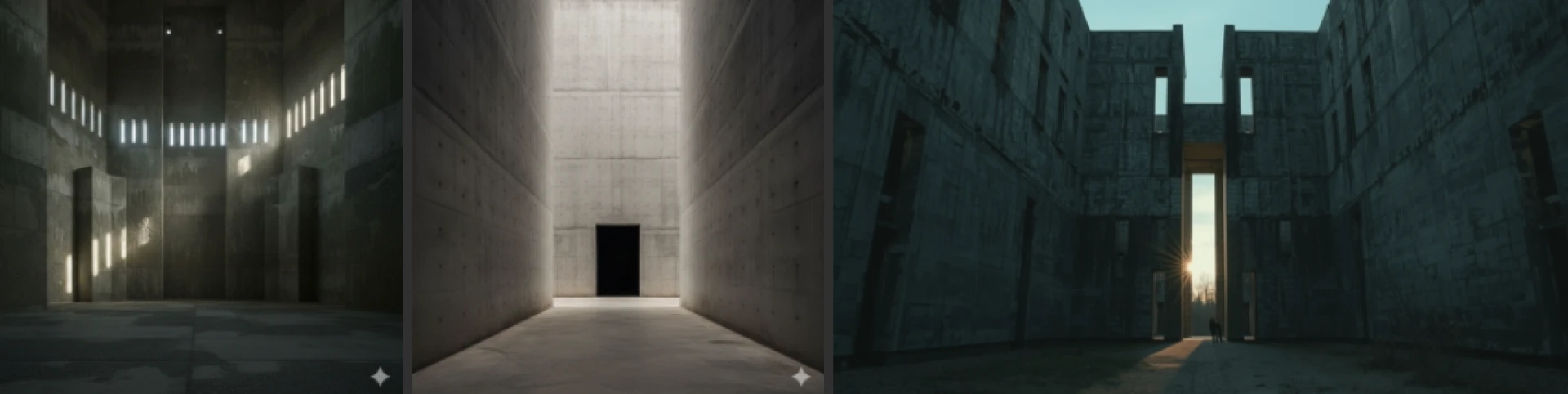
The Brutalist’s Ending and Life’s Purpose
The Brutalist presents an ending that forces us to confront the tension between journey and destination. In the traditional understanding, life is often framed as a path with a final goal in mind, a destination that validates the struggles and experiences along the way. However, this story challenges that notion, showing that the way we live and interpret our experiences might hold more weight than any endpoint we aim for. The ending pushes us to reconsider how we assign meaning to our lives and whether fulfillment arises from achieving milestones or embracing the lived moments themselves.
Examined Life versus Passive Existence
Finding meaning in life often requires reflection and self-examination. The Brutalist’s conclusion compels the audience to question whether they are living passively, moving from one achievement to the next without understanding the deeper implications of their actions. An examined life is one where choices, relationships, and values are consciously evaluated. It asks us to consider whether we are shaping our lives according to authentic principles or merely following routines that society has prescribed. The ending underscores that true insight and clarity emerge not from reaching a final destination but from engaging with the journey thoughtfully.
The Tension Between Journey and Destination
The debate between journey and destination lies at the heart of our understanding of purpose. Many philosophies emphasize the journey, suggesting that growth, learning, and experience are where meaning resides. Others argue that destinations, achievements, or tangible goals give life structure and significance. The Brutalist complicates this debate, revealing that neither perspective alone fully captures the human experience. By confronting mortality, consequence, and choice, the story illustrates that meaning may emerge in the interplay between how we navigate life and what we ultimately hope to attain.
Authenticity and Self-Reflection
Authenticity becomes a central theme when searching for life’s meaning. The Brutalist’s ending invites introspection: are we acting in alignment with our core selves or merely performing roles expected by others? Finding meaning in life often arises from authenticity, from acknowledging our desires, fears, and values, and acting in ways that reflect our true identity. Reflection on the life we have lived allows us to confront regrets, celebrate growth, and clarify what truly matters, creating a sense of purpose that is independent of external validation or societal standards.
The Role of Mortality in Understanding Purpose
Facing the inevitability of death amplifies the urgency of finding meaning in life. The Brutalist highlights how awareness of mortality sharpens our understanding of priorities and encourages deep reflection on what constitutes a worthwhile life. Recognizing that time is finite can shift our focus from superficial achievements to experiences, relationships, and personal growth that bring enduring fulfillment. This confrontation with impermanence suggests that meaning is less about reaching a final point and more about the depth and quality of engagement with life itself.
Integration of Experience and Reflection
The ending encourages integrating lived experiences with reflection, showing that meaning often arises from synthesis rather than singular achievements. Our lives are composed of moments, decisions, and relationships that, when examined together, reveal patterns, insights, and values that define our existence. The Brutalist demonstrates that understanding the significance of our journey requires stepping back, observing our choices, and drawing connections between our actions and their broader implications. In this way, meaning is not something we chase but something we uncover through reflection and awareness.
What Makes a Life Worth Living
Ultimately, the Brutalist challenges us to rethink what makes life worth living. Rather than presenting a clear answer, it emphasizes the active engagement with life as essential to finding meaning. Moments of connection, acts of courage, and the pursuit of authenticity form the substance of a fulfilling existence. The ending reminds us that meaning is not simply a product of reaching destinations but a dynamic process of living intentionally, reflecting honestly, and embracing the complexities of human experience.
Embracing the Uncertainty of Life
Finding meaning in life often requires accepting uncertainty and the absence of easy answers. The Brutalist’s conclusion does not resolve the tension between journey and destination but instead highlights the richness and depth that comes from grappling with ambiguity. This uncertainty encourages ongoing reflection, curiosity, and adaptability, allowing us to navigate life with a sense of purpose that evolves rather than remains fixed. Meaning, therefore, is not static but emerges through engagement, exploration, and a willingness to confront life in its full complexity.
Reflection as a Path to Fulfillment
In the end, the story suggests that reflection itself may be one of the most powerful tools for finding meaning in life. By examining our experiences, understanding our values, and acknowledging both triumphs and failures, we create a narrative that gives coherence and significance to our existence. The Brutalist’s ending challenges us to embrace reflection as an ongoing journey, demonstrating that the richness of life lies not solely in destinations achieved but in the conscious, thoughtful engagement with the journey itself.