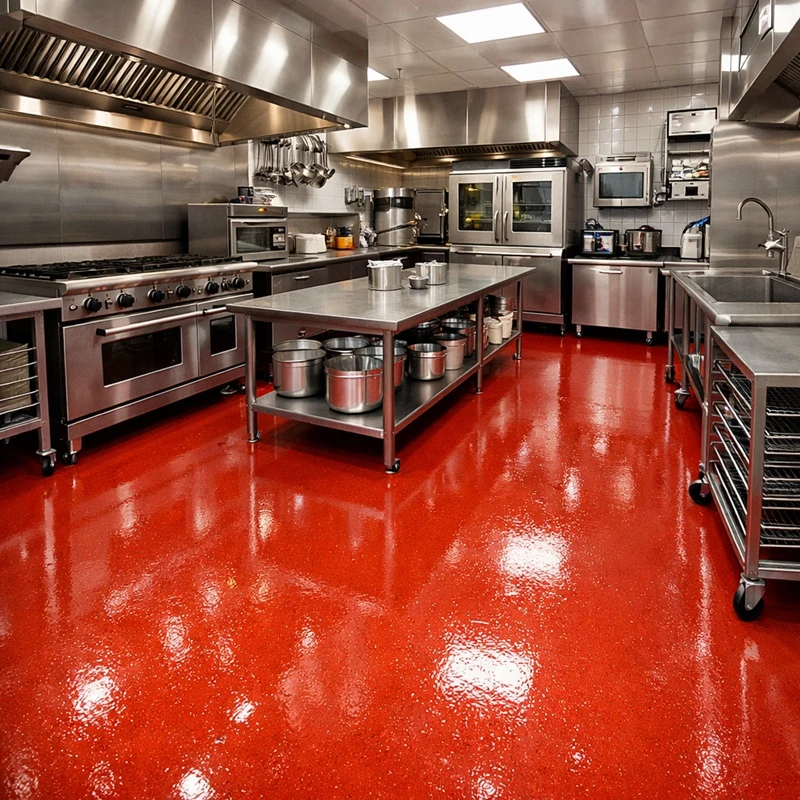
When designing a commercial space, the floor is often an afterthought. However, it is one of the most hardworking components of your building. In a kitchen environment, the floor must endure spilled oils, boiling water, dropped utensils, and constant foot traffic.
Choosing commercial kitchen epoxy flooring provides the resilience needed for these environments. It is a specialized solution that combines aesthetics with extreme durability. For any commercial building or warehouse, this type of flooring is a foundational requirement for safety and efficiency.
Long-Term Value of Commercial Kitchen Epoxy Flooring
The longevity of a floor impacts the bottom line of any business. Epoxy is known for its ability to resist wear and tear over many years. Unlike wood or laminate, it does not scratch easily and maintains its high-gloss or matte finish even under heavy use.
High Performance Systems offers professional contractor services to ensure these floors are installed to the highest standards. Their expertise in resin flooring for factories and warehouses ensures that your kitchen floor will be just as tough. A well-installed floor can last decades with proper care.
Slip Resistance and Employee Safety
In a fast-paced kitchen, speed is necessary, but safety is paramount. Wet floors are a leading cause of workplace injuries in the food service industry. Epoxy floors can be customized with quartz or aluminum oxide to create a non-slip surface.
This added traction does not make the floor harder to clean. It simply provides enough "grip" to prevent shoes from sliding on wet or greasy surfaces. Keeping your staff safe reduces workers' compensation claims and ensures a positive, productive working environment every day.
Environmental Impact of Resin
Modern epoxy systems are becoming more eco-friendly. Many formulations have low VOC (Volatile Organic Compound) levels, meaning they don't release harmful fumes during or after installation. This is important for maintaining indoor air quality in food-sensitive areas.
Comparing Epoxy to Traditional Tiling
Traditional quarry tile has been a staple in kitchens for years, but it has flaws. Grout lines eventually fail, allowing water to get underneath the tiles. This leads to loose tiles that become a trip hazard and a breeding ground for pests.
Switching to epoxy commercial kitchen flooring eliminates these issues entirely. There are no seams or grout lines to worry about. You get a solid, continuous surface that is much easier to manage and far more hygienic than any tiled alternative available today.
Key Maintenance Tips
- Sweep daily to remove abrasive dirt and debris.
- Use a pH-neutral cleaner to maintain the shine of the epoxy.
- Address major spills immediately to prevent staining.
- Use soft-bristled brushes for scrubbing to avoid micro-scratches.
- Perform periodic inspections to ensure the topcoat is intact.
Conclusion
A high-performance kitchen requires a high-performance floor. By choosing the right materials and professional installers, you protect your investment and your employees. High Performance Systems is the trusted partner for commercial flooring, delivering results that meet the highest industrial and culinary standards.