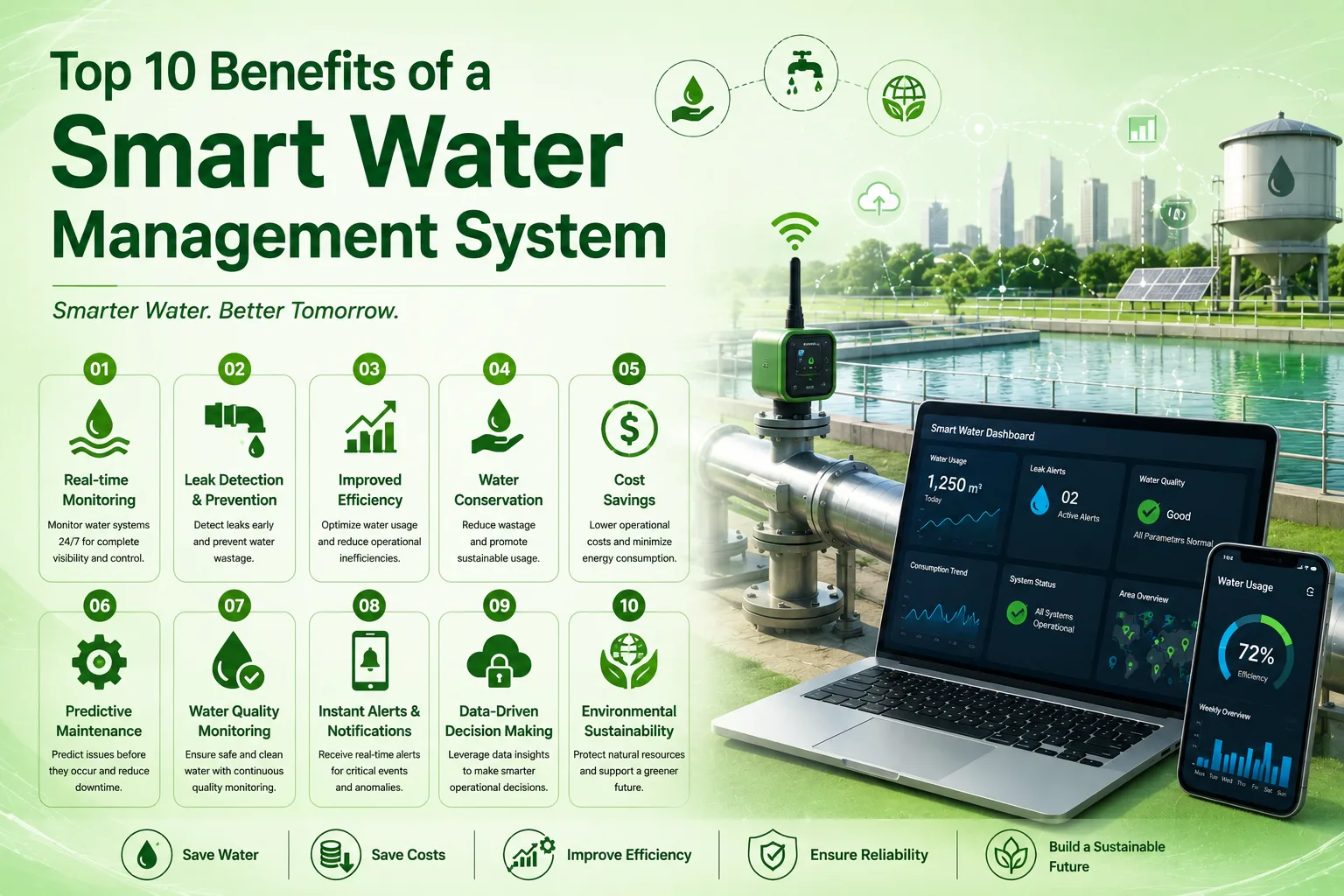
Water is one of the world's most valuable natural resources, yet it is becoming increasingly difficult to manage due to population growth, urban development, climate change, and rising industrial demand. A Smart Water Management System offers an intelligent solution by combining advanced technologies such as IoT sensors, cloud computing, and real-time data analytics to monitor, control, and optimize water usage. By providing accurate insights into water consumption, leak detection, and infrastructure performance, these systems help organizations reduce waste, lower operational costs, and support long-term sustainability. As industries and cities move toward digital transformation, smart water management has become an essential step in ensuring efficient resource utilization and sustainable growth.
Understanding Smart Water Management
Traditional water management methods often rely on manual monitoring and periodic inspections, making it difficult to identify leaks, equipment failures, or unusual water consumption quickly. This can result in significant water loss, increased maintenance costs, and inefficient resource utilization.
Modern digital solutions replace these outdated practices with connected devices that continuously collect and analyze data. Water managers receive real-time information about the condition of pipelines, storage tanks, pumps, and distribution networks, enabling faster and more informed decision-making.
By transforming raw data into meaningful insights, organizations can improve operational efficiency while protecting one of the planet's most important resources.
How a Smart Water Management System Works
An intelligent water management solution integrates multiple technologies that work together seamlessly.
Smart Sensors
Sensors installed throughout the water network monitor important parameters such as:
- Water flow
- Pressure
- Water level
- Temperature
- Water quality
- Consumption patterns
These sensors continuously gather information without requiring manual intervention.
Data Transmission
The collected information is securely transmitted through communication networks to cloud platforms for centralized monitoring.
Cloud-Based Monitoring
Cloud technology stores and processes large amounts of operational data, allowing users to access system information from anywhere through computers or mobile devices.
Intelligent Analytics
Advanced analytics identify trends, detect abnormalities, and provide actionable recommendations for improving system performance.
Instant Alerts
Whenever unusual activity such as pipeline leakage, excessive water usage, or equipment malfunction is detected, automatic notifications are sent to maintenance teams for immediate action.
Key Benefits of Smart Water Management
1. Reduced Water Wastage
One of the biggest advantages is minimizing water loss.
Hidden leaks can continue for weeks before being discovered using traditional methods. Intelligent monitoring detects even small leaks early, helping organizations prevent unnecessary water loss.
Reducing wastage directly supports environmental conservation while lowering operating expenses.
2. Real-Time Monitoring
Continuous monitoring gives operators complete visibility into the water distribution system.
Instead of waiting for manual inspections, engineers can instantly monitor:
- Water flow
- Pressure changes
- Storage tank levels
- Pump performance
- Consumption trends
Real-time information enables faster decision-making and improves operational reliability.
3. Lower Operational Costs
Automating water monitoring reduces labor-intensive inspections and unnecessary maintenance activities.
Organizations benefit from:
- Reduced maintenance costs
- Lower water bills
- Improved energy efficiency
- Fewer emergency repairs
Over time, these savings contribute significantly to overall operational efficiency.
4. Improved Leak Detection
Leak detection is one of the most valuable capabilities of modern water management systems.
Small leaks often remain unnoticed until major damage occurs.
Continuous monitoring identifies unusual flow patterns immediately, allowing maintenance teams to repair issues before they become expensive problems.
5. Better Water Quality Monitoring
Maintaining water quality is essential across industries, municipalities, hospitals, and commercial buildings.
Continuous monitoring helps track:
- pH levels
- Turbidity
- Temperature
- Dissolved oxygen
- Conductivity
Any abnormal readings trigger alerts so corrective action can be taken quickly.
6. Predictive Maintenance
Instead of repairing equipment only after failures occur, organizations can perform maintenance based on system performance.
Historical data helps predict when pumps, valves, or pipelines require servicing.
This proactive approach:
- Reduces downtime
- Extends equipment life
- Improves reliability
- Lowers repair costs
7. Improved Decision Making
Access to accurate data helps managers make informed operational decisions.
Instead of relying on assumptions, organizations can analyze:
- Daily water usage
- Peak demand periods
- Infrastructure performance
- Historical consumption trends
Better information leads to better planning.
8. Enhanced Resource Conservation
Water conservation has become a global priority.
Efficient monitoring encourages responsible water usage by identifying unnecessary consumption and reducing waste.
Organizations can establish measurable conservation goals and monitor progress over time.
Applications Across Different Industries
Smart Cities
Municipal authorities use intelligent monitoring systems to improve water distribution, detect leaks, and reduce non-revenue water losses.
Agriculture
Farmers optimize irrigation schedules using soil moisture data and weather information, reducing unnecessary water consumption while improving crop productivity.
Manufacturing
Industrial facilities monitor production processes, cooling systems, and wastewater treatment to improve efficiency and reduce operating costs.
Commercial Buildings
Hotels, shopping malls, office complexes, and residential communities use automated monitoring to manage water consumption more effectively.
Educational Institutions
Schools and universities improve sustainability by reducing water wastage and identifying maintenance issues early.
Healthcare Facilities
Hospitals require reliable access to clean water. Continuous monitoring helps maintain water quality and operational reliability.
Environmental Benefits
Sustainable water management contributes directly to environmental protection.
Major environmental advantages include:
- Reduced freshwater consumption
- Lower carbon emissions
- Improved groundwater conservation
- Better wastewater management
- Reduced pollution
- Increased sustainability
Every litre of water saved contributes to preserving natural ecosystems for future generations.
Challenges Solved by Smart Water Management
Many organizations continue to face common water management challenges.
Traditional systems often suffer from:
- Manual inspections
- Delayed leak detection
- Limited visibility
- High maintenance costs
- Inaccurate meter readings
- Slow response to emergencies
Modern intelligent systems eliminate many of these limitations by providing continuous monitoring and automated reporting.
Future of Water Management
The future of smart water management is becoming increasingly intelligent.
Emerging technologies include:
- Artificial Intelligence
- Machine Learning
- Digital Twins
- Advanced predictive analytics
- Edge computing
- Smart automation
- Renewable energy integration
These innovations will continue improving operational efficiency while supporting sustainable development.
Why Businesses Should Invest
Organizations investing in intelligent water management gain long-term advantages.
These include:
- Reduced operational expenses
- Improved infrastructure performance
- Better regulatory compliance
- Increased sustainability
- Enhanced customer confidence
- Greater operational efficiency
Digital transformation is no longer optional—it has become an important part of responsible resource management.
How Karikala Supports Smart Water Management
Implementing an intelligent water management solution requires expertise in IoT, industrial automation, cloud integration, and real-time monitoring. Karikala helps organizations embrace digital transformation by delivering customized IoT solutions that improve operational visibility and efficiency.
From integrating smart sensors and connected devices to developing cloud-based dashboards and intelligent monitoring platforms, Karikala provides end-to-end solutions tailored to industries, commercial buildings, agriculture, utilities, and infrastructure projects. Their technology enables organizations to monitor water systems efficiently, reduce wastage, improve maintenance planning, and make data-driven decisions that support sustainable growth.
Whether you are upgrading an existing infrastructure or building a new connected solution, Karikala offers the expertise to help you achieve smarter water management.
Final Thoughts
Efficient water management is no longer just an environmental responsibility—it is a strategic investment for businesses, industries, and communities. Intelligent technologies make it easier to monitor water usage, prevent losses, improve operational efficiency, and conserve valuable resources. As sustainability becomes a key business priority, adopting modern water management solutions will help organizations build resilient and future-ready operations.