The Algorithmic Age: Navigating the Ethical and Economic Future of AI
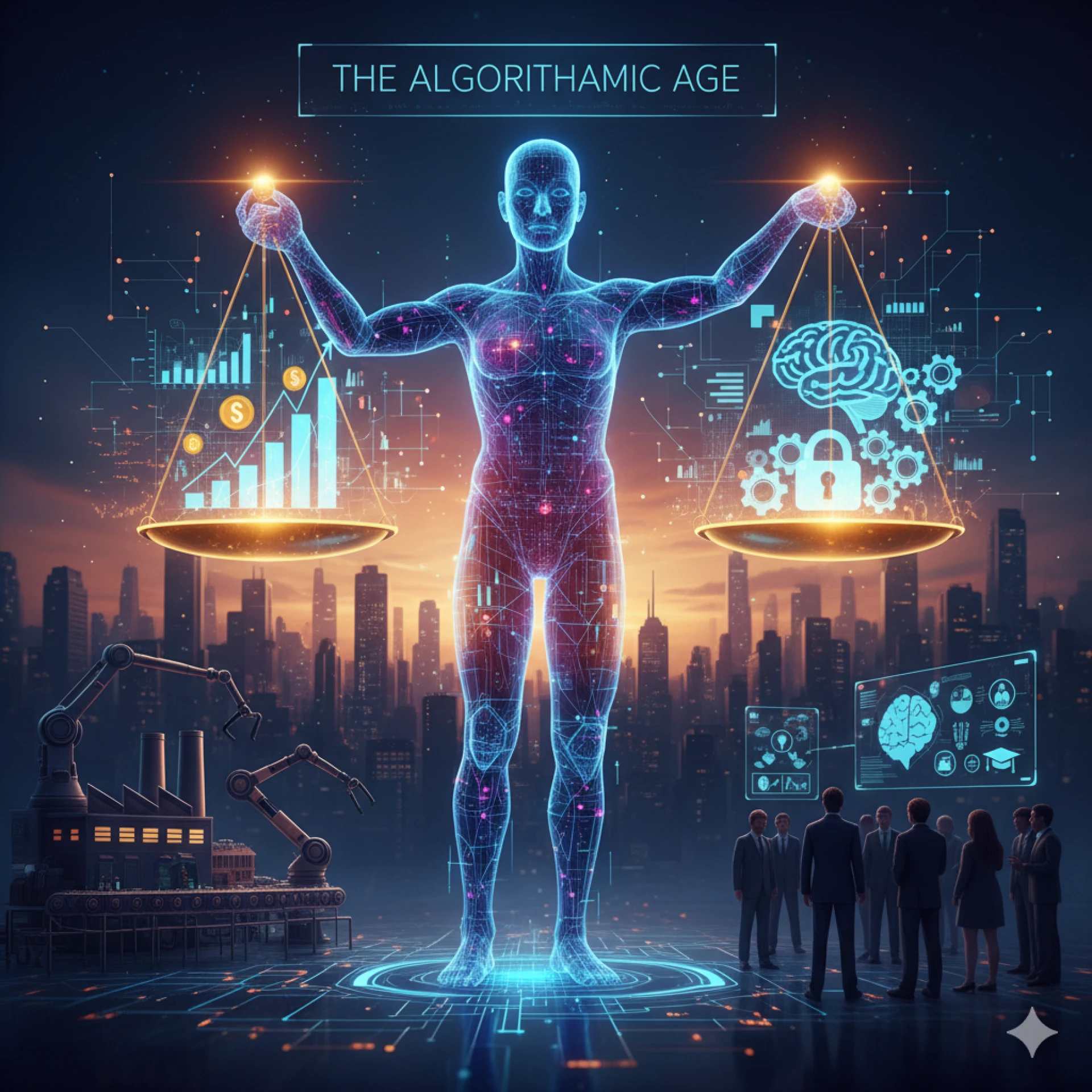
Artificial Intelligence (AI) is no longer a futuristic concept confined to science fiction; it is the fundamental operating system of the 21st century. From optimizing global supply chains to powering personalized medicine, AI is transforming every facet of human endeavor at an unprecedented speed. However, as these powerful algorithms become more integrated into our daily lives, humanity faces a critical imperative: to proactively navigate the profound ethical, economic, and societal challenges this algorithmic age presents.
The Economic Revolution: Productivity and Transformation
Economically, AI is the new frontier of productivity. Generative AI tools are reshaping the workplace, automating repetitive tasks, and augmenting human capabilities. This automation promises trillions in economic gains, driving innovation across diverse sectors. In healthcare, machine learning models are accelerating diagnostics and drug discovery. In finance, AI-driven risk assessment systems are optimizing markets. For businesses, the ability to analyze vast datasets and predict trends offers a competitive edge, driving efficiency and hyper-personalization for consumers.
However, this transformation is not without turbulence. The most immediate concern is the displacement of jobs, particularly in sectors heavy with routine cognitive tasks. While historically, technological shifts have created more new jobs than they destroyed, the speed of AI adoption demands proactive strategies for reskilling and upskilling the global workforce. The economic future is not about humans versus machines, but about a collaboration where human creativity, critical thinking, and emotional intelligence complement algorithmic power.
The Ethical Imperative: Bias, Transparency, and Control
The exponential growth of AI makes the ethical dimension its most pressing challenge. Systems are only as impartial as the data they are trained on, and biased datasets can lead to discriminatory outcomes in areas like lending, hiring, and criminal justice. Addressing algorithmic bias is crucial to ensuring AI serves as a force for equity, not division. This requires meticulous data curation, rigorous auditing of models, and diverse teams developing the technology.
Equally vital is the issue of transparency and explainability (XAI). As AI systems make life-altering decisions—from approving loans to diagnosing illnesses—users and regulators must be able to understand how a decision was reached. The "black box" nature of complex deep learning models undermines trust. Future AI development must prioritize creating inherently interpretable models or effective methods for explaining their outputs in human terms.
Finally, the looming question of control and safety requires global cooperation. As AI capabilities approach and perhaps surpass human-level intelligence in various domains, establishing robust regulatory frameworks becomes non-negotiable. Guardrails are needed to prevent misuse, ensure accountability, and manage the existential risk associated with superintelligence.
Beyond the Code: Shaping a Human-Centric AI Future
The path forward requires a shared commitment to building Human-Centric AI. This philosophy prioritizes the well-being and autonomy of individuals, ensuring that AI remains a tool to amplify human potential rather than diminish it.
Key actions include:
- Global Governance: Establishing international standards and regulatory bodies to govern AI development and deployment, ensuring ethical alignment across borders.
- Educational Overhaul: Integrating AI literacy into all levels of education, preparing citizens not just to use AI, but to understand its implications and participate in its governance.
- Prioritizing Safety: Investing heavily in AI alignment research to ensure future advanced systems operate consistently with human values and goals.
The Algorithmic Age offers humanity a chance to solve its most complex problems, from climate change to disease. The challenge is immense, but the opportunity to sculpt a future where intelligence—both human and artificial—coexists for the benefit of all is the defining mission of our time.