As industries continue to push the boundaries of performance, efficiency, and reliability, the demand for advanced engineering materials has never been greater. From aerospace and defense to oil & gas and power generation, manufacturers require components that can withstand extreme temperatures, corrosive environments, and high mechanical loads without compromising safety or performance.
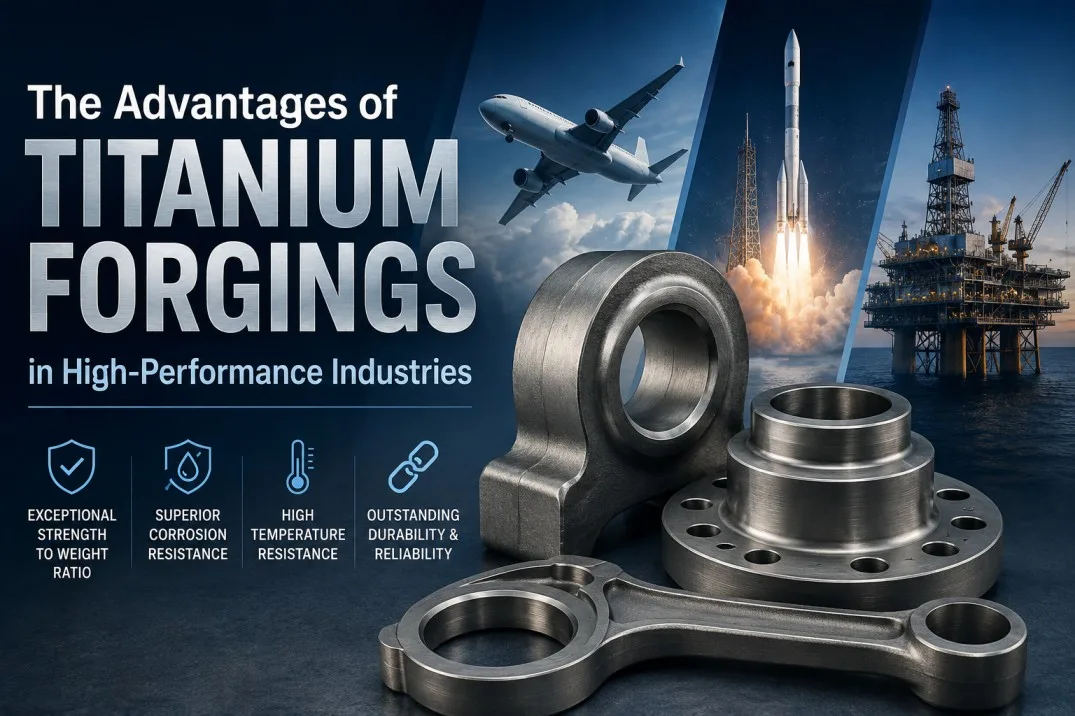
Among the materials that have transformed modern engineering, titanium forgings stand out as a superior solution for critical applications. Known for their exceptional strength-to-weight ratio, corrosion resistance, and long service life, titanium forged components have become indispensable across high-performance industries.
In this article, we explore the key advantages of titanium forgings and why they continue to be the preferred choice for demanding industrial applications.
Understanding Titanium Forgings
Titanium forgings are manufactured by shaping titanium alloys under controlled pressure and temperature conditions. Unlike casting or fabrication methods, the forging process enhances the material's grain structure, resulting in improved mechanical properties and superior structural integrity.
The refined grain flow achieved during forging increases strength, fatigue resistance, and overall durability, making forged titanium components ideal for applications where reliability is critical.
For industries operating under extreme conditions, titanium alloy forgings offer a combination of performance characteristics that few materials can match.
Exceptional Strength with Reduced Weight
One of the most significant advantages of titanium forgings is their remarkable strength-to-weight ratio. Titanium provides strength comparable to many steel grades while being substantially lighter.
This benefit is particularly valuable in industries where weight reduction directly impacts operational efficiency. In aerospace applications, lighter components contribute to improved fuel efficiency and increased payload capacity. In defense systems, reduced weight enhances mobility and performance without sacrificing structural strength.
As manufacturers continue to focus on efficiency and sustainability, lightweight yet durable materials like titanium are becoming increasingly important.
Superior Corrosion Resistance
Corrosion remains one of the biggest challenges for industrial equipment operating in harsh environments. Titanium naturally develops a protective oxide layer that provides exceptional resistance against corrosion caused by seawater, chemicals, and extreme weather conditions.
This makes titanium forgings highly suitable for applications such as:
- Offshore oil and gas platforms
- Chemical processing facilities
- Marine engineering projects
- Desalination plants
- Subsea equipment
By minimizing corrosion-related failures and maintenance requirements, titanium forged components help organizations reduce operational costs while improving equipment reliability.
Excellent Performance at Elevated Temperatures
Many high-performance industries require materials capable of maintaining their mechanical properties under elevated temperatures.
Titanium alloy forgings deliver outstanding thermal stability and retain their strength in environments where conventional materials may experience degradation. This characteristic makes them ideal for:
- Aircraft engine components
- Gas turbines
- Power generation systems
- Heat exchangers
- Industrial processing equipment
The ability to perform consistently under extreme thermal conditions contributes significantly to operational safety and equipment longevity.
Enhanced Fatigue Resistance
Industrial components are often subjected to repeated stress cycles throughout their service life. Over time, these cyclic loads can lead to fatigue-related failures if the material lacks sufficient resistance.
The forging process aligns the internal grain structure of titanium with the geometry of the component, creating a stronger and more fatigue-resistant product. As a result, titanium forgings offer superior performance in applications involving continuous vibration, pressure fluctuations, and dynamic loading conditions.
This advantage is particularly important in aerospace, defense, and heavy engineering sectors where component failure can result in significant operational and financial consequences.
Long-Term Reliability and Reduced Lifecycle Costs
Although titanium forgings may involve a higher initial investment compared to some alternative materials, they often provide substantial long-term savings.
Their durability and resistance to wear, corrosion, and fatigue contribute to:
- Reduced maintenance requirements
- Longer service life
- Fewer component replacements
- Lower downtime costs
- Improved operational efficiency
For businesses focused on maximizing asset performance and minimizing total cost of ownership, titanium forged components offer an attractive return on investment.
Applications of Titanium Forgings Across Industries
Aerospace Industry
The aerospace sector is one of the largest users of titanium forgings. Aircraft manufacturers rely on forged titanium components for applications that demand lightweight construction and exceptional strength.
Common aerospace applications include:
- Landing gear systems
- Engine discs
- Compressor components
- Structural airframe parts
- High-performance fasteners
As modern aircraft designs prioritize fuel efficiency and durability, titanium forgings continue to play a critical role in aerospace manufacturing.
Oil and Gas Industry
Oil and gas operations often expose equipment to highly corrosive environments, extreme pressures, and demanding operating conditions.
Titanium forged components are widely used in:
- Valve bodies
- Flanges
- Pump components
- Subsea systems
- Offshore drilling equipment
Their ability to withstand harsh offshore conditions makes them a preferred material for critical energy infrastructure.
Defense and Military Applications
Defense systems require materials that combine strength, durability, and weight reduction.
Titanium forgings support various military applications, including:
- Aircraft structures
- Naval systems
- Missile components
- Armored vehicles
- Advanced defense equipment
Their performance characteristics contribute to enhanced reliability and mission readiness.
Marine Engineering
The marine industry benefits significantly from titanium's exceptional resistance to seawater corrosion.
Titanium forged components are commonly utilized in:
- Shipbuilding projects
- Subsea infrastructure
- Offshore renewable energy systems
- Propulsion equipment
- Marine heat exchangers
These applications demand materials capable of delivering long-term performance in some of the world's most challenging environments.
Power Generation
Power plants and energy facilities require highly reliable components capable of operating under elevated temperatures and pressures.
Titanium forgings are increasingly used in:
- Turbine assemblies
- Heat transfer systems
- Pressure-containing equipment
- Energy infrastructure projects
Their durability and thermal performance help improve operational efficiency while reducing maintenance-related downtime.
Why Manufacturers Choose Forged Titanium Components
When comparing manufacturing methods, forging consistently delivers superior mechanical properties compared to casting and fabrication techniques.
The forging process provides:
- Improved grain structure
- Higher strength
- Better fatigue performance
- Greater structural integrity
- Enhanced reliability for critical applications
For industries where safety, performance, and operational continuity are essential, forged titanium components offer a significant competitive advantage.
The Growing Demand for Titanium Forgings
As industries adopt advanced technologies and pursue greater efficiency, demand for titanium forgings continues to rise. Emerging sectors such as renewable energy, hydrogen infrastructure, advanced aerospace programs, and next-generation defense systems are driving the need for high-performance forged components.
Organizations seeking durable, lightweight, and corrosion-resistant solutions are increasingly turning to titanium alloy forgings to meet evolving operational requirements.
Conclusion
Titanium forgings have established themselves as a vital solution for industries that demand exceptional performance and reliability. Their unique combination of strength, lightweight properties, corrosion resistance, and fatigue durability makes them an ideal choice for aerospace, oil & gas, marine, defense, and power generation applications.
As industrial challenges become more complex and performance expectations continue to increase, titanium forged components will remain a cornerstone of modern engineering and manufacturing.
For companies looking to improve operational efficiency, enhance equipment reliability, and reduce long-term maintenance costs, investing in high-quality titanium forgings is a strategic decision that delivers lasting value.