
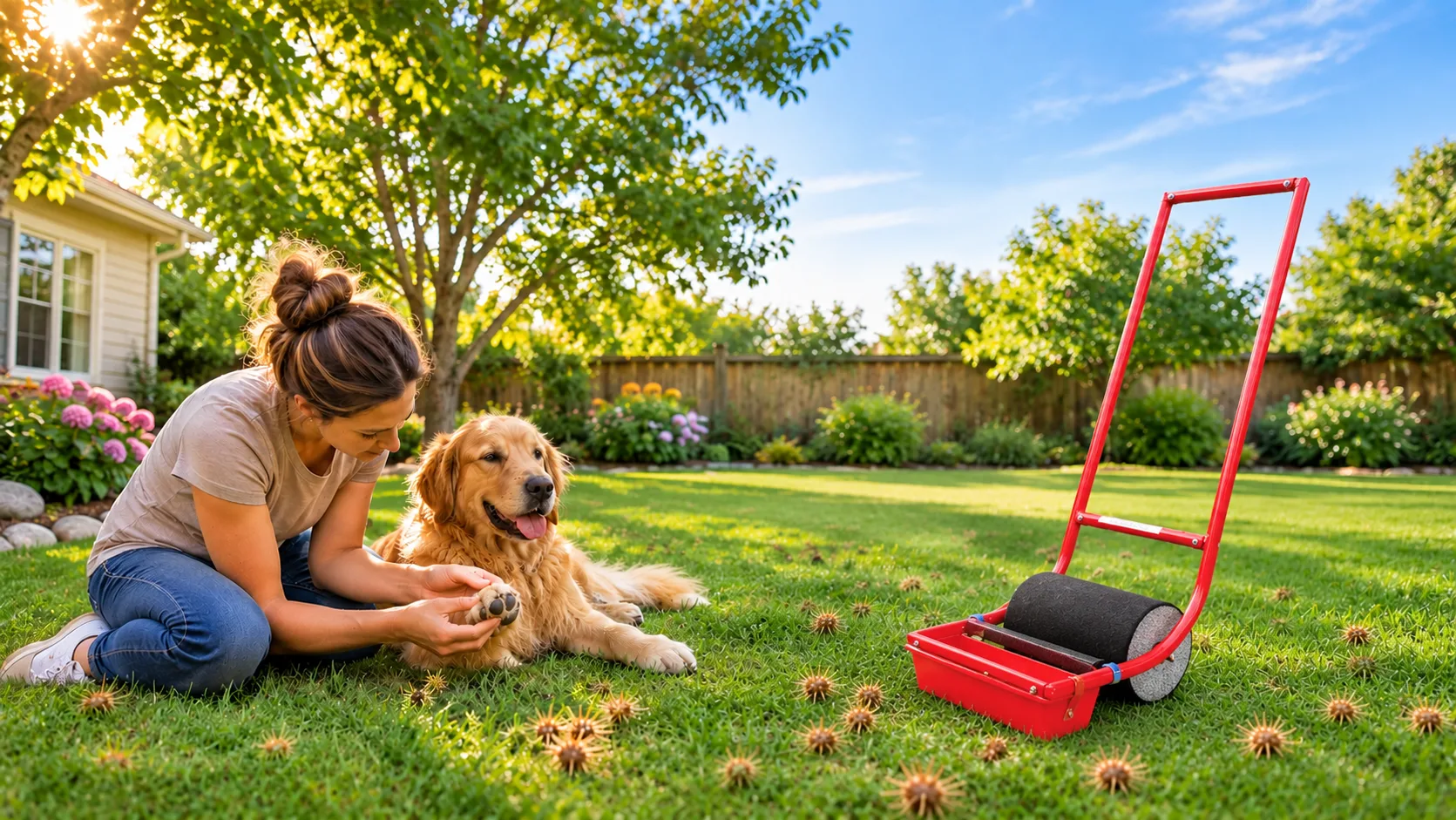
Texas Sticker Burrs: How to Get Rid of Sandburrs in Your Yard
If you live in Texas, you probably know how frustrating sticker burrs can be. One walk across the lawn, and suddenly they are stuck to your socks, shoes, or your dog's paws. They can make even a well-kept yard uncomfortable to use.
In many Texas lawns, these painful stickers come from sandburs, also called grassburs or sand spurs. These grassy weeds produce seed heads covered in sharp burrs that easily attach to anything that brushes against them.
The frustrating part is that cutting down the weeds does not take care of the burrs already on the ground. You need to control the plants before they produce more seeds and collect the loose stickers left behind.
Here is how to identify Texas sticker burrs, get rid of the weeds producing them, and keep your yard more comfortable.
What Are Texas Sticker Burrs?
Texas sticker burrs commonly refer to the sharp seed capsules produced by sandbur and grassbur plants. These weeds belong to the Cenchrus genus, with field sandbur being one of the common species found in Texas.
The plant looks like ordinary grass when it is young. As it matures, it develops seed heads covered in small, spiny burrs. Each capsule usually contains one to three seeds.
The sharp spines help the burrs attach to shoes, clothing, animal fur, tires, and lawn equipment. This is how they spread from one area to another.
Texas A&M AgriLife identifies several sandbur species in the state, including field sandbur, longspine sandbur, and southern sandbur.
How to Identify Sandburs in Your Texas Lawn
Sandburs can be difficult to recognize when they are young because they blend in with surrounding grass. Once the seed heads develop, however, they become much easier to spot.
Look for these signs:
- Grass-like plants with narrow leaves
- Branching stems that may have a flattened appearance
- Small, round seed heads covered in sharp spines
- Mature burrs that catch on shoes and clothing
Sandburrs often grow in thin lawns, dry areas, sandy soil, and places where desirable grass is struggling.
One important detail is that some sandbur species can survive from one growing season to the next. Their above-ground growth may die back during winter while the roots remain alive.
If you are unsure whether you have sandburs or another sticker weed, our guide to sand spurs, goatheads, and grass burrs explains how to tell them apart.
Why Are Sticker Burrs So Common in Texas?
Sandburs are well suited to several growing conditions found across Texas. They can thrive in dry, sandy soil and take advantage of areas where lawn grass is thin.
A few conditions can make the problem worse.
- Weak lawn coverage: When grass is thin or damaged, sandburs have more room to establish and spread.
- Dry, sandy soil: Sandburs tolerate these conditions better than many desirable lawn grasses. However, they are not limited to sandy soil.
- Missed weed growth: If you do not catch the plants early, they can develop mature burrs and produce more seeds.
- Previous infestations: Seeds from earlier growth can remain in the soil and germinate when conditions become favorable.
- Spread through movement: Burrs attach to shoes, pets, tires, and mowing equipment. They can easily move across your property or reach your yard from another area.
Texas A&M AgriLife reports that grassbur seeds can germinate during both spring and fall. This means homeowners may need to monitor their lawns beyond just one part of the year.
How to Get Rid of Sticker Burrs in Texas
The most effective approach is to control the living plants before they produce mature burrs. Once the stickers have dropped, you will need to collect them separately.
1. Remove Young Sandbur Plants Early
If you only have a few sandbur plants, remove them before their seed heads mature. Wear gloves, pull or dig out the plants, and collect any burrs that have already formed. Check the surrounding area for additional plants because young sandburs can be easy to miss in ordinary grass.
If the plants have already produced mature seed heads, handle them carefully. Avoid dragging them across the lawn, as this can spread more seeds.
2. Use Preemergent Weed Control
Preemergent herbicides help prevent certain weed seeds from establishing. They need to be applied before germination, so timing is important. Texas A&M AgriLife explains that grassbur germination can begin when average daily soil temperatures reach around 52°F. Germination can continue under warmer conditions, with spring and fall being important periods.
The right application time depends on your location, lawn conditions, and the product being used. Check that the herbicide is labeled for sandburs and safe for your type of grass.
For a closer look at treatment timing, read our guide to preemergent vs. postemergent control for sandburs.
3. Treat Existing Plants Carefully
If sandburs are already growing, a suitable postemergent herbicide may help. However, product choice matters. Some treatments are safe for certain turfgrasses but can damage others. Check the label for sandbur control, application timing, and restrictions for your lawn type.
For a large infestation or an uncertain weed identification, contact your local Texas A&M AgriLife Extension office for advice.
4. Build a Thicker, Healthier Lawn
A healthy lawn gives sandburs less opportunity to establish. Keep your grass at the recommended mowing height, water according to its needs, and correct bare or weak areas. Choose fertilizers and lawn care practices that suit your turfgrass.
Texas A&M AgriLife recommends maintaining dense, healthy turf as an important part of grassbur management. Mowing can also help reduce seed production when done before mature burrs develop. However, it will not remove stickers that have already fallen onto the ground.
How to Remove Sticker Burrs Already on the Ground
This is where many homeowners get frustrated.
You have removed the weeds or treated the lawn, but the sharp burrs are still scattered across the grass. They can continue sticking to shoes, hurting bare feet, and getting caught in pet fur.
For a small area, you can collect loose burrs by hand using thick gloves. You may also use a suitable collection tool to gather them from the grass.
For a larger yard or acreage, picking up every burr individually can take a lot of time.
The Sticker Burr Roller is designed specifically for collecting loose burrs. Its foam roller picks up stickers as you move across the ground. A conveyor screen then separates the burrs from the foam and transfers them into a collection tray.
It can collect loose sandburs, grass burrs, goatheads, and other stickers.
Keep in mind that the machine collects loose burrs. It does not pull live weeds out of the ground or pick up green burrs still attached to growing plants. Remove or cut the weeds first, then use the roller to collect the burrs left behind.
If you want to compare collection methods, read our guide on how to remove stickers from grass.
How to Keep Texas Sticker Burrs From Coming Back
You may need to manage sandburs over several growing seasons, especially if your yard has a history of heavy infestations.
A few regular steps can make a difference:
- Check areas where sandburs appeared in previous seasons.
- Remove young plants before they produce mature seed heads.
- Apply suitable preemergent treatments at the correct time.
- Repair thin areas and maintain dense turf.
- Clean burrs from shoes, pet fur, tires, and lawn equipment.
- Collect loose burrs after removing or cutting the plants.
Do not wait until the burrs cover your lawn before taking action. Catching young plants early makes the problem easier to manage.
Clear the Sticker Burrs From Your Texas Yard
Sandburs can turn a comfortable lawn into a painful place to walk, especially when mature burrs are scattered across the ground.
Start by controlling the plants before they produce more seeds. Then deal with the loose stickers that remain after the weeds are gone.
If you have a large area covered in loose burrs, the Sticker Burr Roller can make collection much easier. Choose a push model for a residential yard or a pull-behind model for larger properties and acreage.
Get the loose burrs out of your grass and enjoy your yard again.
Explore Sticker Burr Roller machines.
1. What causes sticker burrs in Texas yards?
Sticker burrs commonly come from sandbur or grassbur weeds. These grassy plants produce spiny seed capsules that attach to shoes, clothing, pets, and lawn equipment.
2. How do I get rid of sandbur stickers in Texas?
Remove young sandbur plants before they produce mature burrs. Use suitable preemergent or postemergent treatments when appropriate, and maintain dense, healthy turf to limit new growth.
3. When should I apply preemergent for sandburs in Texas?
Timing depends on local soil temperatures and the product label. Texas A&M AgriLife reports that grassbur germination can begin around an average daily soil temperature of 52°F, making early monitoring important.
4. Does mowing get rid of Texas sticker burrs?
Mowing can reduce seed production if you cut the plants before mature burrs develop. However, it does not remove loose burrs already scattered across the lawn.
5. How do I remove sticker burrs from a large yard?
A burr collection tool can make the job easier. The Sticker Burr Roller uses a foam roller and conveyor screen to collect loose burrs from lawns and larger properties.