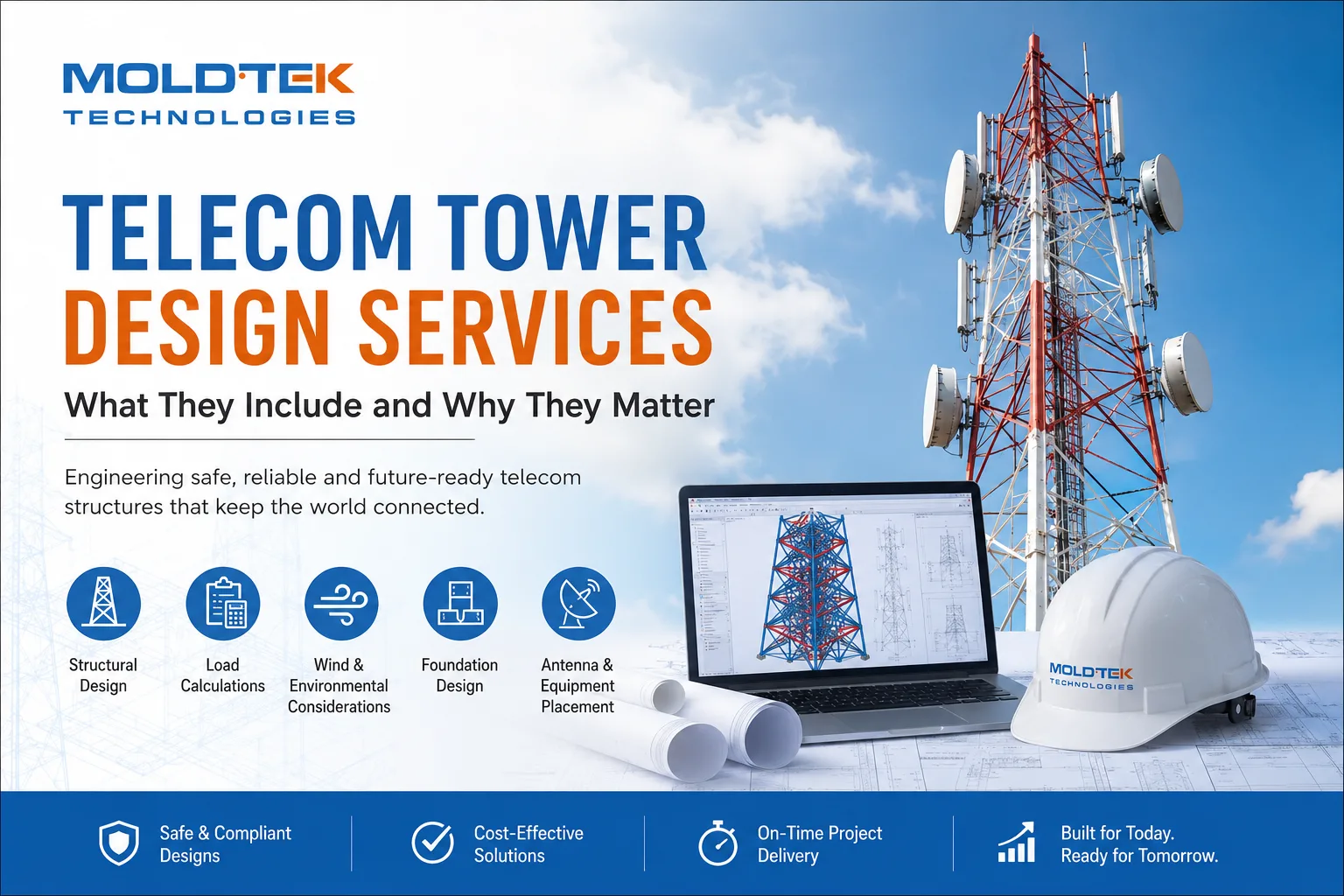
Telecom towers form the backbone of today's wireless networks, supporting the antennas and equipment that keep mobile, internet, and data services running. As networks expand and upgrade to handle 4G, 5G, and beyond, the demand for reliable telecom infrastructure continues to grow. Behind every safe, functional tower is a team of engineers delivering specialized telecom tower design services- and understanding what these services involve can help companies plan stronger, safer projects.
What Are Telecom Tower Design Services?
Telecom tower design services cover the full engineering process behind building or upgrading a tower structure. This includes evaluating site conditions, calculating loads, designing the structure and its foundation, and producing detailed drawings for fabrication and construction. Whether the project involves a new monopole, a lattice tower, a guyed mast, or a rooftop installation, telecommunication tower design ensures the structure can safely carry antennas, cables, and other equipment throughout its service life.
Key Components of Telecom Tower Design
Structural Analysis and Design Engineers evaluate how a tower will perform under real-world conditions, checking that every member and connection can handle the forces acting on it without failure.
Load Calculations Towers must support the combined weight of antennas, mounts, cables, and maintenance access, along with dynamic forces from wind and equipment vibration. Accurate load calculations are central to sound tower structural design.
Wind and Environmental Considerations Wind speed, seismic activity, ice loading, and soil conditions all vary by location. Design teams factor these into the structure to ensure stability across different climates and terrains.
Foundation Design The foundation anchors the tower and distributes its load into the ground. Proper foundation design accounts for soil type, tower height, and expected loads, directly affecting long-term stability.
Antenna and Equipment Placement Efficient layout of antennas, remote radio units, and feeder cables supports both signal performance and ease of maintenance, while keeping the structure balanced and compliant with clearance requirements.
Why Professional Telecom Tower Design Matters
Professional telecom tower engineering directly affects safety, durability, and long-term project performance. A well-engineered tower is built to withstand environmental stress over decades, reducing the risk of structural failure. Proper design also supports regulatory compliance, helping projects meet local building codes and industry standards.
Cost efficiency is another benefit. Accurate calculations and detailed drawings reduce material waste, minimize errors during fabrication, and prevent costly rework on site. For infrastructure providers and project managers, this translates into fewer delays and more predictable project timelines- outcomes that matter across the entire lifecycle of a telecom deployment.
How to Choose a Telecom Tower Design Service Provider
Selecting the right partner for telecom tower design services comes down to a few key factors:
- Engineering expertise- experience across tower types (monopole, lattice, guyed mast, rooftop) and varied site conditions.
- Adherence to industry standards- familiarity with relevant structural and telecom design codes.
- Software capabilities- proficiency with tools such as STAAD.Pro, Tekla Structures, or similar structural analysis and detailing software.
- Project experience- a track record of delivering designs for real-world telecom and network expansion projects.
Providers who combine these strengths can support projects from initial site assessment through final construction drawings.
Conclusion
Telecom tower design services bring together structural analysis, load calculations, environmental assessment, foundation planning, and equipment layout into a single, coordinated engineering process. For telecom companies, infrastructure providers, and engineering firms, working with an experienced design partner helps ensure towers are safe, durable, and built to support the networks of today and tomorrow.