Most people jump into BEP20 Token Development thinking it’s just about deploying a contract and hoping it works. That’s the fastest way to ship a fragile token that breaks under real users, panic transactions, or liquidity pressure. If you are serious about building something that survives audits, scale, and scrutiny, the foundation starts with the tech stack. Choose the wrong tools and you will spend more money fixing problems than building features. Choose the right stack and your token behaves predictably, securely, and efficiently even when the market isn’t.
Before we go deeper, understand one thing clearly. Every successful project, whether you want to create a BEP20 token or build utilities around it, wins because the builders understand the trade-offs of each layer of the stack. This guide gives you the exact technical reasoning behind those choices, not generic textbook advice.
Core Blockchain Platform
Binance Smart Chain remains the dominant choice for BEP20 tokens because of low fees, fast block times, and mature tooling. The ecosystem is battle-tested, and the developer community has pushed countless improvements that make BEP20 contracts predictable. You build faster, deploy cheaper, and scale without seeing your costs explode.
Programming Languages
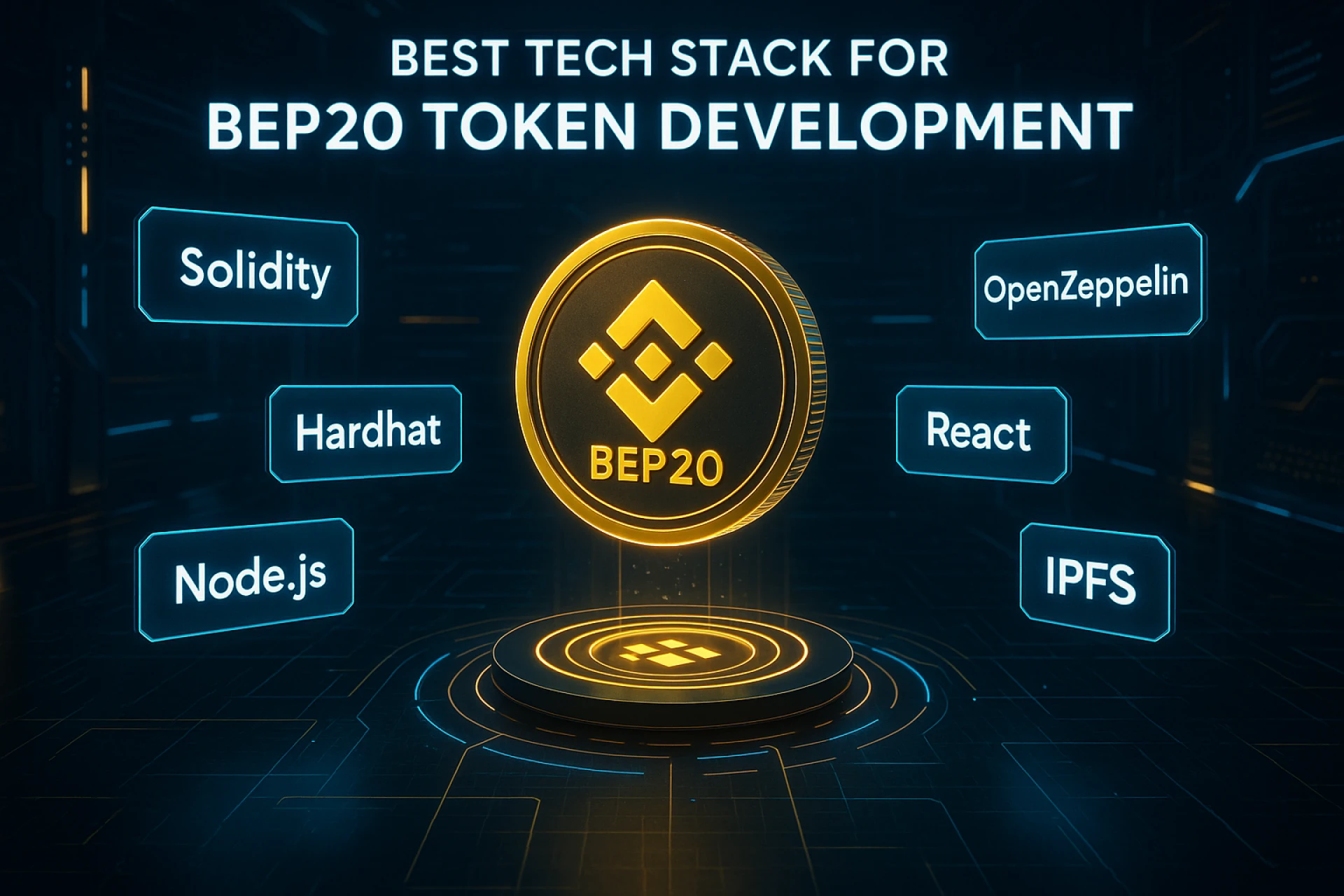
Solidity is the backbone of BEP20 Token Development. It has the largest knowledge base, mature debugging tools, and extensive libraries. Vyper exists, but realistically, it is still a niche option on BSC. If you want reliability, audits, and smooth integration, Solidity is your weapon. Anything else is reinventing the wheel with less documentation.
Smart Contract Frameworks
Hardhat is the modern standard for writing and testing token contracts. It gives you debugging, error tracing, mainnet forking, and plugin flexibility. Truffle still works, but its workflow feels slower. And if you care about security, OpenZeppelin libraries are non-negotiable. They eliminate half the mistakes new developers make, especially around token standards, burning, minting, and role management.
Front-End Development Tools
Your dashboard or dApp interface needs trust at first glance. React and Vue deliver fast, interactive dashboards that users actually enjoy. Ethers.js performs better and cleaner than Web3.js, especially for transaction handling, wallet interactions, and contract calls.
Back-End and API Tools
Node.js and Express remain the most efficient stack for building backend logic on BSC. They handle wallet services, automation, notifications, indexing, and transaction monitoring. When you integrate with BSC APIs, speed becomes your unfair advantage because every millisecond counts in blockchain interactions.
Database and Storage
MongoDB excels in flexibility, PostgreSQL in stability. Use whichever fits your architecture. IPFS helps store immutable metadata, ideal for NFTs or decentralized elements inside token utilities.
Testing, Deployment, and Security
Remix is good for beginners, but serious builds require Hardhat testing, Ganache simulations, and continuous integration pipelines. Security tools like MythX, Slither, and premium audits ensure your token doesn’t collapse from a simple overlooked vulnerability.
Final Thoughts
If you want a future-proof, scalable stack, combine Solidity, Hardhat, OpenZeppelin, Ethers.js, Node.js, and IPFS. And when you're ready to take the next step, you can explore a reliable Crypto Token Development, especially if you want a well-structured project.