Navigating the "Golden City" of Rajasthan requires more than just a map; it requires a strategy for dealing with the intense Thar Desert sun and the unique layout of a medieval fortress town. When you land at the railway station or arrive via a long-distance coach, the first decision you will face is how to get to your hotel and start your adventure. For many, the choice boils down to a reliable taxi service in Jaisalmer or the ubiquitous, brightly colored auto-rickshaws that zip through the streets. Both modes of transport have their place, but understanding the nuances of comfort, cost, and terrain is essential for a stress-free trip.
The Charm and Challenge of the Auto-Rickshaw
Auto-rickshaws, often called tuk-tuks, are the lifeblood of local commuting for short distances. They are nimble enough to navigate the semi-congested areas near the Gadisar Lake or the entrance to the main markets. If you are traveling solo or as a couple with minimal luggage, a rickshaw offers a "raw" and authentic experience of the city’s sights and sounds.
However, the open-air nature of a rickshaw is a double-edged sword. While it provides a front-row seat to the city's golden sandstone architecture, it also exposes you to the desert's dust and the searing afternoon heat, which can often exceed 40°C even in the shoulder seasons of 2026. Furthermore, rickshaws lack the suspension and safety features required for longer journeys. They are also notoriously difficult for those who prefer not to haggle, as meters are rarely used, and "tourist pricing" is common.
Why a Taxi is the Superior Choice for Sightseeing
While rickshaws work for a two-minute dash to a nearby cafe, a professional cab service becomes indispensable when you plan a comprehensive Jaisalmer sightseeing tour. The geography of the region means that many of the most iconic landmarks are spread far apart. For instance, while the Jaisalmer Fort is central, the haunting ruins of Kuldhara and the scenic Vyas Chhatri are several kilometers away.
A taxi offers a climate-controlled sanctuary. After walking through the sun-drenched courtyards of the Patwon Ki Haveli, returning to an air-conditioned car is a luxury that preserves your energy for the rest of the day. Additionally, taxis provide secure storage for your belongings—camera gear, shopping bags, and water supplies—allowing you to explore landmarks hands-free.
Navigating Sam Sand Dunes and Beyond
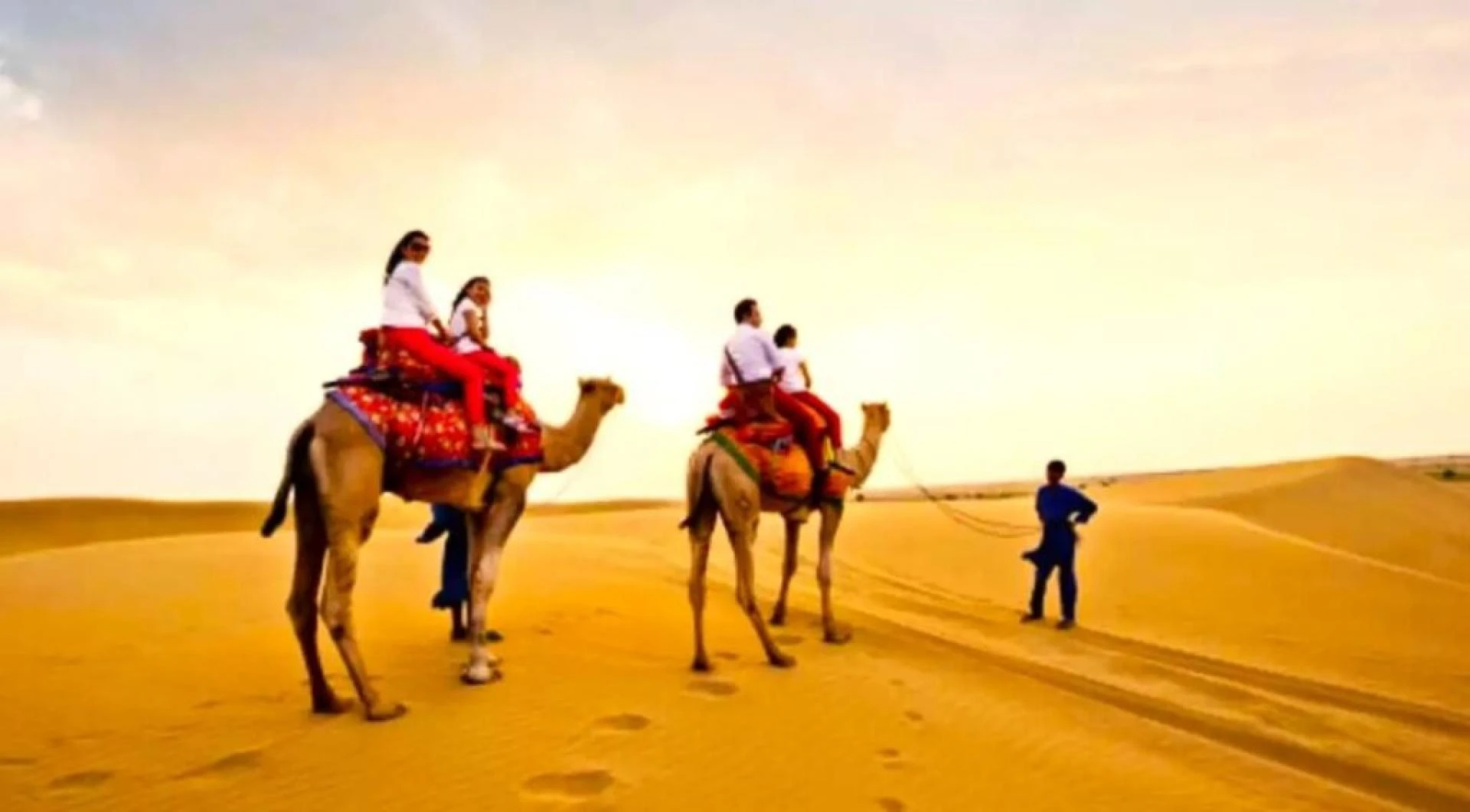
The real debate between taxis and rickshaws ends when the desert horizon begins. The famous Sam Sand Dunes are located approximately 45 kilometers from the city center. Attempting this journey in an auto-rickshaw is not only uncomfortable due to the wind and sand but can also be surprisingly expensive when you factor in the return trip.
Most cultural performances and desert dinners at the dunes conclude late in the evening. Finding a rickshaw in the middle of the desert at 10:00 PM is nearly impossible. A pre-booked cab ensures that your driver is waiting for you, providing a safe and warm ride back to your city hotel. For those following a tight schedule like the Jaisalmer in 2 Days plan, the efficiency of a car is the only way to ensure you hit every highlight, from the Tanot Mata Temple near the border to the sunset at the dunes, without wasting hours on the roadside.
Cost vs. Value: A 2026 Perspective
In 2026, travelers are increasingly prioritizing value over the absolute lowest price. While a rickshaw ride might cost 100 to 200 rupees for a short hop, a full-day taxi hire provides a fixed-price advantage. This eliminates the need for constant negotiation at every stop. When you calculate the cost of four or five separate rickshaw rides versus a dedicated cab, the price gap narrows significantly, especially for families or groups of three or more.
- Comfort: Taxis offer AC and cushioned seating; Rickshaws are open-air and bumpy.
- Safety: Cabs provide GPS tracking and verified drivers; Rickshaws are more informal.
- Distance: Taxis are essential for the 45km+ trips to the dunes; Rickshaws are for 1-2km hops.
- Reliability: A booked taxi stays with you; a rickshaw must be found and negotiated with at every landmark.
Making the Final Call
The "best" transport depends entirely on your itinerary. If you are spending the entire day within the narrow, walkable alleys of the Jaisalmer Fort where vehicles cannot enter, you won't need much transport at all. However, for every other aspect of your Rajasthani journey—from airport transfers to late-night desert returns—a taxi is the gold standard. It transforms a potentially exhausting trek into a seamless, royal experience worthy of the Golden City.