
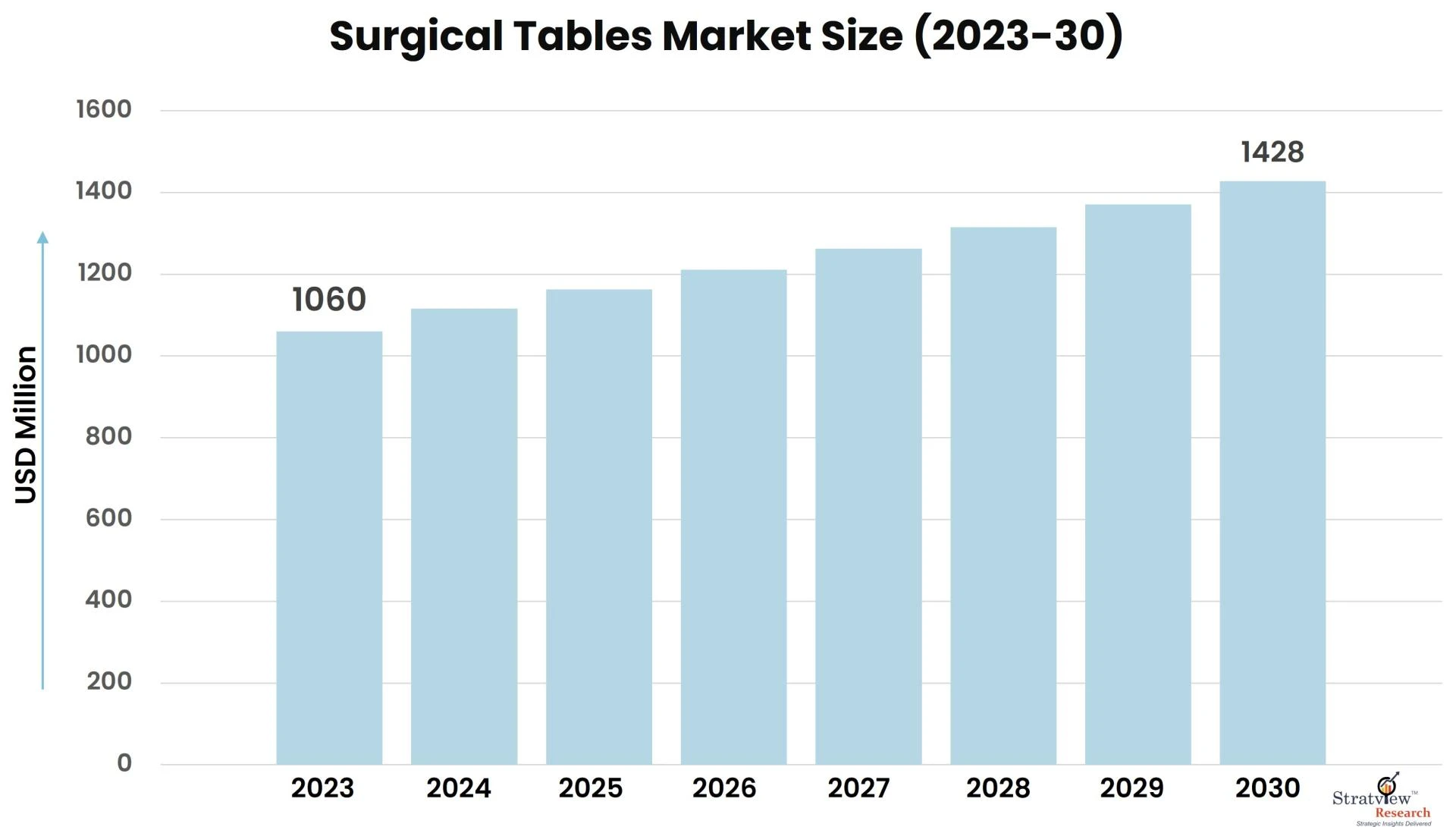
The Surgical Tables Market is expected to continue its growth, driven by factors such as increasing surgical procedures, technological innovations, and rising healthcare investments. As surgical technologies advance and patient expectations rise, the need for modern, high-performance surgical tables that offer flexibility, comfort, and precision is becoming more pronounced.
Stratview Research estimates that the surgical tables market will grow at a CAGR of 4.2%, reaching USD 1.4 billion by 2030, driven by advances in surgical technology, the growing demand for patient-centric solutions, and improvements in healthcare infrastructure.
Request a sample report to preview our in-depth analysis:
https://stratviewresearch.com/Request-Sample/3872/surgical-tables-market.html#form
Market Drivers
- Rising Surgical Procedures and Aging Population: As the global population ages and the number of surgeries increases, especially in orthopedics, spinal surgeries, and joint replacements, the demand for advanced surgical tables is expected to grow. Aging populations are more likely to experience bone fractures, spinal issues, and degenerative diseases, all of which require surgical intervention.
- Technological Advancements in Surgical Systems: The demand for minimally invasive surgeries, robotic systems, and integrated imaging systems is driving innovation in surgical table designs. These technologies require advanced tables that can accommodate precision positioning and seamless integration with surgical instruments.
Challenges in the Surgical Tables Market
- High Costs and Affordability: Advanced surgical tables, particularly those with robotic systems and integrated imaging technology, are expensive. The high upfront costs can be a challenge, especially for small and mid-sized healthcare facilities. However, as technology evolves and economies of scale take effect, prices are expected to become more affordable.
- Maintenance and Durability: Ensuring the longevity and proper functioning of surgical tables requires regular maintenance and replacement of parts, such as electrical components and mechanical adjustments. Healthcare facilities must budget for ongoing maintenance costs to ensure the reliable operation of these critical devices.
Conclusion
The Surgical Tables Market is expanding rapidly, driven by technological advancements, increasing surgical procedures, and the need for patient-centered care. While challenges such as high costs and maintenance remain, the continued focus on improving surgical efficiency, patient comfort, and safety will drive the market toward continued growth.