
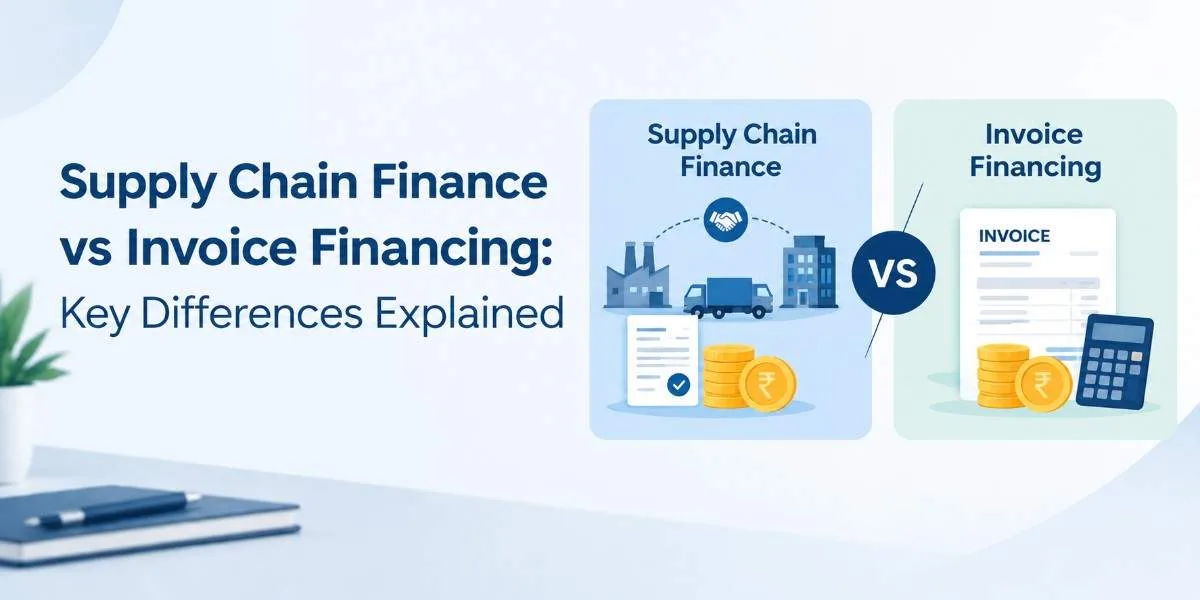
Managing cash flow is one of the biggest challenges for businesses, especially when customers take 30, 60 or 90 days to make payments. A business may have completed an order and raised an invoice, but the money remains tied up until the buyer makes the payment.
Supply chain finance and invoice financing are two financing options that can help businesses manage this gap. While both can provide access to working capital, they work differently and are designed around different business situations.
Understanding the difference between supply chain finance and invoice financing can help businesses choose an option based on their cash flow needs, customer relationships and payment cycles.
What Is Supply Chain Finance?
Supply chain finance is a financing arrangement that helps improve cash flow for businesses involved in a supply chain. It generally allows suppliers to receive payment earlier while giving buyers the flexibility to maintain their agreed payment terms.
For example, a supplier may sell goods to a large corporate buyer and raise an invoice with a 60-day payment period. Instead of waiting for 60 days, the supplier may be able to receive the payment earlier through a supply chain finance arrangement.
The financier provides funds against the eligible receivable, while the buyer makes payment according to the agreed terms.
Supply chain finance can therefore benefit both sides of a transaction. Suppliers can improve their cash flow, while buyers can maintain their payment cycles and strengthen relationships with suppliers.
What Is Invoice Financing?
Invoice financing is a broader form of financing where a business uses its outstanding invoices to access working capital before the customer pays.
When a business has unpaid invoices from customers, it can use eligible invoices to obtain financing from a financier or financing platform. The amount provided depends on factors such as the invoice value, buyer, transaction terms and the financier's assessment.
For example, if an MSME has raised an invoice worth ₹10 lakh and expects payment after 60 days, invoice financing may allow the business to access funds against that invoice instead of waiting until the due date.
Invoice financing can include different structures, such as invoice discounting and invoice factoring.
Supply Chain Finance vs Invoice Financing: What Is the Difference?
The main difference is the way the financing is structured and the parties involved.
Supply chain finance is generally built around a relationship between a buyer and its suppliers. The buyer's involvement and acceptance of the transaction can play an important role in the financing process.
Invoice financing, on the other hand, focuses primarily on helping a business access funds against its outstanding invoices. The financing can be arranged based on eligible receivables and the terms agreed with the financier.
Let's look at the key differences in more detail.
1. Focus of Financing
Supply chain finance focuses on the overall supply chain relationship between buyers, suppliers and financiers.
It can help suppliers get paid earlier while allowing buyers to maintain their agreed payment terms.
Invoice financing mainly focuses on converting unpaid invoices into working capital. The business does not have to wait until the customer makes the payment to access funds, subject to the financing arrangement.
2. Role of the Buyer
The buyer generally has an important role in supply chain finance. The transaction may need to be accepted or confirmed by the buyer before financing is provided.
In invoice financing, the buyer's role depends on the type of financing and the arrangement with the financier. The focus is primarily on the outstanding invoice and the underlying receivable.
3. Who Can Benefit?
Supply chain finance is commonly used in B2B supply chains where established buyers purchase goods or services from suppliers.
It can be particularly useful for MSME suppliers working with larger companies and dealing with longer payment cycles.
Invoice financing can be used by businesses that have eligible outstanding invoices and want to access working capital before those invoices are paid.
4. Purpose of Financing
The purpose of supply chain finance is not only to provide financing but also to improve cash flow across a supply chain.
For suppliers, early payment can help fund salaries, purchase raw materials, pay vendors and fulfil new orders.
Invoice financing is generally used to unlock the cash tied up in unpaid invoices and address short-term working capital requirements.
5. Payment Terms
Supply chain finance can allow suppliers to receive their money earlier while buyers continue to follow their agreed payment schedule.
For example, a buyer may have agreed to pay a supplier after 60 days. Through an eligible supply chain finance arrangement, the supplier may receive the funds earlier, while the buyer pays according to the agreed terms.
With invoice financing, the business receives financing against its outstanding invoice and settles the financing arrangement when the invoice is paid, based on the agreed structure.
6. Relationship Between the Parties
Supply chain finance is closely connected to the relationship between a buyer and its suppliers. The strength and nature of this relationship can be important to the financing arrangement.
Invoice financing is more directly connected to the business's receivables. A company can use eligible invoices generated from its customers to access working capital.
How Does Supply Chain Finance Work?
A typical supply chain finance process may involve the following steps:
Step 1: Supplier delivers goods or services
The supplier completes an order for the buyer and raises an invoice.
Step 2: Buyer accepts the invoice
The buyer verifies and accepts the invoice according to the agreed process.
Step 3: Supplier seeks early payment
Instead of waiting until the invoice due date, the supplier can choose to receive early payment through the financing arrangement.
Step 4: Financier provides funds
The financier provides funds against the eligible receivable, subject to the applicable terms.
Step 5: Buyer makes payment
The buyer makes payment according to the agreed payment terms.
This process can help suppliers maintain liquidity without putting additional pressure on their customers to make early payments.
How Does Invoice Financing Work?
Invoice financing generally follows a simple process.
First, the business supplies goods or services and raises an invoice. The eligible invoice is then submitted to a financier or financing platform.
After reviewing the transaction and applicable terms, the financier provides funds against the invoice.
The customer eventually pays the invoice, and the financing arrangement is settled according to the agreed terms.
The exact process can differ depending on whether the business uses invoice discounting, factoring or another form of receivables financing.
Which Option Should a Business Consider?
The choice between supply chain finance and invoice financing depends on the business's requirements.
Supply chain finance may be relevant for businesses that:
- Supply goods or services to established corporate buyers
- Have longer payment cycles
- Want to receive payment earlier
- Want to maintain healthy supplier-buyer relationships
- Have eligible buyer-approved receivables
Invoice financing may be relevant for businesses that:
- Have outstanding invoices from customers
- Need short-term working capital
- Want to unlock cash tied up in receivables
- Do not want to wait until the invoice due date
- Want financing based on their eligible invoices
Businesses should consider factors such as financing costs, eligibility, invoice approval, customer relationships, payment terms and the overall financing structure before making a decision.
Role of TReDS in Supply Chain and Invoice Financing
TReDS, or the Trade Receivables Discounting System, provides a digital mechanism for financing eligible trade receivables of MSMEs.
An MSME supplier can submit eligible invoices or receivables on a TReDS platform. Once the buyer accepts the transaction, financiers can participate in financing the receivable. This can help the MSME receive funds before the original payment due date.
Platforms such as RXIL facilitate receivables discounting through TReDS, giving eligible MSMEs a way to access working capital against approved trade receivables.
For businesses dealing with delayed payments or long credit periods, TReDS can therefore be considered as one of the channels for accessing invoice-based working capital.
Final Thoughts
Supply chain finance and invoice financing both address a common business problem: money getting tied up in unpaid receivables.
However, they are not exactly the same. Supply chain finance is generally built around the buyer-supplier relationship and aims to improve cash flow across the supply chain. Invoice financing focuses more directly on helping a business access funds against its outstanding invoices.
For MSMEs, the right option depends on factors such as the type of customers they work with, invoice payment cycles, working capital requirements and the financing terms available.