
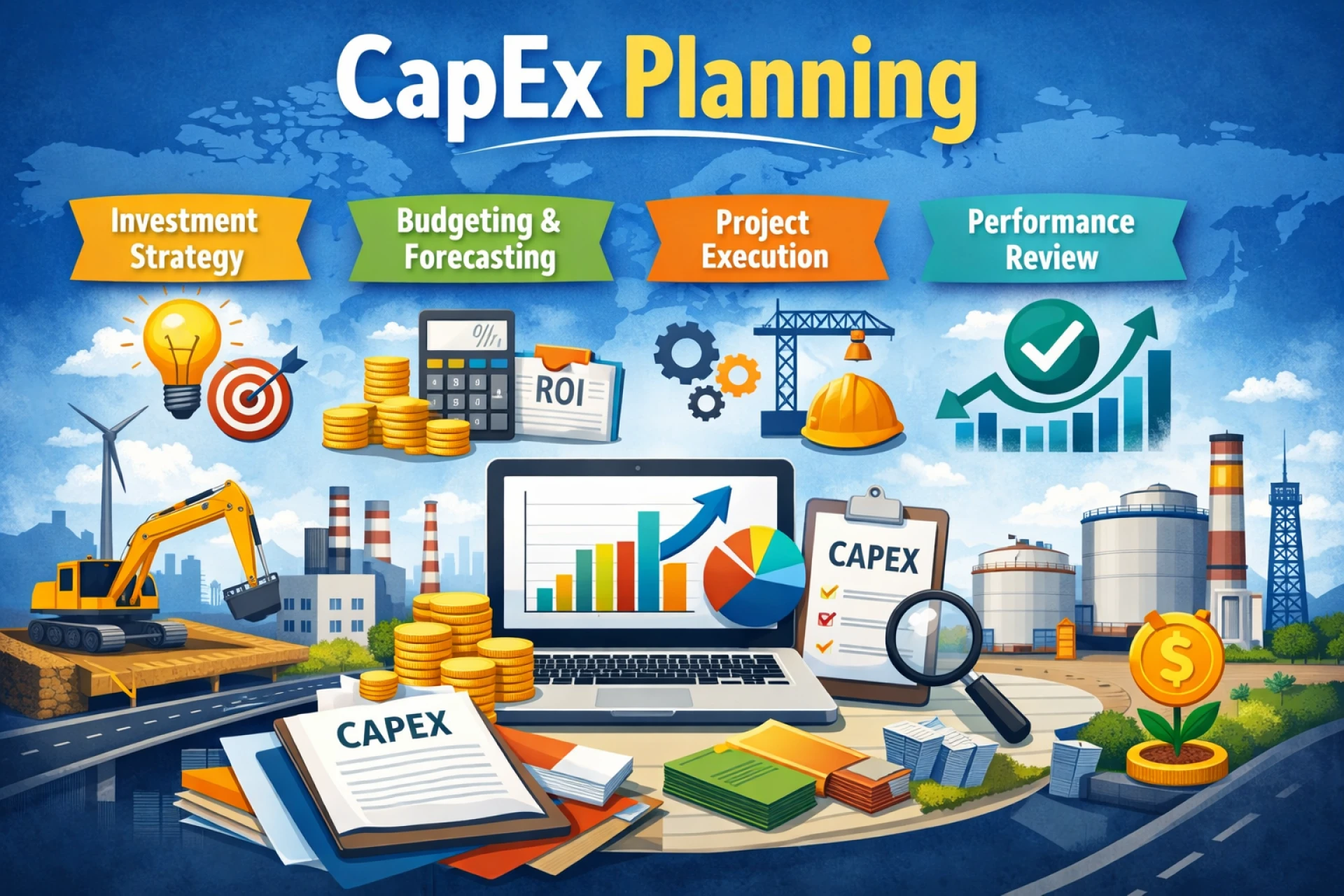
Industries that are capital-intensive rely heavily on financial planning that is structured to ensure sustainable growth in efficiency and productivity. CapEx plan plays an essential role in assisting organizations to manage their resources efficiently, prioritizing investments and managing large-scale infrastructure project development for assets. When companies expand production facilities or upgrade their technology or construct new infrastructure, a clearly defined capital expenditure strategy will help ensure the investment will yield sustainable returns.
This article provides the basics in CapEx strategy, including its primary components, its benefits and ways for businesses to adopt a successful Capital investment plan.
Understanding CapEx Planning
CapEx planning is the formal method of identifying, evaluating the budget, and directing capital expenditures that are long-term assets. They typically involve investment in the physical infrastructure, machinery and technology systems, as well as facilities, and equipment to help to boost business growth.
In contrast to operational costs which are short-term, capital expenditures are investment plans to boost efficiency, boost capacity or improve the capabilities of operations. Capital planning that is effective ensures companies invest in the right projects, while ensuring the financial stability.
Businesses operating in areas like infrastructure development, manufacturing engineering, energy, and manufacturing typically rely on capital allocation systems to aid in the strategic expansion of their business.
Why CapEx Planning is Critical for Businesses
A capital investment strategy that is structured can help organizations align their budgetary decisions with the business goals. In the absence of a proper plan, organizations are at risk of overspending, delays in projects or a poor utilization of assets.
Benefits of key importance are:
- Improved Financial Control - A clear investment plan can help businesses forecast costs, keep track of capital budgets and track expenditure across several projects.
- Better Strategic Alignment -Capital investment can be aligned to longer-term goals for business, like expanding, digital transformation or the modernization of infrastructure.
- Risk Reduction - Analyzing feasibility, financial returns and the operational impact prior to making a commitment to resources minimizes the risk of a project.
- Efficient Resource Allocation - Companies can prioritize high-impact projects that will yield greater ROI on investments.
- Enhanced Operational Performance - Modern equipment automation, infrastructure, and equipment increase efficiency and improve productivity.
Key Components of an Effective CapEx Planning Process
A thorough CapEx planning process typically comprises multiple phases that help ensure that investments are evaluated and carried out effectively.
1. Identifying Capital Investment Opportunities
The first step is to identify potential capital projects based upon requirements of the business. They could be:
- Modernization of the plant or facility
- Automatization and upgrades to equipment
- Infrastructure development
- Technology implementation
- Sustainable or energy efficiency projects
In this phase, companies review their operational requirements along with market potential to identify whether capital investments are required.
2. Financial Evaluation and Feasibility Analysis
Before approving a project firms conduct financial evaluations to assess the viability of the project. The process typically includes:
- Analysis of Return On Investment (ROI) analysis
- Net Present Value (NPV) calculation
- Evaluation of the payback period
- Cost-benefit analysis
- Analysis of sensitivity and risk
These financial models aid decision makers prioritize projects that have the greatest potential value.
3. Budget Allocation and Capital Forecasting
After evaluating projects after which budgets are assigned to organizations based on priority and funds. Capital forecasting helps companies ensure financial stability even when financing major investments.
Capital budgets for long-term projects can span several years, especially in industries that require massive engineering or infrastructure projects.
4. Project Execution and Monitoring
Following approval of the project, implementation starts with a structured plan for management procedures. The project manager monitors milestones, costs and timeframes to ensure that investments stay within budget and on time.
Project consultants and engineering firms often assist companies during this phase by offering expert advice, procurement assistance and oversight of execution.
Businesses that require specialist knowledge often work with professional capex providers within India for effective planning of projects, cost management and execution of complicated capital projects.
5. Performance Tracking and Asset Optimization
The last stage of CapEx planning is to evaluate the effectiveness of investments made. Companies assess whether the project was successful in achieving the desired outcomes, like increased efficiency, cost savings or an increase in revenues.
Performance tracking also aids companies refine their plans for capital investments.
Industries That Depend on CapEx Planning
CapEx planning is especially important in the industries where infrastructure, equipment and large-scale assets play an vital function.
A few of the most important sectors include:
- Production and industrial manufacturing
- Utilities and energy
- Automotive and electric vehicle infrastructure
- Oil and gas
- Infrastructure development
- Data centers and technology
In these industries even minor inefficiencies on capital investment could have significant financial consequences that is why structured planning is crucial.
The Role of Professional CapEx Consulting
The management of investments in capital can prove complicated particularly when multiple parties such as vendors, contractors, and engineering procedures are in play. Professional consulting services can help businesses improve the planning and execution of capital investment projects.
Expert consultants usually aid with:
- Capital investment strategy development
- Study of feasibility for the project
- Estimating costs and modeling financials
- Procurement planning and selection of vendors
- Monitoring and reporting on projects
Companies that require structured investment planning typically rely on specific Capex services in India to maximize capital allocation and make sure the projects are executed effectively.
Best Practices for Successful CapEx Planning
Companies can enhance their capital planning strategies by using these best practices
- Make sure that capital investments are aligned with a the long-term strategy of business
- Use data-driven financial models for decision-making
- Set up clear governance and approval procedures
- Integrate risk management into your project evaluation
- Monitor project performance continuously and the results
Implementing these methods ensures that capital expenditures directly contribute to growth in the business and efficiency improvements.
Conclusion
A successful CapEx strategy is crucial for companies who want to manage large-scale investment and ensure financial discipline. Through the implementation of a systematic capital planning system, companies can determine the best projects, manage costs, and get the most long-term return.
As companies continue to modernize infrastructure and embrace new technologies Strategic capital investment management will be a crucial element for long-term growth. Businesses that incorporate the analysis of financials, management experience and expert consulting services will significantly improve the effectiveness of capital investment initiatives.